A new, consensual world order
The era of globalisation is drawing to a close and a new one is emerging—an era of bilateralism over globalisation, of domestic over foreign focus, and reality-based policy-making

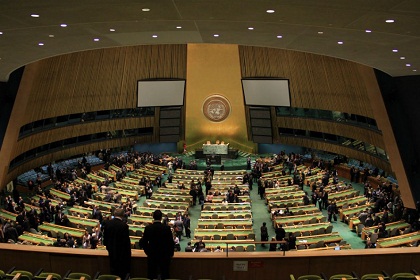 Courtesy: IB Times
The era of globalisation is drawing to a close and a new one is emerging—an era of bilateralism over globalisation, of domestic over foreign focus, and reality-based policy-making
 Courtesy: Wikimedia Commons
The incoming Trump administration is inheriting an economy that is on a strong recovery path. What are the challenges in sustaining this and what is emerging as the new administration’s growth agenda?
 Courtesy: Gateway House
2016 has been marked by unprecedented geopolitical dislocations and dispersals. In January 2016, Gateway House, identified the major emerging global trends. As the year comes to an end, several developments have confirmed these forecasted trends
 Courtesy: Gateway House
Security studies provides the framework for anticipating and analysing threats. While foreign policy offers fitting strategies to respond to these threats and address potential issues. Both contribute fundamentally to the other, making it important for both fields to be developed and studied.
 Courtesy: Gateway House
In the last seven decades since independence, successive prime ministers have ushered in changes in India’s foreign policy in response to shifting global geopolitical dynamics, aggregating transformation in bilateral relations. This overview places the past against the changes being brought in by Prime Minister Narendra Modi, a more forceful foreign policy practitioner than his predecessors
 Courtesy: bdnews24
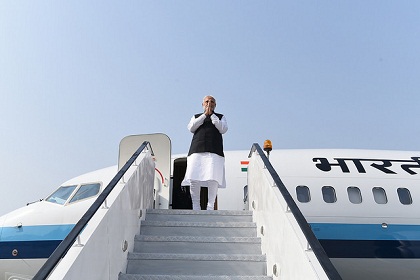
India imports 80% of its oil and 80% of the imports are from vulnerable regions. This high-cost, high-risk approach is not sustainable, and the current low price of oil offers India an opportunity to secure its long-term energy needs by taking three concurrent steps: diversifying supply sources, investing in oil fields, and using financial instruments
 Courtesy: MEA/flickr
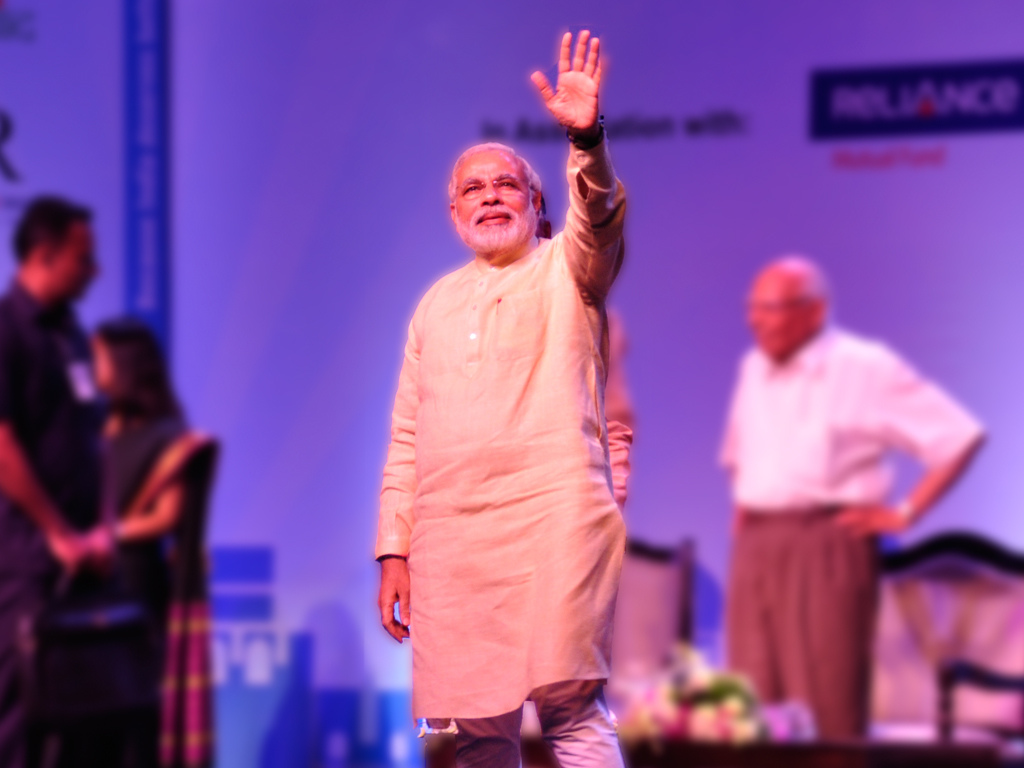
In Modi’s worldview, bolder than that of his predecessors, India has a bigger place than envisaged before. Consonant with this, the prime minister’s foreign policy mirrors the Arthashastra’s emphasis on pragmatic and intelligent use of power, informed by knowledge and the larger cause of the people. Has it been successful so far?
 Courtesy: Narendra Modi / Flickr
The Indian government and businesses should stay away from giving an overly “mercantile” attitude to foreign policy and investments abroad. A deal secured by only economic heft and preying on weakness is likely to produce only bitter fruit later on.
 Courtesy: MEA / Flickr
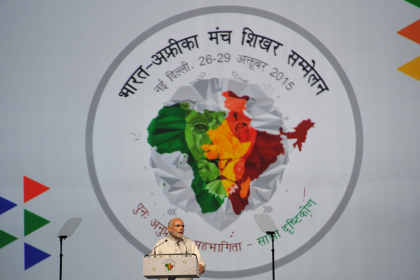
Changes in how India plans to approach its relationship with Africa were evident at the recent India-Africa Forum Summit, including the wider representation of African countries, and Modi’s push to forge a united front with Africa at multilateral institutions on trade and other issues. But beyond these, gaps in the India-Africa alliance remain to be addressed.
 Courtesy: Debarpan Das
In his first year in office, Prime Minister Narendra Modi has been busy globetrotting—he has spent 53 days abroad during which he has visited 17 countries. He has held bilateral summits with nearly all the South Asian countries, as well as two each with the U.S. and China. He has also travelled to countries of strategic importance such as Germany, France, Australia, South Korea and Japan