Sri Lanka: Debt-trapped
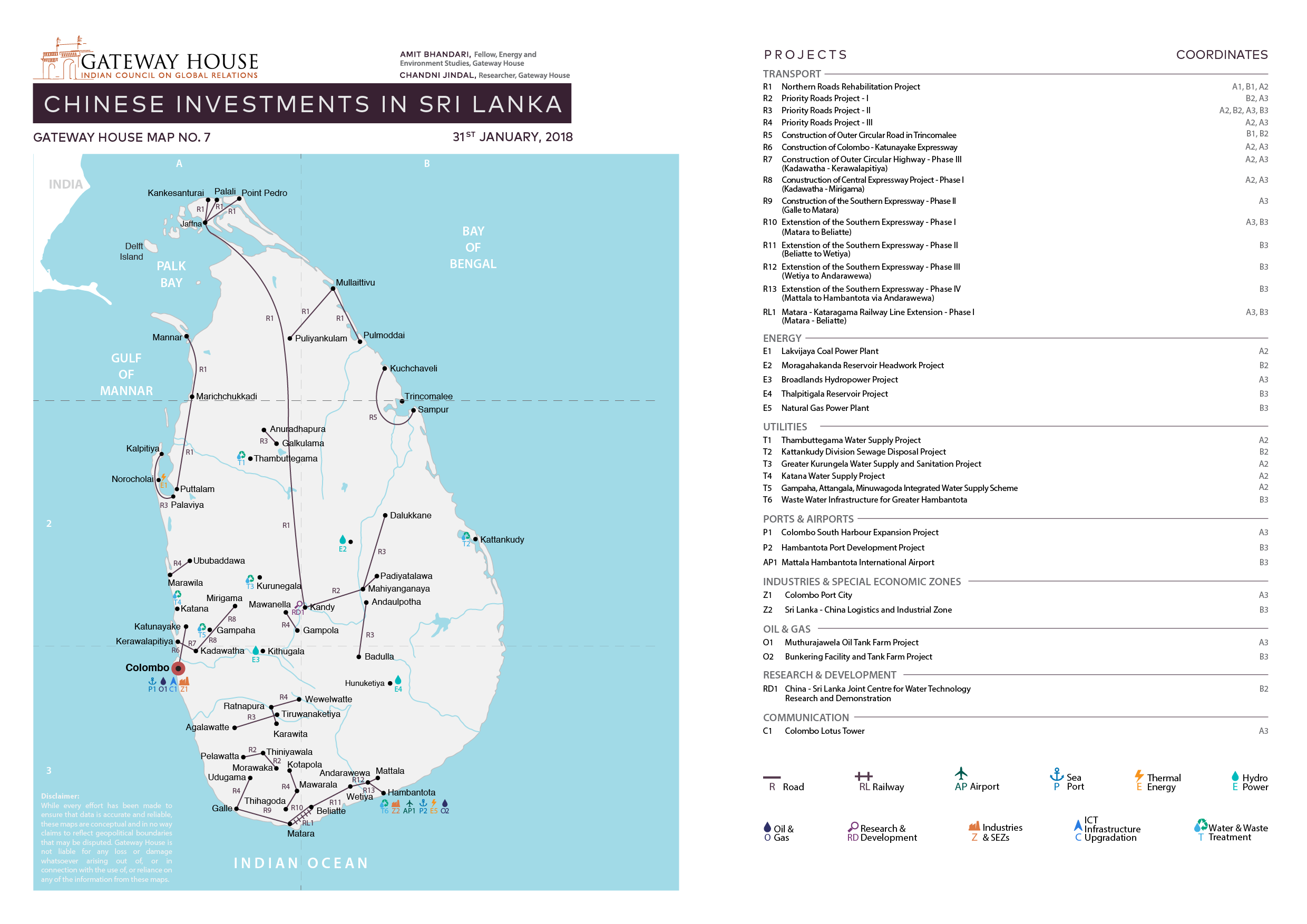
China has replaced India as Sri Lanka’s biggest economic partner. It is gaining control of Sri Lanka’s ports, which can give it leverage over India’s external trade

 Courtesy: Gateway House
China has replaced India as Sri Lanka’s biggest economic partner. It is gaining control of Sri Lanka’s ports, which can give it leverage over India’s external trade
 Courtesy: Sudath Silva/Flickr
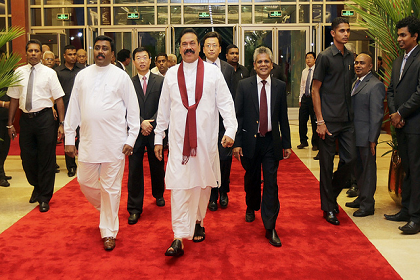
After losing power in January, Mahinda Rajapaksa, former president of Sri Lanka, is trying to re-enter politics by contesting for the prime minister’s seat in the elections on August 17. If he wins, it could destabilise Sri Lanka’s politics and impact relations with India, which had been hit under Rajapaksa’s rule. The future scenario will become clearer by next week.
 Courtesy: gatewayhouse.in
India has welcomed President Sirisena’s recent electoral victory largely because he is willing to check China’s rise in Sri Lanka. His visit to India next week is an opportunity for New Delhi to overcome its difficult relationship with former president Rajapaksa and offer its unconditional partnership to Colombo
 Courtesy: Wikipedia.org
Incumbent Sri Lankan president Mahinda Rajapaksa lost to his opponent Maithripala Sirisena in the recent elections. The reasons have been attributed to nepotism and dwindling support from the Sinhala community. With considerable challenges awaiting the new government, it would be wise to not rule out a return of Mahinda
Courtesy: http://www.maithripalas.com/
Neelam Deo, director at Gateway House, comments on the outcomes of the Sri Lankan presidential election that took place on 8 January 2015 and its implications for India
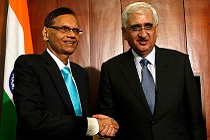 Courtesy: Ministry of External Affairs, India
The recent elections in Sri Lanka’s Northern Province may not ensure the much-anticipated devolution of powers. Rajeshwari Krishnamurthy blogs about why the Indian government must ensure that domestic pressures do not adversely impact the New Delhi-Colombo equation or the internal politics of Sri Lanka
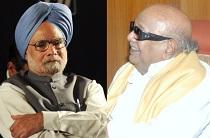 Courtesy: WikimediaCommons
New Delhi has taken some opportunistic actions, such as its vote against Sri Lanka in the UN Human Rights Council, to pacify internal political demands. But these extract a price in the international arena. Should we anticipate a further decline in India’s regional and international credibility?
 Courtesy: PMO
It is evident that Tamil Nadu plays a large role in shaping India’s policy towards Sri Lanka. The recent visit to India by Sri Lanka’s President, coming promptly after aggressive rhetoric from Tamil Nadu, is yet another sign that foreign affairs cannot be outsourced to regional or state governments.