Iran-P5+1 Interim Accord: An Assessment
Fair Observer, an online foreign policy journal carried a piece published by Gateway House, analysing the Iran-P5+1 interim agreement on Tehran's long disputed nuclear deal

 Courtesy: Fair Observer
Fair Observer, an online foreign policy journal carried a piece published by Gateway House, analysing the Iran-P5+1 interim agreement on Tehran's long disputed nuclear deal
 Courtesy: Random House
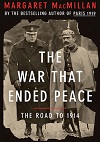
In 'The War that ended Peace: The Road to 1914', Margaret Macmillan delves into the decades leading up to 1914, as she explores why Europe abandoned years of peace to plunge into World War I
 Courtesy: Organisation for Economic Co-operation and Development/Flickr
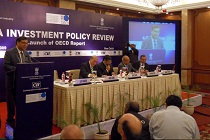
In the face of a severe economic slowdown and an impending balance-of-payment crisis, the Indian business community has a clear opportunity to pull the country out of the current crisis. However, this can only achieved if the apex chambers of commerce restructure themselves
 Courtesy: WikimediaCommons
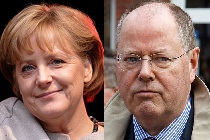
German foreign policy can be described as one anchored in the European and NATO alliance while being the economic centre of Europe. Yet, any government that comes in after the September 22 elections will be challenged by rapid developments in West Asia and elsewhere in a politically and economically turbulent world
This daily column includes Gateway House’s Badi Soch – big thought – of the day’s foreign policy events. Today’s focus is on the negotiations for a free trade agreement between the E.U. and the U.S.
Momentous developments are taking place in Europe. In elections in Greece, France and Germany, Europeans expressed dissent against austerity policies adopted by their government to combat the economic crisis in Europe. How will these results affect the future of European policy-making?
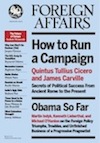 Courtesy: Foreign Affairs
As Europe emerges from economic crisis, a larger challenge remains: finally turning the eurozone into an optimal currency area, with economies similar enough to sustain a single monetary policy. Getting there will be difficult and expensive, but the future of European integration hangs in the balance.
The Fukushima Daiichi nuclear disaster has sparked debate in the field of energy security all over the world. As Germany and Switzerland announce plans to phase out nuclear power, India's nuclear’s debate, and its looming water crisis, remains largely unopened.
 Courtesy: Pragati
Germany’s abstention on the UN Resolution on Libya heralds the mellowing of a nation blamed for last century’s most catastrophic wars. This time, Berlin may determine the history of Europe by choosing to pursue its national interests peacefully rather than subjugating an entire populace.
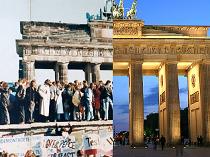 Courtesy: Lear21,ThomasWolf/Wikipedia
Germany’s abstention on the UN Resolution on Libya heralds the mellowing of a nation blamed for last century’s most catastrophic wars. This time, Berlin may determine the history of Europe by choosing to pursue its national interests peacefully rather than subjugating an entire populace.