The Right Way Out of Afghanistan
To leave behind a stable government in Afghanistan in 2014, the U.S. needs to work towards electoral reforms, negotiations with the Taliban, and a regional settlement involving Pakistan.

 Courtesy: Foreign Affairs
To leave behind a stable government in Afghanistan in 2014, the U.S. needs to work towards electoral reforms, negotiations with the Taliban, and a regional settlement involving Pakistan.
 Courtesy: Embassy of India, Washinton D.C.
The third India-U.S. Strategic Dialogue saw more talk of ‘mutual capabilities’ than of a mere alliance. The larger endeavour in the bilateral is to find the right fit as partners, where both countries can preserve their strategic autonomy and benefit from their unique positions in the international community.
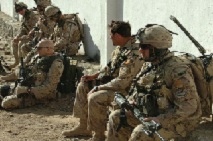 Courtesy: Open Democracy
The NATO withdrawal from Afghanistan in 2014 should be done tactically so that it doesn't destabilize Pakistan. Despite having accepted Pakistani help in the past, the Taliban might empathize with Pakistani Pashtuns and spread the very secessionist tendencies which Pakistan’s Afghan policy was designed to prevent.
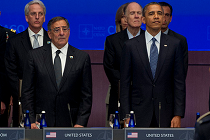 Courtesy: Secretary of Defense/Flickr
Pakistan’s refusal to re-open NATO supply routes into Afghanistan has made the country an instant pariah in the U.S. at the NATO Summit. The communiqué released confirms a withdrawal of 130,000 troops by as early as mid-2013. Can the remaining soldiers help maintain peace when a force much larger could not?
 Courtesy: Ministry of External Affairs, India
U.S. Secretary of State Hillary Clinton's recent visit to China, India, and Bangladesh is keeping with the U.S. pivot to Asia. The choice of countries has strategic significance for the U.S., where India is flagged as balancing the rise of China, and Bangladesh as a strategic base in the Bay of Bengal.
 Courtesy: U.S. Department of Defense
An important take-away from the preliminary pact reached by Kabul and Washington is that unlike the 1990s, the Americans are not just packing their bags and leaving. This is good news in terms of regional stability, and the upcoming NATO summit may answer some questions this draft agreement raises.
 Courtesy: LGEPR
With turmoil in the Middle East, a drawdown in Iraq and Afghanistan, the Iran-Israel-U.S. conflict, the international community has paid little attention to the democracy of a small group of people - the Bahrainis. More worrisome, however, is that politics now responds to the elite.
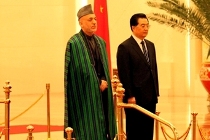 Courtesy: Afghanistan Goverment/WikimediaCommons
Afghanistan has become the first significant theatre of effective confrontation between the West and China. But with its deep-rooted economic ties, could the U.S. and NATO actually confront China?
 Courtesy: nazeah/Wikimediacommons - Ramesh Lalwani/Flickr
The year 2011 saw various events - the Arab Spring, anti- corruption protests, Europe's sovereign debt crisis - transform countries and reshape the world order. Gateway House takes a look at what these events mean for India, and presents India's top foreign policy cheers and jeers for the year.
 Courtesy: Michael Trolove/WikimediaCommons
Growing instability in the region make the planned Turkmenistan-Afghanistan-Pakistan-India (TAPI) gas pipeline seem more like a burden than a solution to India’s hunt for alternative energy sources. Is it wise for India to move ahead with the $7.6 billion project?