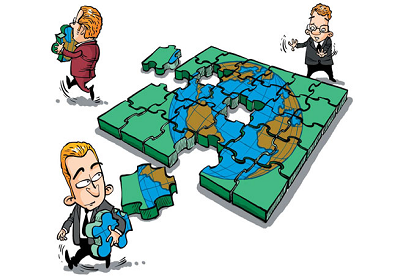
Reversal of Globalisation2 Courtesy: Systemic Alternatives
8 February 2017

Is globalisation in reverse?

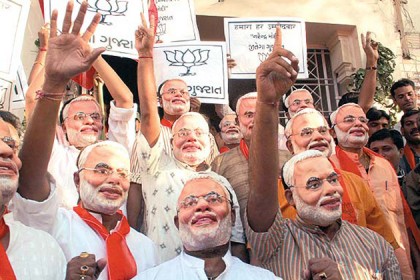
The contours of globalisation are being reshaped. The Brexit vote and the election of Donald Trump mark a strong anti-globalisation sentiment even as leaders in China, India and Russia successfully marry nationalist rhetoric with a cleverly crafted overseas strategy, premised on the very tenets of globalisation. There seems to be a ‘pause’ in the unbalanced progress of globalisation of the last three decades—and this could have many positive outcomes
SLQ Courtesy: Wikimedia Commons
19 December 2016

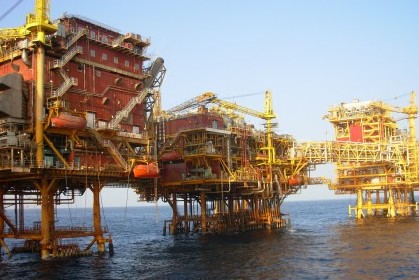
LNG strategies for the EU and India

India’s gas consumption is lower than the EU’s, but it too, like the EU, relies heavily on imports. With LNG likely to remain a key part of India’s gas supplies in the future, and given recent changes in the global market, what is the future potential of LNG imports for the EU and India? What are the best energy policies for the two regions?

1023-modi-cameron-mea Courtesy: MEA / Flickr
30 June 2016

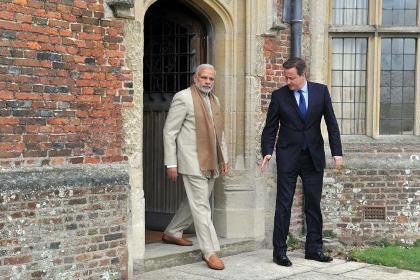
The dislocations of Brexit: can India gain?

The result of the Brexit referendum is nothing less than a body blow to Bretton Woods organisations, International Monetary Fund-North Atlantic Treaty Organisation (NATO)-World Bank, that originated at the end of the Second World War. The possibility of an Asian century becomes more feasible, if India can be nimble enough to make the most of the opportunity which has presented itself in Europe.

ukip-eu-protest-5 Courtesy: Business Insider
24 June 2016

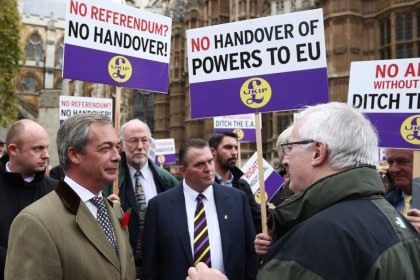
Brexit: a wake-up call for global elites

The message from Brexit is simple: the post-second world war financial, trade and industrial order and security arrangements that developed around Bretton Woods, have passed their expiry date. This is the time for countries, regional unions and global institutions to reform themselves – putting people instead of regulations and strategic objectives at the centre of their decision-making.

U.S. Mission / Eric Bridiers Courtesy: Wikipedia
8 October 2015

UNSC and sanctions: a balanced role

The sanctions against Iran impacted the country’s oil, banking, aviation, and other sectors, and had a major humanitarian impact. But neither is armed attack a more suitable method in most instances to address allegedly recalcitrant states. What then is the middle ground? And can the UNSC assume a more proactive role in this context?

P5+1 Talks With Iran in Geneva, Switzerland Courtesy: U.S. State department/Flickr
6 April 2015

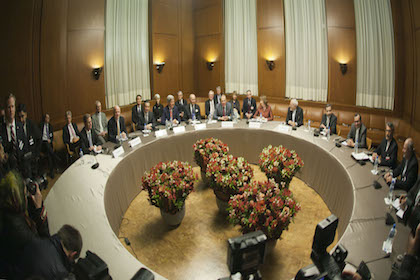
The end of the Iran nuclear journey?

With the EU, Iran, and other entities taking decisive steps on April 2 to ensure a non-nuclear Iran, President Obama must now counter interests in the U.S. that want to stymie the final agreement. But having come this far, and considering the comprehensive benefits of an agreement, all sides are sure to deliver