Peaceful dissent was the original animus for the formation of the Forum 2000 Foundation. Started by the late Czech dissident Vaclav Havel, the conference, held in Prague every September, offers a platform to experts and activists from around the world to revisit ideas about pacifism and protest
The United Nations’ Paris Agreement of 2015 had nations committing to reduce emissions of greenhouse gases to slow the rise in global temperatures. But terrestrial geoengineering – or the use of “carbon capture” technologies and developing carbon sinks to remove gases already in the atmosphere – and atmospheric climate engineering are technologies which also seek to slow global warming
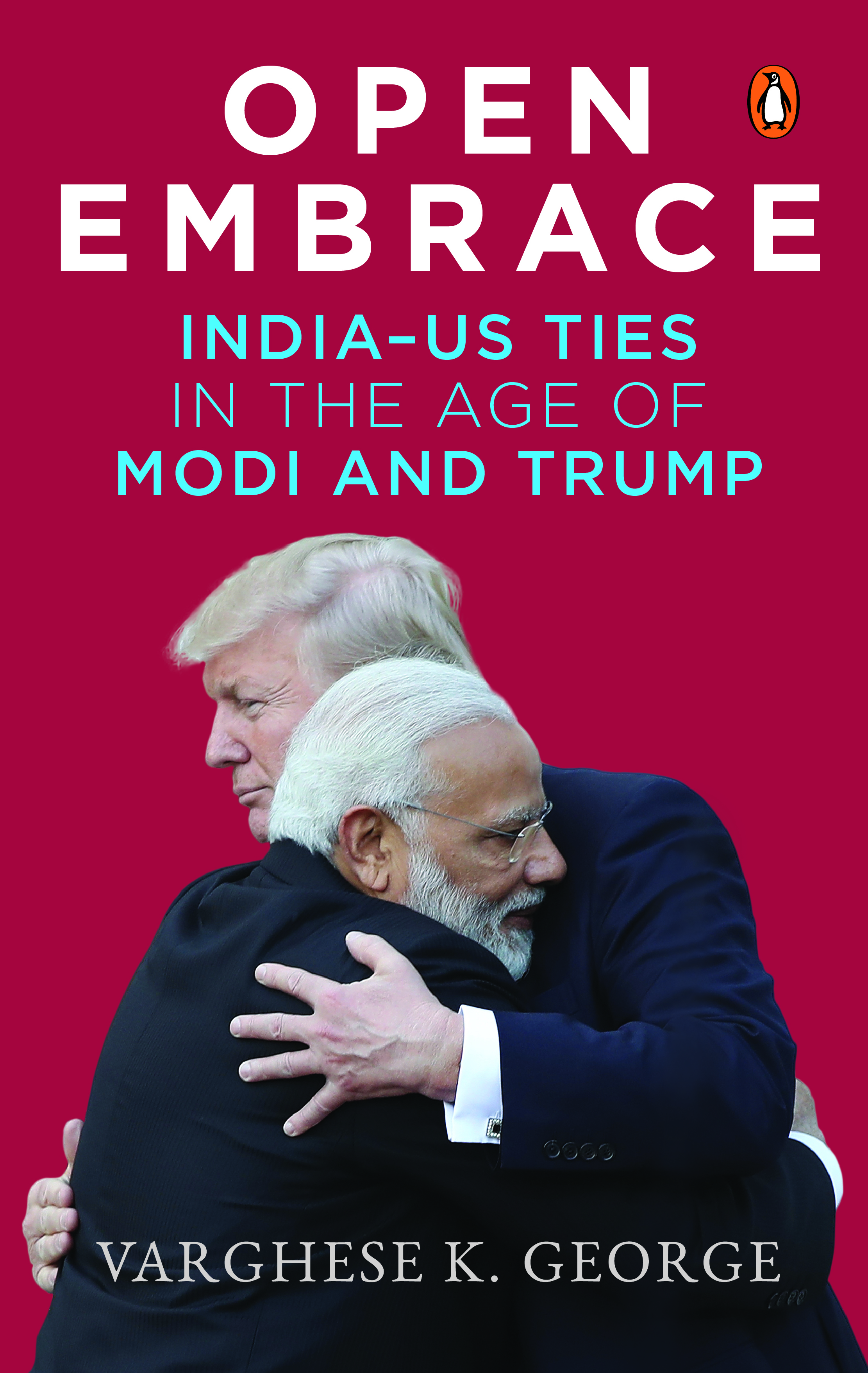
This book offers a ringside view of evolving Indo-U.S. ties under two conservative leaders, both engaged in mixing nationalism, religion and populism to advance the global capitalist order. The title points to an interesting departure from the more orthodox view of the bilateral relationship, which is usually from the prism of discord or estrangement
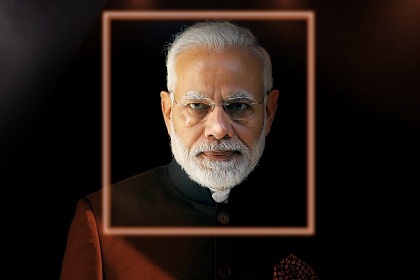
India's foreign policy under the second Modi government will take account of a turbulent world in which the old verities are disappearing and domestic political compulsions exert overwhelming influence on external postures
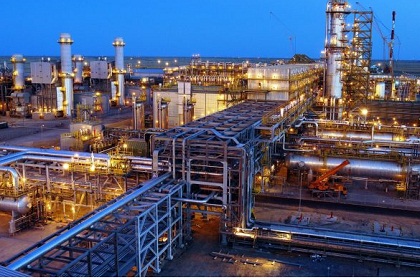
The main objective of the Shanghai Cooperation Organisation’s (SCO) Energy Club, when Russia formed it, was to market its member states’ substantial oil and natural gas reserves. This map shows some of the important natural gas pipelines, originating from Russia and its neighbouring countries that are not members of the SCO. What can India do to secure supplies from these abundant but currently inaccessible natural gas reserves?
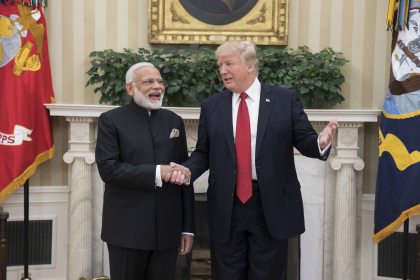
The imperative for India to move away from its non-aligned posture is now, especially if it wants to be consequential in the global reordering underway. This will play out in the contention between the U.S. on one side, and China and Russia on the other.
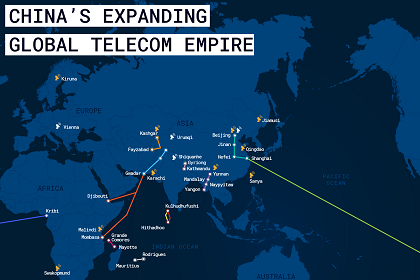
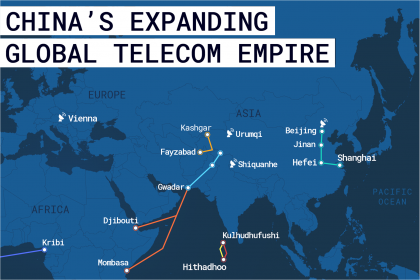
This version of the Gateway House Map on China’s Expanding Global Telecom Empire identifies some more telecommunication assets -- optic-fibre and satellite ground stations -- that Beijing is working on in South and Central America, Africa, Myanmar, the Indian Ocean Region and mainland China besides the existing ones, such as the Pakistan East Africa Cable Express (PEACE). It shows the direction China’s investment is taking, its diplomatic overtures and the larger geopolitical implications of its growing telecom empire
China is steadily deploying state-of-the-art communications systems to connect its strategic and economic assets in Asia. It is then linkingthe Asian mainland to Africa, and Africa to South America. The investment spree is rapidly making Beijing a major player in global telecommunications – and ‘informationisation warfare’.
A conference in Doha on ‘Enriching the Middle East’s Economic Future’ offered many insights into the nature of geopolitical relations in the region and India’s significant role in it
China has expanded its presence in the Indian Ocean Region. President Xi Jinping has abandoned Deng Xiaoping’s conciliatory posture for an aggressive, money-fuelled search for super power status