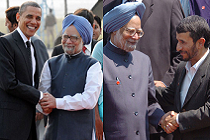
Pragati_0 Courtesy: PMO
10 April 2012

Between Washington and Tehran

Over the past thirty years, the U.S. and Iran have been at odds over Iran's alleged nuclear weapons programme. India too has a large stake with both countries - with the U.S. as a strategic partner and Iran for its oil imports - and resolving this conundrum will require some creative diplomacy.
Courtesy: IAEA Imagebank
9 April 2012

Iran: An opportunity for BRICS

The scope for any process on nuclear talks with Iran to founder on distrust, misunderstanding and political in-fighting in both Tehran and Washington remains formidable. Equally disturbing are the wider political realities. Can the upcoming talks in Istanbul launch a process that can, over time, lead to agreement?

wisner interview Courtesy: Gateway House
2 April 2012

India-U.S.-Iran Impasse?

Given the immediacy of rising tensions around Iran’s nuclear programme, what can India and the U.S. do to resolve the issue? Gateway House’s Manjeet Kripalani talks to Ambassador Frank Wisner about the possibilities of a strike against Iran and its effects on the India-U.S. relationship.

2355314992_76470bb8ce Courtesy: Amir Farshad Ebrahimi/Flickr
17 February 2012

What Iran’s election means for India

On March 2, 2012, the Islamic Republic of Iran will hold its ninth parliamentary election. The outcome and state decisions that follow will have significant effects on India, which has strong political relations with Iran and relies on it for a considerable portion of its energy imports.

Maldives: Nasheed outpaced his people Courtesy: notsogoodphotography/Flickr
16 February 2012

Maldives: Nasheed outpaced his people

Despite recent regime changes and agitation in the Middle East, the international community's attention has been diverted from the Indian Ocean - via Maldives. After President Nasheed's forced resignation, the country is now in political turmoil.

anna hazare 2 Courtesy: nazeah/Wikimediacommons - Ramesh Lalwani/Flickr
30 December 2011

2011’s Top Foreign Policy Cheers and Jeers

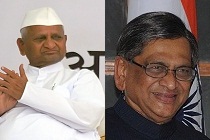
The year 2011 saw various events - the Arab Spring, anti- corruption protests, Europe's sovereign debt crisis - transform countries and reshape the world order. Gateway House takes a look at what these events mean for India, and presents India's top foreign policy cheers and jeers for the year.

r2p Courtesy: UN Photo/Paul Banks
6 December 2011

Reconsidering R2P, post-Libya

After the crass misuse of Responsibility to Protect (R2P) in Libya, the broader question is: where is R2P headed? Do the events in Libya herald a more explicit assertion of this doctrine in other parts of the world? And should India rethink its viewpoint towards this ambiguous doctrine?

sarah chayes article Courtesy: U.S.ArmedForces/WikimediaCommons
13 September 2011

Mafia-nation: State capture by criminal syndicates

Corruption has become a galling global phenomenon: structured, vertically-integrated networks, whose objective is the extraction of resources, are forming in countries around the globe. And strikingly, these structures are masquerading as democratically-elected, seemingly-open governments.