Book review: Exploring the origins of World War I
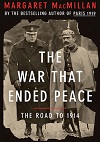
In 'The War that ended Peace: The Road to 1914', Margaret Macmillan delves into the decades leading up to 1914, as she explores why Europe abandoned years of peace to plunge into World War I

 Courtesy: Random House
In 'The War that ended Peace: The Road to 1914', Margaret Macmillan delves into the decades leading up to 1914, as she explores why Europe abandoned years of peace to plunge into World War I
 Courtesy: European External Action Service
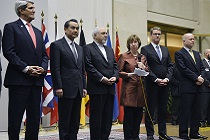
On November 24, the P5+1 and Iran reached a consensus on the interim agreement regarding Tehran’s long-disputed nuclear program. How comprehensive is this agreement, and what are its potential upshots for U.S., and West Asia – especially Israel and Saudi Arabia? More importantly, can India play a positive role?
 Courtesy: WikimediaCommons
This daily column includes Gateway House’s Badi Soch – big thought – of the day’s foreign policy event. This Badi Soch analyses the implications of France’ kowtowing to Saudi Arabia and Israel’s demands in the P5+1 talks with Iran.
 Courtesy: WikimediaCommons
Can the world aspire to a future where the use of force is not seen as leadership? Can the U.S. and former colonial powers like France and UK, think differently and reject the use of force as first resort? Can China and India craft alternatives?
This daily column includes Gateway House’s Badi Soch – big thought – of the day’s foreign policy events. Today’s focus is on the negotiations for a free trade agreement between the E.U. and the U.S.
The deterioration of growth prospects is at the core of the financial crisis in Europe. Can Europe successfully form a banking and monetary union? Gateway House interviews Nicolas Véron, a French economist, to discuss the repercussions of the financial crisis in Europe and the potential for Indo-EU cooperation.
 Courtesy: trendscout::/Flickr
All the major economic forces in the world have come together in Africa in a new version of the Great Game. The competition for the continent’s resources will ultimately harm Africa unless Africa uses this opportunity to its advantage and to address its own serious problems.
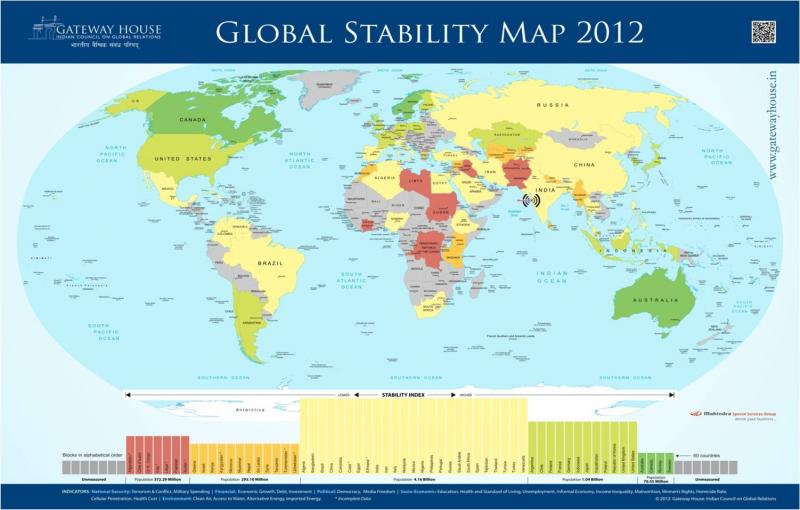 Courtesy: Gateway House
Gateway House prepared a Global Stability Map, using 20 differing indicators, to analyze the stability of 60 countries around the world. Using criteria that are important to the emerging economies of the world, the map provides an Indian perspective of the world today.
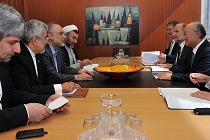 Courtesy: IAEA Imagebank/Flickr
Ahead of nuclear talks between Iran and the P5+1 in Moscow, the West seems confident that sanctions will induce Iran to settle on its uranium enrichment. But rather than arriving at a negotiated settlement by applying the principle of reciprocity, the West may look to anaesthetize oil markets.
Momentous developments are taking place in Europe. In elections in Greece, France and Germany, Europeans expressed dissent against austerity policies adopted by their government to combat the economic crisis in Europe. How will these results affect the future of European policy-making?