Chairman’s remarks at Regional Conclave on ASEAN
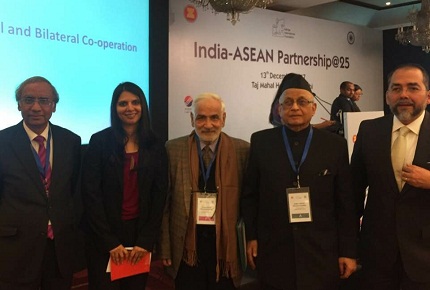
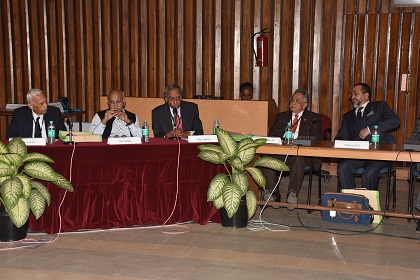
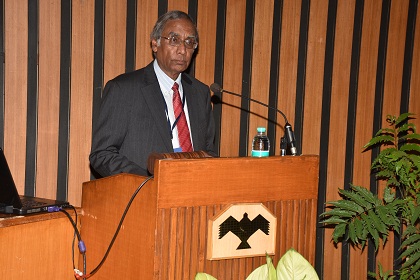
Ambassador Rajiv Bhatia, Distinguished Fellow, Gateway House gave the Chairman’s Remarks at ‘Regional Conclave on ASEAN@50 and India-ASEAN Relations’ in Bengaluru
Courtesy:
Ambassador Rajiv Bhatia, Distinguished Fellow, Gateway House gave the Chairman’s Remarks at ‘Regional Conclave on ASEAN@50 and India-ASEAN Relations’ in Bengaluru
Courtesy: Arjun Chawla
This speech was delivered by Rajiv Bhatia, Distinguished Fellow, Foreign Policy Studies, Gateway House, at the Delhi Dialogue 9, for the session on Regional Geopolitics: Great Power Politics in Asia -Pacific in Delhi on 4 July
Courtesy: Deutsche Welle
This regional grouping of 10 nations, which observes its golden jubilee year in 2017, has come a long way from the Cold War era when it was founded, making a significant contribution to peace, security and prosperity. Now, its future prospects and “centrality” look uncertain amidst the region’s changing geopolitics
Courtesy: MEA/flickr
The year 2017 may change some equations in the East Asian region. Will the near parity that the U.S. and China currently share turn into a keener contest? Will strained relations between India and China persist? Donald Trump’s election as the next U.S. president casts the spotlight squarely on these inter-state relationships
Courtesy: Russian Government
At a time when New Delhi is beginning to not just ‘Look East’ but also ‘Act East’, and when parallel integrative processes are underway globally, including the ASEAN-led process, the incipient China-led process and the U.S.-led TTP, India and ASEAN could together produce a brilliant new era of Asian integration
Courtesy: Flickr / MEA India
India’s East Asia policy has been a bedrock of the country’s foreign policy, and the Modi government has deepened ties with ASEAN and extra-ASEAN powers in a significant way. As India turns 70, it is worth assessing the few key bilaterals that will now become more important for regional security and prosperity.
Courtesy:
In two years, the Modi government’s Act East Policy has gone well beyond the focus on economic ties of its predecessor, the Look East Policy. It has made progress on many wider fronts, including connectivity and defence collaboration. India must now build on this success and further consolidate relations and trade links with ASEAN and beyond
Courtesy: ustr.gov
The Trans-Pacific Partnership has dropped strong Intellectual Property Rights regulations on India’s doorstep. The implications of these regulations could affect India’s own policies, as well as her global aspirations towards the potential Regional Comprehensive Economic Partnership.
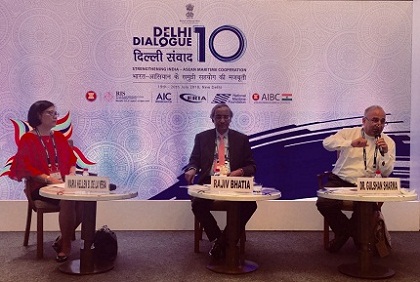
Ambassador Rajiv Bhatia participated as a panelist at edition VIII of the Delhi Dialogue hosted by IDSA.
Courtesy: PTI
Vice President Ansari’s recent visits to Brunei and Thailand provided further clarity to the Act East Policy while advancing its implementation. He effectively showcased that the rationale for a strong India-ASEAN strategic partnership is sharper than before.