2015_Summit_of_the_Shanghai_Cooperation_Organization_03 Courtesy: Wikipedia
29 April 2016

India in the SCO: win-win

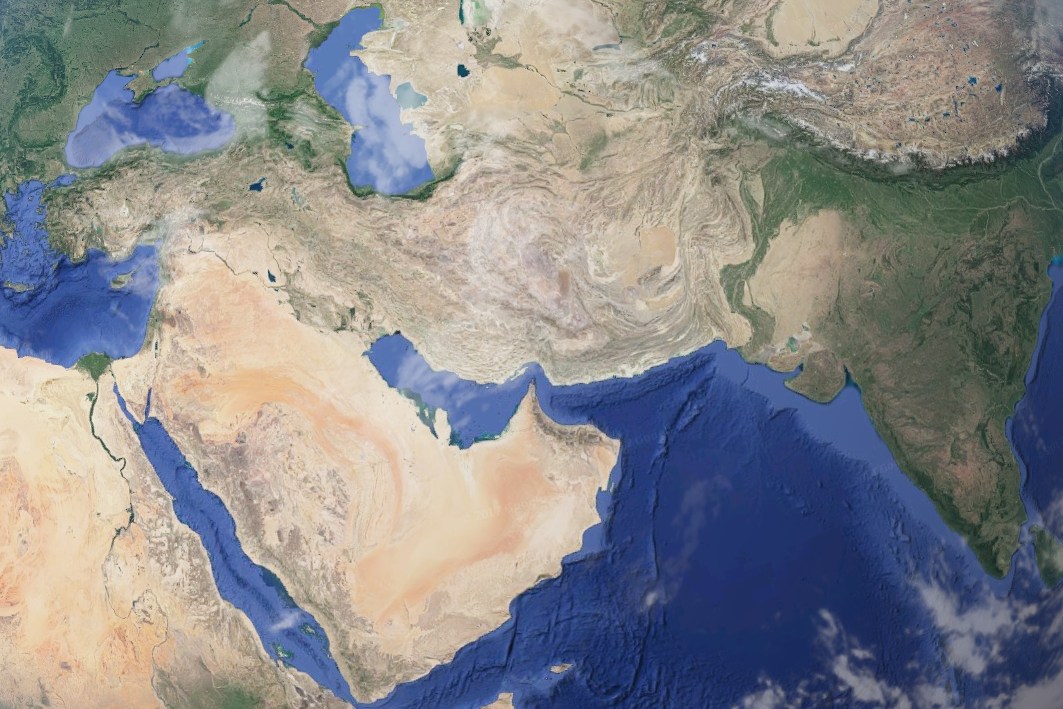
India’s forthcoming membership in the Shanghai Cooperation Organization (SCO) will benefit the SCO, Central Asia, Russia, China, as well as India itself. While India will be able to promote its own security, strategic, trade, economic, and energy interests in Central Asia, the SCO will benefit from India's rapid growing economy and its experience in counter-terrorism.

Sagar2 Courtesy:
14 April 2016

Sagarmala or SAGAR: a maritime dilemma

After decades of passivity, India is beginning to assert itself in the maritime arena. There is a whiff of salt in the usually 'sea-blind' corridors of Delhi, where the Modi government clearly sees the linkage between the possession of maritime wherewithal, both civilian and military, and the furthering of national prosperity, through ever-increasing trade.

maxresdefault Courtesy: Youtube
4 February 2016

The world in 2016

The world has witnessed a number of upheavals in the past few years, precipitating widespread global political turbulence stemming from geo-economic instability. Over the next couple of months, Gateway House experts will attempt to deconstruct these events and how India and its foreign policy can work to take advantage of these trends.

admin-ajax (3) Courtesy: Wikipedia
28 January 2016

Gwadar and “the String of Pearls”

Is China actively building up its maritime presence in the Arabian Sea, to dominate vital sea lanes and perhaps encircle India with a chain of naval bases? There can be little doubt that China views Gwadar as a potentially useful asset. China, however, will know better than anyone that Gwadar has two considerable limitations.

Modi-AbeMEAFlickr Courtesy: MEA/Flickr
17 December 2015

India balances Asian security with Japan

During Japanese PM Shinzo Abe’s recent visit to India, both countries made important progress in strengthening their security engagement focused on maritime security, defence purchases and counter-terrorism. Nonetheless, Indian policymakers are conscious of regional concerns about Japan’s renewed nationalism and of balancing this relationship with that of China

This year, India's defence diplomacy has ramped up. In 2015 alone there have been 18 military exercises- naval, army and air force- with 13 countries, among the largest engagements the country has had. Most significant is Japan joining the Malabar exercises in the Bay of Bengal and the first-ever maritime exercise with Australia. This is increasing India's presence from the Arabian Sea to the Bay of Bengal. As these exercises intensify India will be better positioned to handle regional security challenges. Courtesy:
12 November 2015

India’s defence diplomacy

This year, India's defence diplomacy has ramped up. In 2015 alone there have been 18 military exercises- naval, army and air force- with 13 countries, among the largest engagements the country has had. Most significant is Japan joining the Malabar exercises in the Bay of Bengal and the first-ever maritime exercise with Australia. This is increasing India's presence from the Arabian Sea to the Bay of Bengal. As these exercises intensify India will be better positioned to handle regional security challenges.

Backlit keyboard Courtesy: Wikipedia
21 October 2015

U.S.-China: no more spy games?

The recent U.S. and China agreement to contain cyber espionage will not only impact their bilateral relationship, it will also create norms in international cyberspace. But implementation remains a challenge, and businesses, including in India, that have faced cyber threats must proactively plug their vulnerabilities

Xi'an_erhuan_southeast Courtesy: Wikimedia
28 September 2015

Learning from China’s OBOR playbook

The ‘One Belt, One Road’ initiative announced by China last year is being actively implemented at the provincial level. A recent conference in Lianyungang, Jiangsu province, provided a glimpse of China’s multi-pronged strategy to harness various resources available to make OBOR a success.