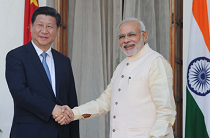
Modi with Xi Jinping_India Courtesy: MEA/Government of India
26 December 2014

New-look India-China ties in 2015?

2015 is likely to begin with India-China boundary talks in New Delhi, and strategic analysts believe it can be a unique window—arising out of the new political dynamism in both countries—to resolve the dispute. Besides, if Modi visits China in 2015, it can expedite investments—also making it a big year for bilateral ties
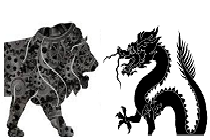
china check or mate v3 Courtesy: Make in India & Wikimedia commons
19 December 2014

India 2015: China’s check or mate?

From the Indian perspective, how China manages the readjustment of its economy and how secure South Asia remains, will be two major determinants that will influence world affairs in 2015. Gateway House has developed four scenarios to explain the outcomes that will ensue, starting 2015, when these two determinants intersect.

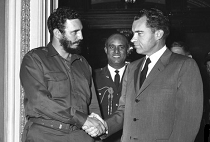
Fidel Castro with Nixon Courtesy: Getty Images
19 December 2014

Cuba: end of isolation

The U.S. has finally ended its outdated policy of isolating Cuba. It is a triumph for the proud and courageous Cubans who have withstood so many overt and covert destabilisation attempts by the U.S. It is also a victory for Latin America which has opposed the U.S. embargo and advocated normalization of relations with Cuba

Carter_final Courtesy: defence.gov
11 December 2014

Ashton Carter knows India well

Chuck Hagel’s unremarkable stint as the U.S. Defence Secretary should soon be forgotten if Ashton Carter’s nomination is confirmed. Even though Carter’s nomination bodes well for the India-U.S. bilateral due to his work on furthering the defence partnership he will be faced with more immediate concerns and the onus will then be on India to strategically enhance the relationship

Yal Railway Line Courtesy: flickr.com/presidentrajapaksa
17 October 2014

India’s imperatives in Sri Lanka

India has tried to address the concerns of Sri Lankan Tamils through projects such as the recently-inaugurated railway between Jaffna and Colombo. But their aspirations for autonomy in the North and East remain unfulfilled, and New Delhi faces a dilemma—pushing Colombo on political issues can drive it closer to Beijing

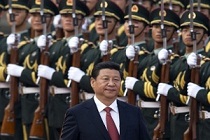
Chinese-President-Xi-Jinping-with-chinese-soldiers-300x216 Courtesy: newshence.com
8 October 2014

Chumar incursion: a message to Xi?

The reason behind a People’s Liberation Army (PLA) contingent intruding into eastern Ladakh around the time of Chinese President Xi Jinping’s visit to India, still needs to be decoded. It is not unlikely that domestic rivals, including possible ‘rogue’ elements within the PLA, could have decided to embarrass Xi — angry with his historic crackdown on corruption among Chinese officials

kudankulam Courtesy: Wikimedia.org
1 October 2014

Decoding the India-U.S. nuclear deal

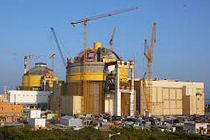
Bringing U.S. nuclear technology to India is a goal identified in the countries’ joint vision statement. Although public discourse on the India-U.S. nuclear deal has focussed on the liability clause, the pact’s success also depends on resolving other factors such as local sourcing, technology transfer and project delays

Modi obama Courtesy: Ministry of External Affairs
30 September 2014

India-U.S. must move past deal-led ties

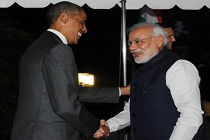
Prime Minister Narendra Modi’s visit to the U.S. is unlikely to reset bilateral relations. The relationship remains determined by bickering over trade and investment deals, such as the impasse at the WTO and the disputes over IPR. To become real strategic partners, both countries must move beyond these transactional exchanges