Beyond the Rafale deal
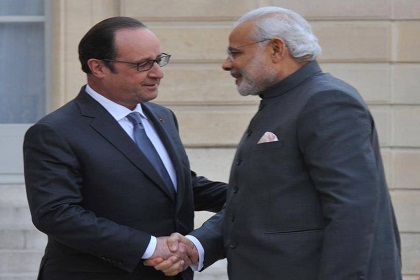
The France-India relationship must not be overshadowed by the Rafale deal. Modi’s visit can be the opportunity to add fresh energy in the economic relationship by harnessing economic complementarities.

 Courtesy:
The France-India relationship must not be overshadowed by the Rafale deal. Modi’s visit can be the opportunity to add fresh energy in the economic relationship by harnessing economic complementarities.
 Courtesy: Wikimedia commons
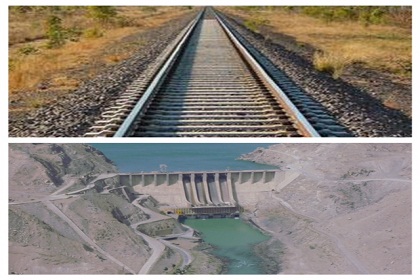
With the Modi government’s focus on improving neighbourhood relations, India cannot afford delays in its aid projects in the region—especially because aid is an effective foreign policy instrument. Why are these projects getting delayed? Is the government taking remedial steps to improve India’s aid programme?
 Courtesy: topnews.in
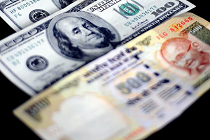
In its recent monetary policy document, the Reserve Bank of India has imposed strict maturity conditions on foreign portfolio investment in debt to get a better handle on risk. But a fiscal solution would be more elegant and effective
 Courtesy: http://photos.state.gov
/libraries/america/3239/
India is revising the model draft agreement of its existing bilateral investment treaties. Some of the new clauses are unlikely to be accepted by either U.S. negotiators or U.S. corporations without substantial dilution
 Courtesy: globalsherpa.org
The Indian government has undertaken a massive financial inclusion scheme to bring bank accounts to the poor. But poverty alleviation needs to be addressed at multiple levels for which the Latin American example of using targeted and customised conditional cash transfer programmes can help India
 Courtesy: Newscom.com
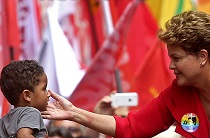
The reelection of President Dilma Rousseff means continuation of the slow growth of the Brazilian economy and a lower likelihood of much-needed, major political and economic reforms. India should lower its expectations on a global partnership with Brazil
 Courtesy: wikimedia
India’s decision to block the Trade Facilitation Agreement at the World Trade Organisation in July was perplexing; the confusion was compounded because India was almost alone in its position. This policy perspective explains the reasons for India’s curious stand
 Courtesy: Wikipedia
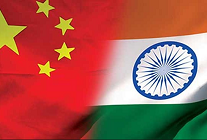
The trade deficit and border issues have usually overshadowed the public discourse between India and China. However, below this surface, bilateral business and financial engagement is growing. India will have to engage judiciously with China to ensure that the resulting geoeconomic benefits remain in our favour
 Courtesy: Gateway House
Indian prime minister Narendra Modi's landmark visit to the U.S. in September 2014 was followed by U.S. President Barack Obama's historic visit to India this month. Anticipating a renewed partnership between the two countries, Gateway House, presents a research paper titled ‘The India-U.S. Partnership: $1 Trillion by 2030’ that advocates a different path for the India-U.S. bilateral from all others, one that will help deepen economic relationship with the U.S.
 Courtesy: Food Corporation of India
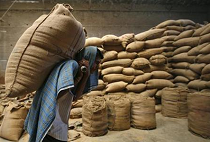
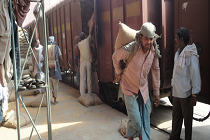
India's refusal to budge on food security has resulted in the World Trade Organization’s failure to reach the first multilateral trade agreement in the last two decades. Having taken a tough stand can India take the lead, among developing countries, in reframing the power equations of globalisation?