Latin America Update, November 2013
In 'Latin America Update' Gateway House lists some of the important events in Latin America over the past month

 Courtesy: Google Maps
In 'Latin America Update' Gateway House lists some of the important events in Latin America over the past month
 Courtesy: Rigues/Flickr
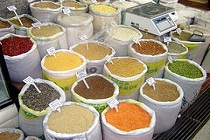
A recent UN report praises governments for promoting the right to food. At the same time, India’s Food Security Act will encounter resistance at the WTO meeting in Bali in December. Can India play an exemplary role in the global power struggle over food security?
 Courtesy: Ministério da Saúde/Flickr
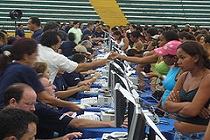
After revelations that the U.S.’s NSA spied on her, Brazilian President Dilma Rousseff has ordered a series of measures to ensure online independence and called for an equitable global internet infrastructure. India can follow Brazil’s lead and make its communication systems less vulnerable
 Courtesy: glaubercavalcante
Like Brazil, many other countries in Latin America have implemented successful poverty-alleviation programmes, including cash transfers, as part of an overall strategy for reducing inequality. These programmes can be a model for other developing countries
 Courtesy: Yassin/Flickr
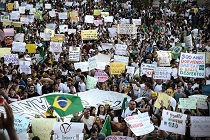
Brazil, despite the presence of good leadership, several consistent and successful development programs, and recording their lowest unemployment rate, witnessed widespread protests this June – triggers for which weren't conventional. What are the Brazilians protesting against, and what does it indicate?
 Courtesy:
In 'Latin America Update' Gateway House lists some of the important events in Latin America over the past month
 Courtesy: Semilla Luz/Flickr
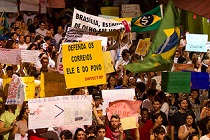
Though Brazil is a vibrant democracy, grievances over inadequate provision of public services and government overspending will not be resolved quickly due to the political disconnect with the needs of the people. Fernando Veloso blogs about the possible determinants and consequences of the protests
 Courtesy: oxfamnovib/Flickr
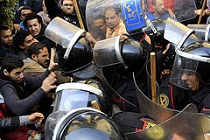
Elections are meant to be a suitable recourse in democracies if citizens feel that the government does not represent them. However, the recent protests in Brazil, Turkey and India show that people feel political classes are too far removed from their every day realities to address their grievances
 Courtesy: Jacques Delarue/Wikimedia Commons
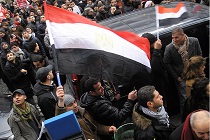
The leaderless protests are upending traditional definitions of leadership and forms of hierarchy. Instead, the protestors are seeking some form of direct democracy and dignity.
 Courtesy: Semilla Luz/ Flickr
The protests in Brazil, Turkey, Egypt and India are bound by a common thread of grievances against misuse of government power and corruption. These modern protests show a marked decline in government trust, even though may not always have clear objectives