Senior Fellow, Energy, Investment and Connectivity
Amit has nearly two decades of experience as a public policy researcher, an entrepreneur and a financial analyst. He is the author of "India and the Changing Geopolitics of Oil (Routlege, 2021), a book that looks at India's changing role in the global oil trade and how it can use this heft to secure energy supplies. He is also the lead author of the report "Chinese Investments in India" (Feb 2020), which looked at China's penetration of India's startup ecosystem. He is the founder of tezbid.com, a numismatic portal.
Amit started his career with the Economic Times, where he tracked the energy sector. He was a part of the start-up team of ET Now, the business news channel. Amit was responsible for setting up India Reality Research, a new research outfit within CLSA India, a stockbroking firm. He has also worked with Deccan Chronicle Group as the business editor for their general dailies.
He holds a Master in Business Administration from IIM- Ahmedabad and a Bachelors degree in Technology from IIT-BHU.
The Mecca Accord between Saudi Arabia, Turkiye and Pakistan has raised some red flags in the region, and in India. One element remains unchanged: India’s value to Riyadh as an energy importer. With demand security holding more weight than supply security in an uncertain future, a major and growing oil importer like India is more important than the cash-for-security arrangement the Kingdom has signed with Pakistan.
The absence of panic in the energy markets despite the renewed U.S.-Iran fighting indicates a well-supplied oil market in the longer term. That means stability for energy short countries like India in the long term. In the short term, however, India will be impacted by other disruptions, such as the increased use of sanctions.
The AI industry in the U.S. is on a high, with three major upcoming public offerings on the table from Anthropic, Open AI and Space X hogging the attention and news. But users are increasingly concerned about costs, and developers are rushing to raise capital. When the effervescence abates, a reduced appetite for AI stocks may eventually see investors return to emerging markets. Can India benefit?
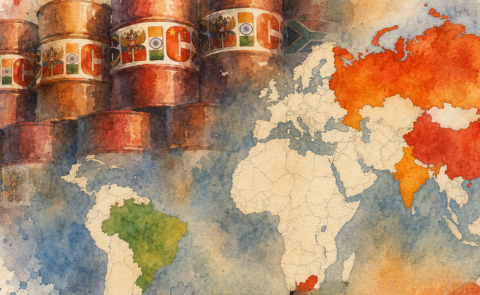
The 2026 Persian Gulf conflict has pushed energy security to the forefront of the BRICS agenda. Divergent national interests prevent the grouping from acting as a unified geopolitical bloc, the growing energy crisis highlights the need for stronger economic cooperation. Proposals such as a BRICS energy reserve, an Energy Stability Fund, and cross-border investments could enhance resilience and be essential if BRICS wants to emerge as a serious economic grouping.
The UAE’s recent exit from OPEC, and the U.S. push to sell more oil to India are markers of a new order in the oil world with demand security at a premium. As a major oil importer, India must respond to it smartly. It must develop deeper partnerships with both the UAE and U.S., and a new financial ecosystem and benchmarks for the new order.
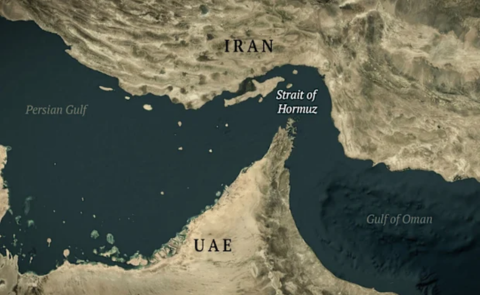
The Persian Gulf conflict has already impacted India’s oil imports and financial security. However, India has not created meaningful options to protect itself from oil shocks over the last decade – and such shocks will continue. Now is the time for India to make equity investments in oil and gas companies in stable economies like the U.S., Canada and Australia, to protect itself from future energy crises.
The war in the Persian Gulf has already caused significant disruption in India’s South Asian neighbours. A prolonged conflict is likely to push the region back into economic and political crises from which it had been hopeful of emerging this year.
Bangladesh’s economy, already weak at the time of the August 2024 coup, has been on a downward spiral since. Banks are insolvent and cannot lend, business confidence is low, and investors are staying out. These issues will worsen the ongoing radicalisation, extremism and violence in the country.
Renewable energy adoption will be much slower than what was being projected earlier, and China’s curbs on rare-earth magnets will slow down the adoption of electric vehicles. Oil will continue to fuel India’s economy in 2026 and beyond.
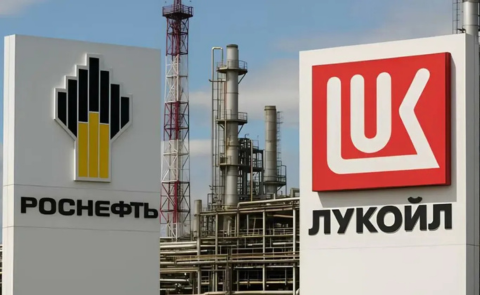
On October 22, 2025, U.S. President Donald Trump imposed sanctions on Russia’s oil giants, Rosneft and Lukoil. The move has clear geopolitical motives—to remove a major supplier from an oversupplied oil market. Indian oil companies, key buyers of Russian crude, now face pressure to cut imports, undermining India’s energy diversification and shaking global oil markets, including the U.S. economy.