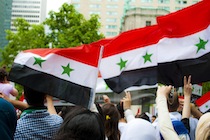
human rights Courtesy: Flickr/tao_zhyn
1 June 2012

Rethinking human rights

The failure of Western military interventions to bring peace raises questions about the effectiveness of human rights and calls for its redefinition. Instead of stigmatizing non-Western democracies that do not necessarily support intervention, the West should initiate an inclusive dialogue with these countries.

Worldpress Courtesy: Worldpress
8 May 2012

Qatar: Geopolitical Cosmopolitanism

Worldpress, an online magazine that fosters the international exchange of information, republished Gateway House's Head of Research Akshay Mathur's article on Qatar. The article discusses Qatar's rising profile and its growing role in international affairs over the last few years.

Courtesy: Flickr/ccqatar
3 May 2012

Qatar: Geopolitical Cosmopolitanism

Over the last few years Qatar has actively participated in world affairs by holding the Presidency of multilateral organizations, hosting international institutions and investing significantly in foreign markets. What does Qatar hope to achieve from its rising profile and its growing role in international affairs?

Myanmar Sanctions Courtesy: Wikimedia Commons/Htoo Tay Zar
1 May 2012

Sanctions on Myanmar: Have they worked?

The West is quick to claim that their sanctions against Myanmar have forced the government to implement political and economic reforms in the country. However, such bans do not usually achieve their stated purpose of forcing regimes to change their behavior.

5825395379_5d725a53f4_z Courtesy: Flickr/freeedomania
21 April 2012

UN: a return to ‘mandated colonialism’

By forcing regime change in Libya, and attempting the same in Syria, and by promiscuously arming disparate groups of Wahabbis and Salafists to achieve this aim, NATO is creating more room for instability in the region. What Syria needs is engagement, not isolation; it needs dialogue and not the arming of rebels.

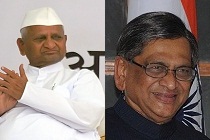
anna hazare 2 Courtesy: nazeah/Wikimediacommons - Ramesh Lalwani/Flickr
30 December 2011

2011’s Top Foreign Policy Cheers and Jeers

The year 2011 saw various events - the Arab Spring, anti- corruption protests, Europe's sovereign debt crisis - transform countries and reshape the world order. Gateway House takes a look at what these events mean for India, and presents India's top foreign policy cheers and jeers for the year.

r2p Courtesy: UN Photo/Paul Banks
6 December 2011

Reconsidering R2P, post-Libya

After the crass misuse of Responsibility to Protect (R2P) in Libya, the broader question is: where is R2P headed? Do the events in Libya herald a more explicit assertion of this doctrine in other parts of the world? And should India rethink its viewpoint towards this ambiguous doctrine?

rsz_4535640306_5e8875d785_z Courtesy: Broddi SigurðarsonFlickr
25 November 2011

Why the UN didn’t respond to 26/11

Today, at the national and regional level, large loopholes still exist in the security system. On the international front, however, there have been a lot more initiatives, yet the apex body of the UN remained silent post-26/11. Were they justified in holding back?