Book review: Brazil’s guided capitalism
Michael Reid's book argues that Brazil, a nation that was built by a top-down elite, is now moving to a new phase of a bottom-up approach to political and economic reform

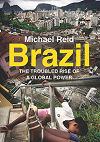 Courtesy: Yale University Press
Michael Reid's book argues that Brazil, a nation that was built by a top-down elite, is now moving to a new phase of a bottom-up approach to political and economic reform
 Courtesy: youtkiawaaz.com
In 2014 the Narendra Modi-led government outlined a neighbourhood-first approach, revitalised traditional ties and invited the world to invest in India’s growth story. But, a new year brings new challenges as well as new goals. Gateway House outlines the priorities for India’s foreign policy for 2015
 Courtesy: gaatha.com
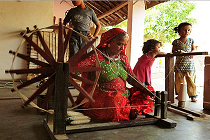
Although the informal and small enterprises sector contributes significantly to India’s GDP, and engages the majority of the country’s workforce, it is barely reflected in official growth numbers. Strengthening this segment will revitalise the economy and substantiate the government’s ‘Make in India’ policies
 Courtesy: MEA/Government of India
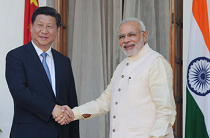
2015 is likely to begin with India-China boundary talks in New Delhi, and strategic analysts believe it can be a unique window—arising out of the new political dynamism in both countries—to resolve the dispute. Besides, if Modi visits China in 2015, it can expedite investments—also making it a big year for bilateral ties
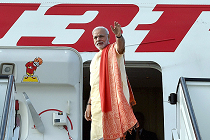 Courtesy: Ministry of External Affairs of India
Prime Minister Narendra Modi had a busy diplomatic calendar in 2014. He travelled to seven countries and met dozens of world leaders in his first six months in office, and received 11 heads of state during that time. Gateway House followed his foreign engagements closely, commenting on them in our weekly newsletter to our members
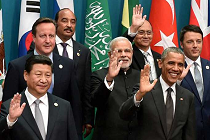 Courtesy: Ministry of External Affairs/GoI
The style and substance of the foreign policies of Narendra Modi’s six-month-old government have been remarkably different from those of his predecessors. Gateway House examines the changes in India’s equations with three critical countries—the US, China and Pakistan—and outlines a foreign policy forecast for 2015
 Courtesy: Wikimedia Commons
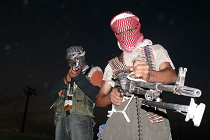
This year has seen a disturbing increase in brutal violence by terrorist groups across the world—the Islamic State in Iraq and Syria, Boko Haram in Nigeria and the Tehreek-e-Taliban in Pakistan. With non-traditional terror targets like Belgium, Canada and Australia also being attacked this year, 2015 could see a more lethal spread of jihadist terror
 Courtesy: Karen Bleier AFP/Getty
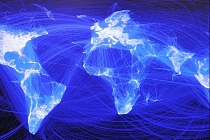
Social media has disrupted how diplomats communicate with each other and the general public. How are diplomats using these platforms? How will future digital tools change the meaning and capabilities of digital diplomacy? Gateway House presents an educational mini-series on digital diplomacy, profiling Indian digital diplomacy, and the future trajectory of digital diplomacy.
 Courtesy: Make in India & Wikimedia commons
From the Indian perspective, how China manages the readjustment of its economy and how secure South Asia remains, will be two major determinants that will influence world affairs in 2015. Gateway House has developed four scenarios to explain the outcomes that will ensue, starting 2015, when these two determinants intersect.
 Courtesy: UN Climate Conference
With the weaker-than-expected agreement at the recent Climate Change Conference at Lima, there is an urgent need to replicate innovative green endeavours in civil society and business for a sustainable global economy with grassroots empowerment