A new, consensual world order
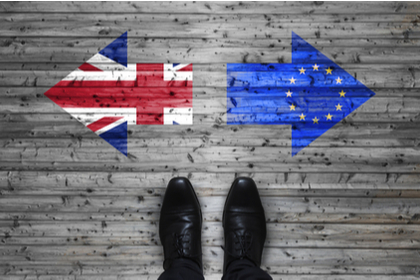
The era of globalisation is drawing to a close and a new one is emerging—an era of bilateralism over globalisation, of domestic over foreign focus, and reality-based policy-making
Courtesy: IB Times
The era of globalisation is drawing to a close and a new one is emerging—an era of bilateralism over globalisation, of domestic over foreign focus, and reality-based policy-making
Courtesy: Systemic Alternatives
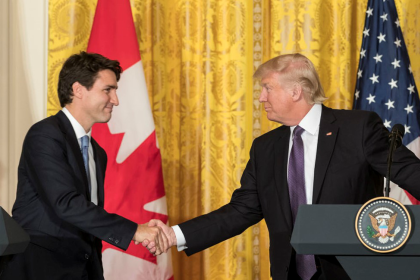
The contours of globalisation are being reshaped. The Brexit vote and the election of Donald Trump mark a strong anti-globalisation sentiment even as leaders in China, India and Russia successfully marry nationalist rhetoric with a cleverly crafted overseas strategy, premised on the very tenets of globalisation. There seems to be a ‘pause’ in the unbalanced progress of globalisation of the last three decades—and this could have many positive outcomes
Courtesy: Gateway House
The year 2016 is the year of the divided electorate, so close were some of the election outcomes. Deep divisions lurk within voters coming from ostensibly “liberal” political cultures. The trend looks set to continue in the elections that will be fought in dozens of countries in 2017, where the votes could also be divided. Gateway House analyses these results through this infographic
Courtesy: Gateway House
Prime Minister Narendra Modi's announcement on November 8 to demonetise notes of the denomination of Rs 500 and Rs 1000 has a precedent. This infographic traces some interesting demonetisation initiatives around the world. From discontinuation of high denomination notes due to lack of circulation, to the use of beer and water as 'real assets' in place of hyper-inflated currency.
Courtesy: NATO/Flickr
In the aftermath of Brexit, the recently concluded NATO Summit highlighted the emerging asymmetry between NATO and the EU on their respective policy positions towards Russia. Has the expansion of NATO and the EU to absorb Eastern Europe, and the consequent large migration flows, been responsible for the visible cracks within the Europe?
Courtesy: MEA / Flickr
The result of the Brexit referendum is nothing less than a body blow to Bretton Woods organisations, International Monetary Fund-North Atlantic Treaty Organisation (NATO)-World Bank, that originated at the end of the Second World War. The possibility of an Asian century becomes more feasible, if India can be nimble enough to make the most of the opportunity which has presented itself in Europe.
Courtesy: Narendramodi.in
Narendra Modi’s landslide victory in India's 2014 general elections, despite his hardline nationalist image, was viewed as a localised phenomenon. But two years later, voters across the world from Europe to Philippines seem to be tilting towards leaders with the same nationalist tag.
Courtesy: Whitehouse.gov
Once the fourth and final global Nuclear Security Summit is held this week in Washington, D.C., the challenge will primarily be for bureaucrats to continue working and keep leaders engaged on nuclear security. Inertia on this issue, especially when there is growing intelligence on security breaches, could be deadly.
Courtesy: COP Paris / Flickr
COP21 is a reality check for those who like to believe that geopolitical power is shifting from West to East. The just-concluded Paris Climate Summit was essentially about the early-to-develop Western powers continuing to exercise almost complete control over global governance structures, largely through the dominance of markets.
Courtesy:
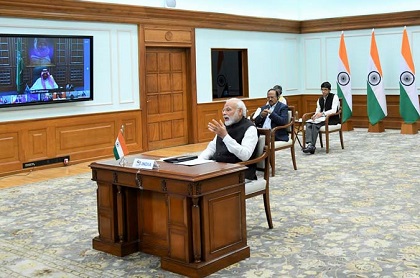
This year, India's defence diplomacy has ramped up. In 2015 alone there have been 18 military exercises- naval, army and air force- with 13 countries, among the largest engagements the country has had. Most significant is Japan joining the Malabar exercises in the Bay of Bengal and the first-ever maritime exercise with Australia. This is increasing India's presence from the Arabian Sea to the Bay of Bengal. As these exercises intensify India will be better positioned to handle regional security challenges.