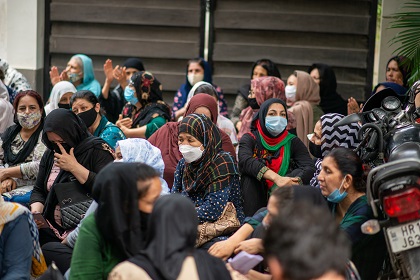
New,Delhi,,India-aug,24,2021:,Group,Of,Afghan,Women,Sitting Courtesy: Shutterstock
27 January 2022

Developing a balanced Indian refugee policy

India has seen a recent influx of refugees from Afghanistan and Myanmar. This has highlighted the absence of a concrete refugee policy in India. India must formalise its approach towards refugees. The Citizen Amendment Act of 2019, is a start. India can move this forward by learning from the examples of other democracies like the U.S., Kenya and South Korea, on how to balance international law with its national security interests.
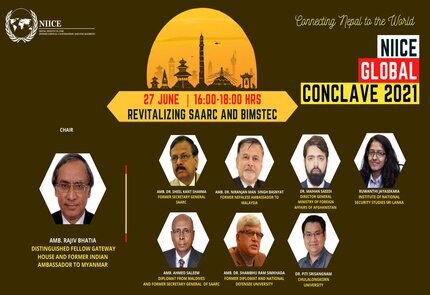
SAARC and BIMSTEC Courtesy: Nepal Institute for International Cooperation and Engagement
1 July 2021

Revitalizing SAARC and BIMSTEC

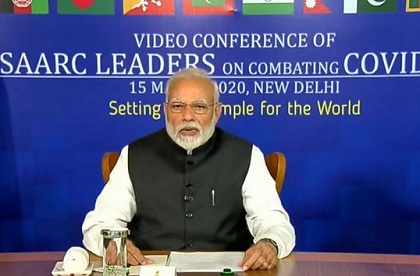
On 27 June 2021, Ambassador Rajiv Bhatia, Distinguished Fellow, Gateway House, chaired a session on Revitalizing SAARC and BIMSTEC. This was part of the Global Conclave 2021, hosted by the Nepal Institute for International Cooperation and Engagement (NIICE), Kathmandu. Bhatia spoke about the present state, past trajectory and future challenges and opportunities for regional and sub-regional cooperation through SAARC and BIMSTEC.

international criminal court: jurisdiction over non-members Courtesy: Shutterstock
8 April 2021

The ICC’s jurisdiction conundrum

On 3 March 2021, the Office of the Prosecutor at the International Criminal Court (ICC) at the Hague, commenced an official investigation into Israel and Palestinian Armed Groups' alleged war crimes committed in the occupied territories of Palestine since July 2014. Palestine, which referred the case, is a member of the ICC, but Israel is not. Does the ICC have any jurisdiction in these cases? Will US support for Israel play a role? The three instances in the table show precedents in similar matters.

shutterstock_1091235845 Courtesy: Shutterstock
15 October 2020

UN: Necessary but reformed

The UN turned 75 this year but instead of grand celebrations, the world witnessed an empty UNGA with world leaders addressing it via video screening because of the pandemic. The UN is under unprecedented stress and being shown up for its inability to tackle the challenges of today like the pandemics, climate change, terrorism or global peace and security. The institution's key governing structures, especially the UN Security Council, are inadequate and demand reform. India must now use gritty resolve to ensure its place in these governing structures.

Sameer Patil-Arc of Border Security-May 11 Courtesy: Gateway House
21 June 2018

Arc of India’s Border Security

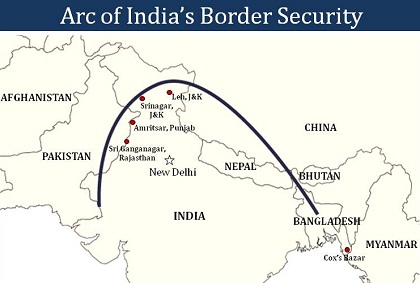
Border regions and communities, some of them far from the heartland, constitute India’s first line of defence, a critical link in its national security. India’s 15,000-km borders touch seven neighbouring countries: Afghanistan (abutting Gilgit), Pakistan, Nepal, Bhutan, China, Bangladesh, Myanmar. Border regions have their own local dynamics, often shaped by subnational and religious identities that do not necessarily align neatly with political borders. Some also serve as flourishing corridors for illegal smuggling of goods and humans. Technology plays an important role in better protecting borders, but in some cases it has made borders obsolete. Despite their importance, border regions do not receive the full attention of the Indian mainstream, except when border tensions arise.

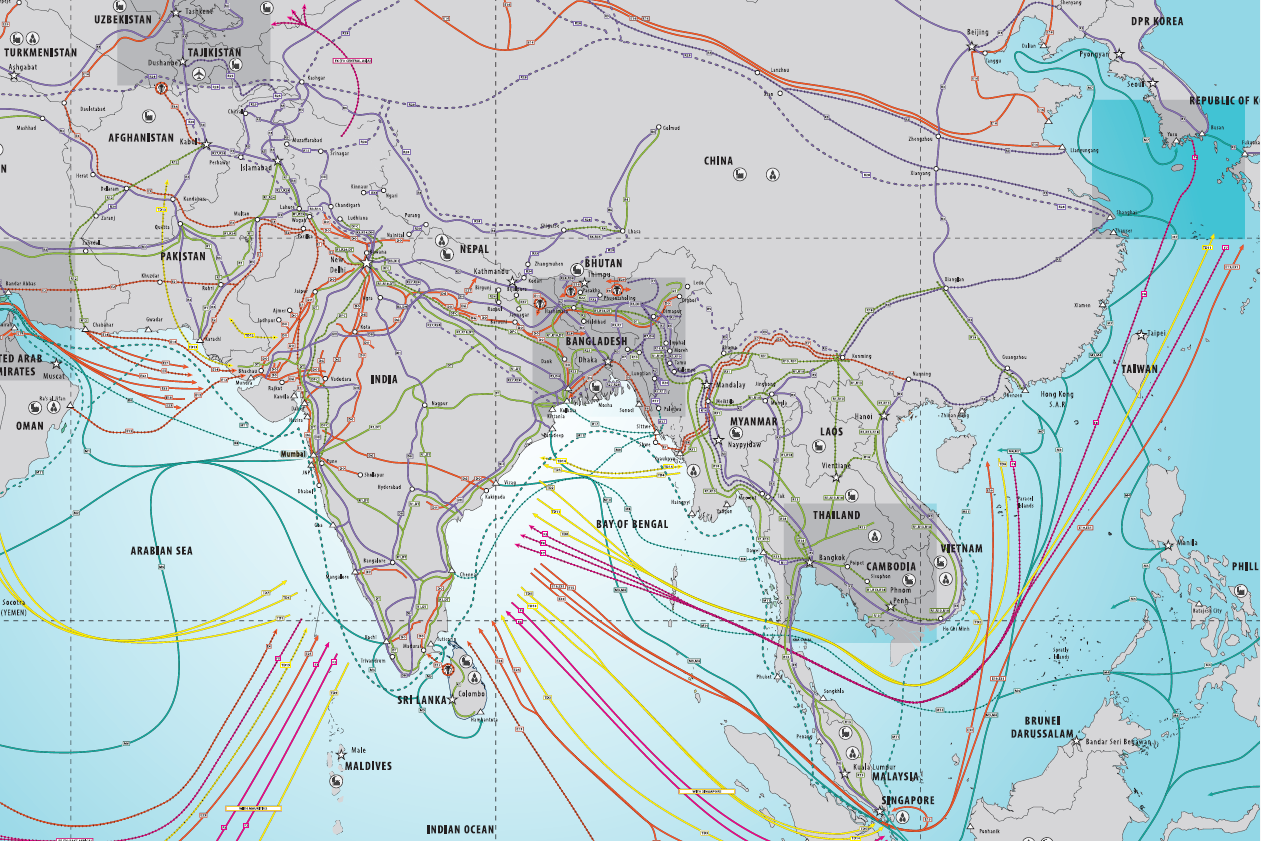
Indian Trade Route Courtesy: Gateway House
4 April 2017

Diversifying India’s trade destinations

India’s global economic engagement, especially with the developing world, has increased in the last two decades, but trade with South Asia has remained low. It holds the potential for building greater productivity and more inclusive growth in India and the region

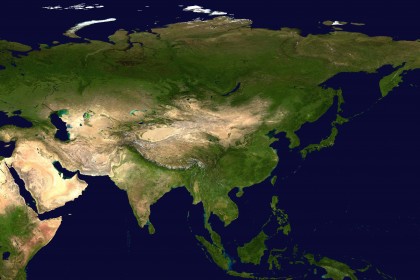
Asia_topic_image_Satellite_image Courtesy: Wikipedia
26 May 2016

Bioregions: India’s strategic imperative

Prime Minister Modi’s term has been marked by a resolve to improve cooperation among South Asian nations. These proactive efforts can bear rich fruit if the Modi government promotes the concept of geoeconomic and geopolitical equations being seen through the lens of bioregions. There are significant precedents which the Modi government can build upon