What really happened in Bangladesh
In the book, The Blood Telegram, the author Gary J. Bass puts the spotlight on the “significant complicity” of U.S. President Nixon and his national security adviser, Kissinger, in Bangladesh's "forgotten genocide"

 Courtesy: Foreign Affairs
In the book, The Blood Telegram, the author Gary J. Bass puts the spotlight on the “significant complicity” of U.S. President Nixon and his national security adviser, Kissinger, in Bangladesh's "forgotten genocide"
 Courtesy: WIkimedia\Commons
Neelam Deo, Director, Gateway House, talks about the implications of the UN tribunal’s recent ruling on the India-Bangladesh maritime boundary dispute. In this interview, she also examines how India can follow up on the decision, what it could mean for our energy imports, and how it will impact global perceptions
 Courtesy:
The rising number of anti-Muslim attacks in Sri Lanka has grave security implications for South Asia, including India. The Mahinda Rajapaksa government must take steps to address the situation immediately, even if it comes at the cost of losing votes
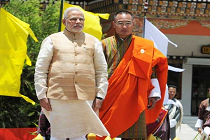 Courtesy: MEA/Government of India
The Narendra Modi government’s first budget comes at a time when the prime minister has been substantially responsive to the world that has reached out to him. It is apparent that the new government will combine politico-strategic concerns with economic advantage
 Courtesy: Wikimedia Commons
The World Bank report highlighting the need for far-reaching reforms in the power sector underlines the necessity for the centre and state governments to arrive at a political consensus. The model of cooperative federalism advocated by Prime Minister Modi has the potential to transform the electricity scenario
 Courtesy: Telegraph.co.uk
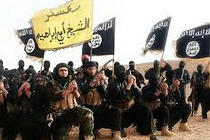
Indian security establishments are closely monitoring developments in West Asia in the wake of the recent threat against India by the Islamic State and the Al-Qaeda. While the possibility of terror violence cannot be ruled out, careful attention needs to be given to the attempts to spread Wahhabi ideology in India
 Courtesy: Ministry of External Affairs
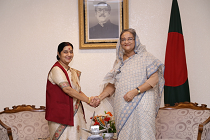
Relations between India and Bangladesh have been limping along a road paved with good intentions, but little action. Will the new government in Delhi make things better or worse for its smaller and weaker neighbour? There are concerns, but there is also optimism, that Prime Minister Narendra Modi may be the man to do business with
 Courtesy: Gateway House
The deliberations during a India-Pakistan young scholars’ workshop in the historic city of Istanbul held out a renewed hope for the bilateral relationship and a genuine desire for peace. The magnificent city of Istanbul offered an excellent backdrop to the serious, often heated discussions.
 Courtesy: MEA
Economic security needs to be defined holistically through an open and democratic discourse. A plurality of perspectives on what constitutes development is essential to democracy across the world. Grass roots protests are driven by a longing for a truly inclusive and fair model of growth.
 Courtesy: MEA/Indian Embassy Thimphu
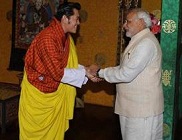
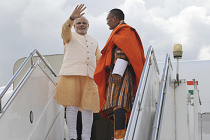
Narendra Modi’s first month in office has seen him deftly handle India’s neighbours, accept an invitation to visit Washington, enhance relations with Bhutan and accord due importance to China. In the same manner, Modi will also have to move quickly and firmly to reassure foreign investors of the dependability of India’s fiscal environment