Passage to India
Prime Minister Modi's prompt acceptance of President Obama's invitation to meet him in Washington shows his clear intent to jump-start India-U.S. relations which gives Obama a unique opportunity to reciprocate

 Courtesy: Foreign Affairs
Prime Minister Modi's prompt acceptance of President Obama's invitation to meet him in Washington shows his clear intent to jump-start India-U.S. relations which gives Obama a unique opportunity to reciprocate
 Courtesy: Foreign Affairs
Why does politics now exercise so much influence over markets? The answer starts with the breakdown of economic growth models that relied on high commodity prices, low interest rates, and other global windfalls
 Courtesy: Foreign Affairs
In the book, The Blood Telegram, the author Gary J. Bass puts the spotlight on the “significant complicity” of U.S. President Nixon and his national security adviser, Kissinger, in Bangladesh's "forgotten genocide"
 Courtesy: Foreign Affairs
The U.S. is focusing on the Asia-Pacific region as part of its rebalancing strategy. However, it will not be able to sustain its leadership in the region through military might alone
 Courtesy: Foreign Affairs
When the average growth rate in emerging markets hit over seven percent a year in the last decade, forecasters hyped its implications. Today, more than five years after the financial crisis of 2008, the euphoria seems to have waned
 Courtesy: Foreign Affairs
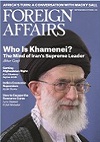
The author argues that Western observers need to entertain the possibility that institutions of democracy, capitalism, and secularism develop exceptional features in non-Western settings
 Courtesy: Foreign Affairs
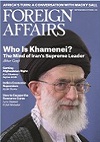
The U.S. needs rethink its tendency to blindly follow the 'COIN' doctrine.
 Courtesy: Foreign Affairs
In Indian politics, caste and religion still matter, but in many states, economic competence now matters more. Things look bad in New Delhi, but the capital is not the whole of India.
 Courtesy: Foreign Affairs
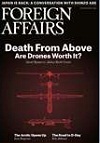
Legal justification and transparency of drone strikes have become a concern for the U.S. In reality, are these targeted killings advancing the strategic goals of U.S. counter-terrorism policy?
 Courtesy: Foreign Affairs
A decade ago, the U.S. immersed itself in the greater Middle East with its wars on Afghanistan and Iraq. Will the current economic scenario force it to turn away from this region?