‘Foreign secretary, you are losing hair!’
Ambassador Rajiv Bhatia, Distinguished Fellow, Foreign Policy Studies Programme, Gateway House, wrote a book review for The Asian Age.

 Courtesy: The Asian Age
Ambassador Rajiv Bhatia, Distinguished Fellow, Foreign Policy Studies Programme, Gateway House, wrote a book review for The Asian Age.
 Courtesy: Arab Today
Ambassador Neelam Deo, Director, Gateway House, was quoted by Arab Today in an article on China, India, and Brexit.
 Courtesy: New Kerala
New Kerala wrote an article on the partnership between Gateway House and Oxford University Press, and its first product, a book by Nish Acharya, Visiting Fellow, India-U.S. Studies, Gateway House.

The partnership between Gateway House and Oxford University Press, and its first product, the publication of a book by Nish Acharya, Visiting Fellow, India-U.S. Studies, Gateway House, was detailed in the New Kerala.
 Courtesy: AFP
Ambassador Neelam Deo, Director, Gateway House, was quoted by AFP in an article on Brexit and the "Asian Century".
 Courtesy: Mint
Rajiv Bhatia, Distinguished Fellow, Foreign Policy Studies, Gateway House, was quoted by Livemint.
 Courtesy: Zee Business
Anoop Singh, Distinguished Fellow, Geoeconomics Studies, Gateway House, was quoted by Zee Business in an article on Brexit and India.
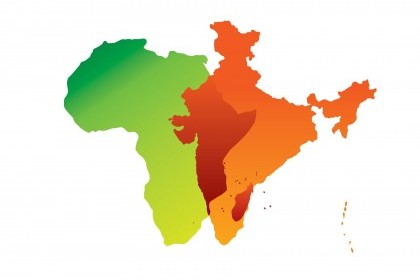 Courtesy: India Africa Forum Summit 2015
Prime Minister Modi’s tour of four African countries will seek to build upon recent high-level visits to the continent, providing fresh impetus for the reinforcement of India-Africa relations in matters of diplomacy, business, security, and energy while putting to rest criticism of India’s visibility deficit in Africa. However, the onus to harness this momentum now lies with other stakeholders.
 Courtesy:
The British referendum to leave the EU has roiled global markets – and revived discussions on gold as a global insurance. Manjeet Kripalani, Executive Director, Gateway House, discusses the role of gold in a post-Brexit world with Vinay Parik, Portfolio Manager for Jeetey Investments.
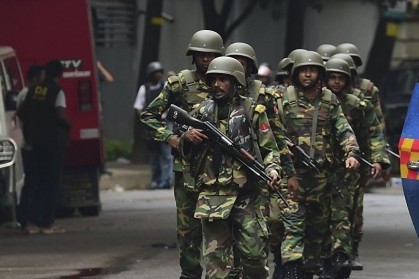 Courtesy: Sputnik News
The recent terror attacks in Dhaka, the capital of Bangladesh, turned the spotlight on the country’s increasingly violent and volatile political situation. The interplay of deep political divisions, the rise of radicalised student politics, religious extremism, which the government has failed to rein in, and the spread of trans-national terror networks has created a toxic cocktail in Bangladesh with dangerous implications for India.