The Paradox of Dynastic Politics in India
Democracy seemed to have won the day. Yet, recent global events raise questions about the future of democracy under the threat of populism, caudillism, and dynastic rule as well as authoritarianism

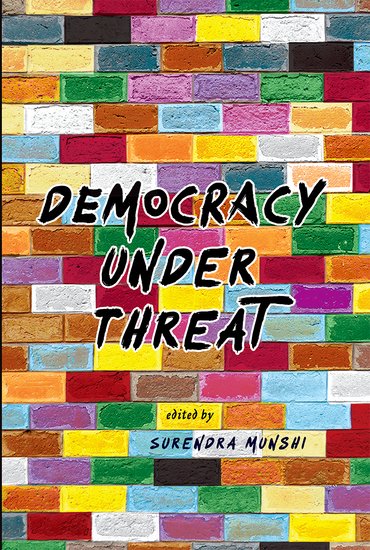 Courtesy: Oxford University Press
Democracy seemed to have won the day. Yet, recent global events raise questions about the future of democracy under the threat of populism, caudillism, and dynastic rule as well as authoritarianism
 Courtesy:
Sameer Patil, Director, Centre for International Security and Fellow, National Security Studies, Gateway House, was quoted in an article published by The New York Times.
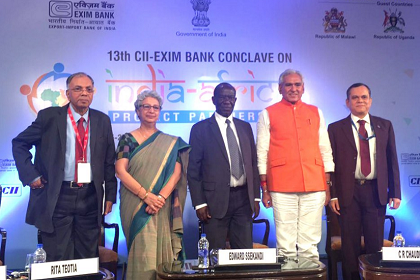 Courtesy: Exim Bank of India
The India-Africa economic partnership lags some way behind the diplomatic reciprocity the two countries share. Africa has had a trade surplus with India in the past decade, but increasing two-way trade of goods and services across sectors calls for serious promotional measures and removal of non-tariff barriers. The government, Indian business and their African partners need to devise an action plan that can take trade to $100 billion and investment to $75 billion by 2022
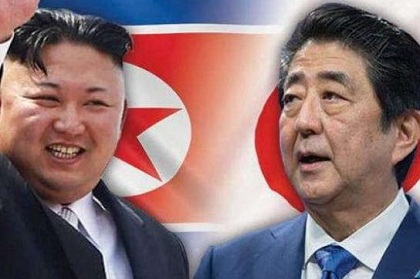 Courtesy: View.mn
North Korea's overtures to its immediate strategic neighbours through a series of summits have excluded Japan, which has long regarded Pyongyang's nuclear weapons and missile development programmes a direct threat. It is reacting by reaching out to the U.S., North Korea and China
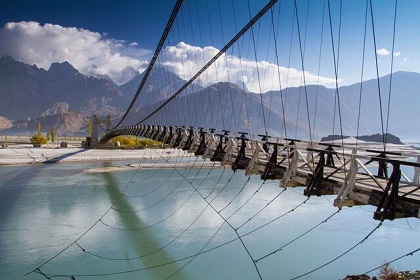 Courtesy: The Third Pole
Pakistan’s economic mismanagement and support for terrorism will leave its economy in a hole – and imperil the multibillion dollar China-Pakistan Economic Corridor
 Courtesy: Wikipedia
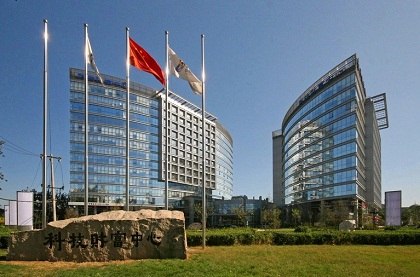
Chinese technology companies that are steadily establishing themselves in India have the potential to transform the scenario for entrepreneurs, consumers and governments even in the face of geopolitical tensions. The Indian government should view this development as an opportunity and an asset
 Courtesy: Gateway House
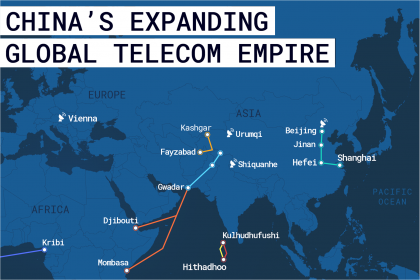
China is steadily deploying state-of-the-art communications systems to connect its strategic and economic assets in Asia. It is then linkingthe Asian mainland to Africa, and Africa to South America. The investment spree is rapidly making Beijing a major player in global telecommunications – and ‘informationisation warfare’.
 Courtesy: Foreign Affairs
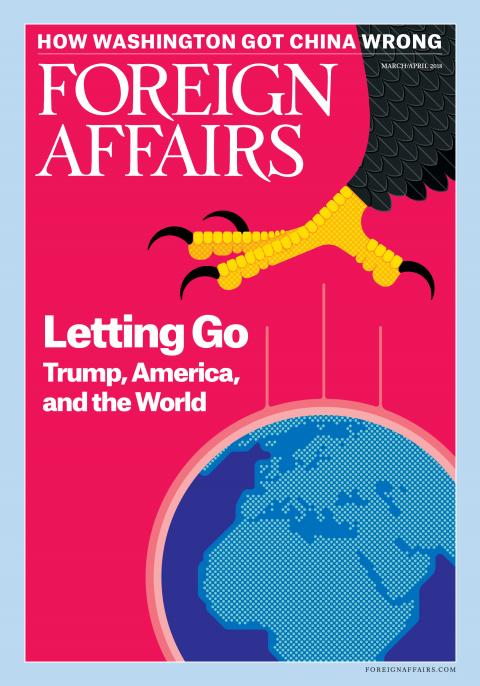
In the aftermath of World War II, the United States set about building a global, rules-based economic order.
 Courtesy: Government Law College
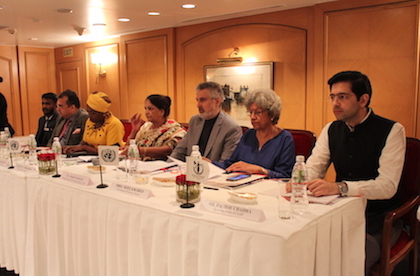
This is a time of transition. A new international order is emerging with many discontinuities--and a collaboration of efforts is needed for it to be better than the one that is fragmenting
 Courtesy:
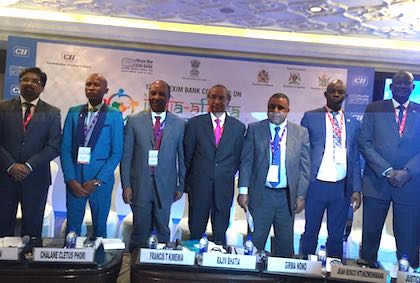
The following speech was given by Ambassador Rajiv Bhatia at the 13 th Africa Conclave: Regional Session on East and Southern Africa on 27 March, 2018. Excellencies and friends, it is a privilege to chair this session. I thank the hosts for this Read more