Pakistani satellites eye India
Pakistan is about to launch two military satellites in June with aid from China. It is pursuing its renewed space programme, using the same clandestine tactics it used for developing its atomic programme

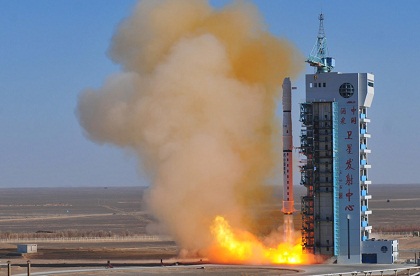 Courtesy: Chinanews
Pakistan is about to launch two military satellites in June with aid from China. It is pursuing its renewed space programme, using the same clandestine tactics it used for developing its atomic programme
 Courtesy: Reuters
Malaysia is in the eye of a different power game today. Fifteen years ago when Mahathir’s last tenure as prime minister ended, the United States loomed over the Asia-Pacific and Malaysia. Today it is an unlikely leader and Mahathir inherits a China-dominated Indo-Pacific and vexed internal politics. What changes in foreign policy will this entail?
 Courtesy: Wikipedia
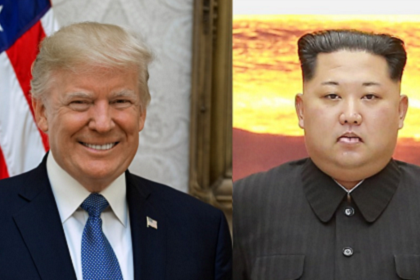
A historic summit is scheduled to take place on June 12. Three participants—the two Koreas and the U.S.—were involved in effecting the rapprochement that has preceded it. And for once, China is playing catch-up. Here is how it came about
 Courtesy: Gateway House
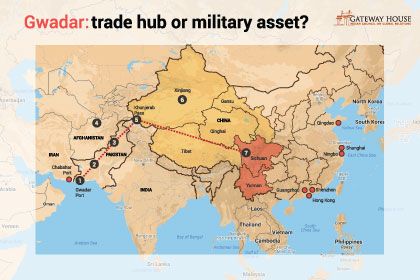
China’s ostensible intentions are to turn Gwadar port into a focal point of the China Pakistan Economic Corridor. But the geography of the region is a major stumbling block in the realisation of these ambitions and raises questions about the project’s underlying motives
 Courtesy: ESO/G. Lombardi (glphoto.it)
Modern astronomy will stimulate scientific, technological, economic and human resource development—all high priorities for India. New Delhi should exploit its proximity to the ‘Roof of the World’ to advance its geopolitical interests
 Courtesy: GovernmentZA/ Flickr
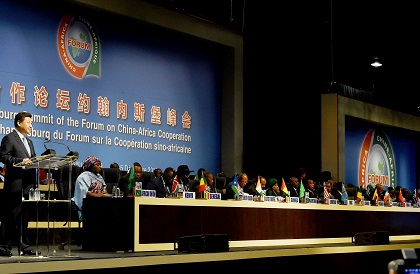
China’s judicious deployment of economic diplomacy—in sectors ranging from infrastructure and agriculture to skill development--has enabled it to develop relations with several African countries. India, Africa’s oldest partner, which is diversifying its own relationship, can replicate parts of China’s approach
 Courtesy: View.mn
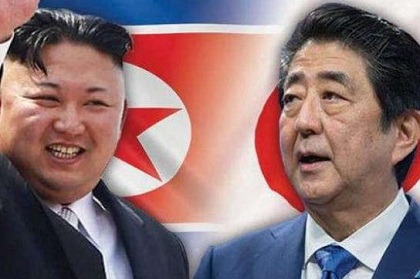
North Korea's overtures to its immediate strategic neighbours through a series of summits have excluded Japan, which has long regarded Pyongyang's nuclear weapons and missile development programmes a direct threat. It is reacting by reaching out to the U.S., North Korea and China
 Courtesy: Wikipedia
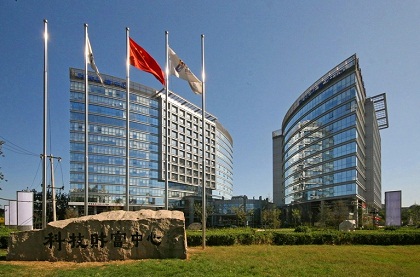
Chinese technology companies that are steadily establishing themselves in India have the potential to transform the scenario for entrepreneurs, consumers and governments even in the face of geopolitical tensions. The Indian government should view this development as an opportunity and an asset
 Courtesy: Gateway House
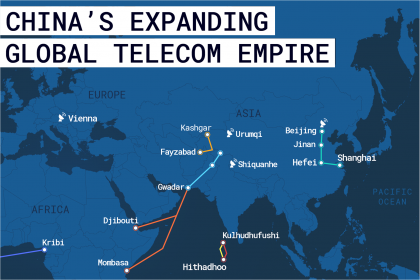
China is steadily deploying state-of-the-art communications systems to connect its strategic and economic assets in Asia. It is then linkingthe Asian mainland to Africa, and Africa to South America. The investment spree is rapidly making Beijing a major player in global telecommunications – and ‘informationisation warfare’.
 Courtesy: Government Law College
This is a time of transition. A new international order is emerging with many discontinuities--and a collaboration of efforts is needed for it to be better than the one that is fragmenting