Iran looms large on Indo-U.S. relations
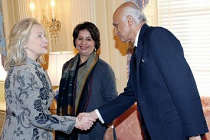
Iran may become a litmus test for India's relationship with the U.S., where New Delhi must deftly balance its strategic relationship with the U.S. along with its energy interests in Iran.

 Courtesy: Indian Embassy
Iran may become a litmus test for India's relationship with the U.S., where New Delhi must deftly balance its strategic relationship with the U.S. along with its energy interests in Iran.
 Courtesy: PMO
India will do well to expand its positive and trust-laden cooperation with Russia in commerce, technology, and education, into a broader regional one, and establish a more meaningful presence in Central Asia. This will also assist in the future acquisition of energy resources in the region.
 Courtesy: VOA - Yuli Weeks/WikimediaCommons
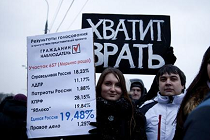
The India-Russia summit in 2011 was sandwiched chronologically between two events that received much greater exposure: the Gita scandal and the Russian protests. Is this a warning sign that Russia’s state-anointed xenophobia and nationalism could act as a dampener for the formerly solid Indo-Russian relationship?
 Courtesy: Yann/WikimediaCommons
Many artists, thinkers and politicians are increasingly threatened, not just in India but in every corner of the world, by those who disagree with them. So what is the implication of Gandhi’s legacy for those of us who oppose such an assertion of ‘might’ over the ‘right’ of free expression and open exchange?
 Courtesy: US Mission Geneva/Flickr
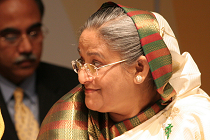
Bangladesh Prime Minister Sheikh Hasina's visit to Tripura marks a turning point in India-Bangladesh relations. The two countries share an extraordinary history, but the key to India's engagement with Bangladesh is through Tripura.
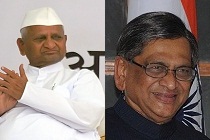
India and Japan have designed their collaborations over the years to be a win-win for both sides. Now, they are willing to collaborate on long-term initiatives, based on intrinsic factors of inter-dependent competencies – rather than on the defence of an extrinsic threat of a common enemy.
 Courtesy: nazeah/Wikimediacommons - Ramesh Lalwani/Flickr
The year 2011 saw various events - the Arab Spring, anti- corruption protests, Europe's sovereign debt crisis - transform countries and reshape the world order. Gateway House takes a look at what these events mean for India, and presents India's top foreign policy cheers and jeers for the year.
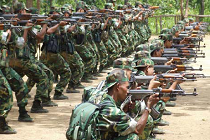 Courtesy: Manipur Police/WikimediaCommons
What have economic blockades in India's North East achieved? For one, they choked off the supply chain of an already isolated region. With Myanmar showing signs of warming towards India, New Delhi must establish ties with its eastern neighbour, but first, it needs to fix Manipur’s broken socio-political landscape.
 Courtesy: Michael Trolove/WikimediaCommons
Growing instability in the region make the planned Turkmenistan-Afghanistan-Pakistan-India (TAPI) gas pipeline seem more like a burden than a solution to India’s hunt for alternative energy sources. Is it wise for India to move ahead with the $7.6 billion project?
 Courtesy: UN Photo/Paul Banks
After the crass misuse of Responsibility to Protect (R2P) in Libya, the broader question is: where is R2P headed? Do the events in Libya herald a more explicit assertion of this doctrine in other parts of the world? And should India rethink its viewpoint towards this ambiguous doctrine?