global-commons-870_0 Courtesy: Global Environment Facility
15 August 2018

India in the Global Commons

Since Independence, India has been consumed by its domestic priorities. Now, with increasing integration with the world and a huge stake in global stability, it is time to focus on the global commons. India has a seat on the hightable to design and shape the rules for the governance of the global commons. In this special Independence Day Briefing, Gateway House examines India’s engagement with four global commons – technology, outer space, cyber and the oceans – and makes recommendations on how best they can be governed for our collective future.


IMG_6681 - Copy Courtesy: Gateway House
12 July 2018

China’s focus on stability

Yuan Peng, Vice President, and Dr. HU Shisheng, director, respectively of the Institute of South & Southeast Asian and Oceanian Studies, China Institute of Contemporary International Relations, Beijing, spoke to Gateway House about working towards ‘the final goal of denuclearisation’, India-China relations since the Doklam stand-off and addressing security concerns raised by the Belt and Road Initiative

Energy Intelligence logo Courtesy:
27 April 2018

India’s Iran Conundrum

“It will be the jump in crude prices that will trouble India more,” said Amit Bhandari, Fellow, Energy & Environment Studies, Gateway House, to Rakesh Sharma at Energy Intelligence, elucidating upon the possible implications for India if the Iran Deal Read more

Snapshot-Energy Map Courtesy: Gateway House
4 January 2018

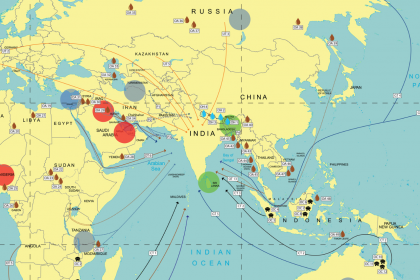
India’s opportunity in high energy prices

India has benefited from three years of low petroleum prices. The tide is now turning, with oil moving from a benign $50 to $70 a barrel. This is a good time for it to start using financial instruments and asset purchases, as other countries do, to protect itself against further price rises

Bin_Salman__Reuters_ Courtesy:
9 November 2017

Saudi purge: Arab Spring 2.0?

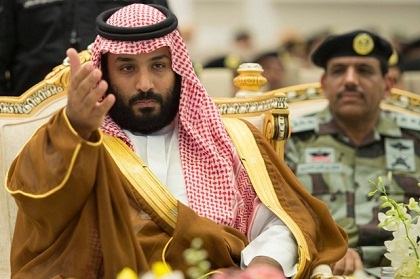
The removal of 11 top ministers in the Riyadh government last week by the young crown prince Mohammad bin Salman, is a geopolitical upheaval, the implications are serious. Domestically, the kingdom is seeking to liberalise its conservative society and move away from oil-dependency – evident from the expected listing of its crown jewel Aramco. For India, which imports oil largely from West Asia, instability could cause a spike in prices, leaving less for its ambitious reforms. Globally, there is now space for new alignments – in the Great Power plays, in the Shia-Sunni rivalry, and in the war on terrorism.