ANI Courtesy: ANI
14 August 2025

Is Russia a Red Line for India?

U.S. President Trump will meet Russian President Putin on August 15. A positive outcome may mean removal of punitive U.S. tariffs on India for buying Russian oil and resolving its dilemma of placating a partner country with growing commercial, geopolitical and defence ties, or pursuing strategic autonomy, keeping its old friends and take an economic hit? Is Russia the red line for India?
Business Today (1) Courtesy: Gateway House
26 June 2025

Unfolding Geopolitics Episode 19 | Global gaze on terrorism

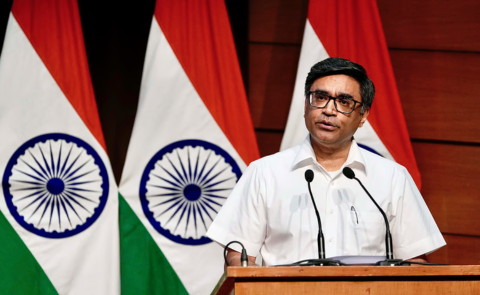
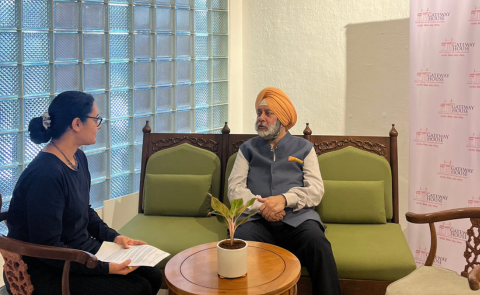
As part of India’s diplomatic outreach after Operation Sindoor, Ambassador Manjeev Singh Puri and his delegation visited Spain, Greece, Slovenia, Latvia and Russia. He spoke to Gateway House on how the thinking of countries needs to coalesce so that the global gaze is not just on terrorism but on Pakistan, which should be pressured to understand that the price for terrorism is far beyond what it can afford.

Joint Statement from the Quad Foreign Ministers’ Meeting in Washington Courtesy: U.S. Embassy & Consulates in India
19 June 2025

Reappraising QUAD post Pahalgam

The July 2 meeting of the QUAD foreign ministers in Washington, D.C., restated all the commitments of the grouping, including a condemnation of the April 22 terrorist attacks on Pahalgam. Yet, none of the QUAD countries actually came to the aid of India, despite China being a present player in the fight, in full support of its partner Pakistan.

The New Indian Express Courtesy: The New Indian Express
19 May 2025

Post-Pahalgam diplomacy

Studying the reaction of key stakeholders to the India-Pakistan conflict, and how India’s diplomatic machine coped with it, is revealing. Some of the major powers like the U.S., raised the temperature, China expectedly stood by Pakistan while Russia once again proved a dependable friend. Unsurprisingly, South Asia had a consistently neutral stance toward the conflict.

Website articles  (5) Courtesy: PTI
9 May 2025

Three messages from Operation Sindoor

Operation Sindoor conveyed three messages: First, to Pakistan that it will have to bear the consequences of continuing to support terrorism. Second, to terrorists, that Bharat will inflict the same pain, if not more, than they inflict on Indian citizens. Third, to the world, that Bharat is resolute in responding to terrorism in a “measured, non-escalatory, proportionate, and responsible” manner.

Website articles  (4) Courtesy: Agence France-Presse
8 May 2025

Pakistan’s clash of ideology and identity

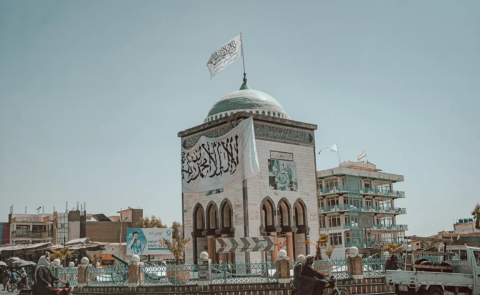
The on-going India-Pakistan tensions have obscured the grave issues Pakistan is facing on its western frontier with Afghanistan. The resurgence of Pashtun nationalism, the long-running Baloch insurgency and the growing resentment over Punjabi dominance is challenging Pakistan’s identity and ideology as protector of Islam. The Taliban under the Emir in Kandahar holds far greater moral authority than any general in Rawalpindi.

Website articles  (3) Courtesy: Agence France-Presse
8 May 2025

How China can assist Pakistan post Pahalgam

India-China relations, undergoing a thaw since October 2024, have been slow to mend. In this scenario it is worth examining what assistance China can give Pakistan in case of military action by India, post Pahalgam. The state of play on the India-China border will also have a major implication for this.

jirga Courtesy:
16 October 2024

Pakistan’s provinces demand electricity equity

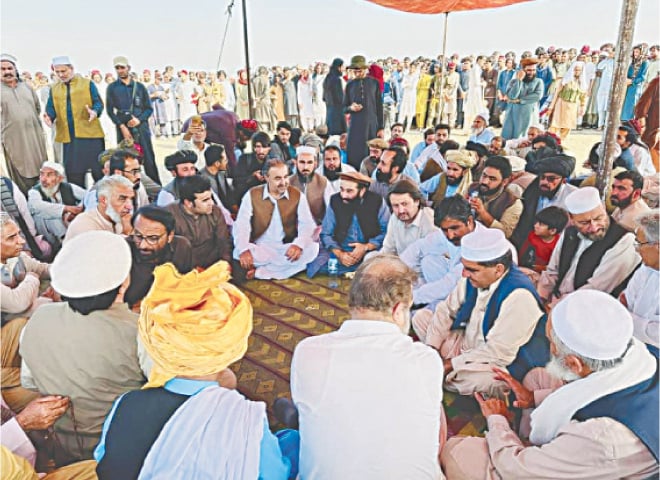
In the backdrop of the Shanghai Cooperation Organisation summit being held in Islamabad this week, is a restive state and peoples. Three high profile attacks in just a week were followed by a show of defiance from the large Pashtun community, demanding political equity – but also electricity concessions. The military has been stepping in to resolve commercial power deals, underlining the criticality of this issue in Pakistan.

Anger mgmt Courtesy: Amazon India
22 February 2024

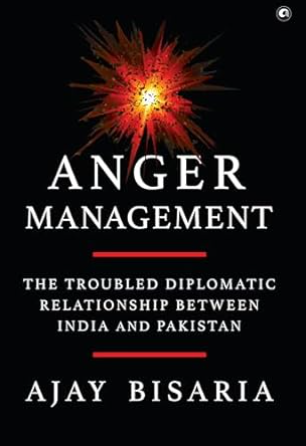
Anger Management: The Troubled Diplomatic Relationship between India and Pakistan

A new book on India-Pakistan relations by former High Commissioner Ajay Bisaria, brings his practitioners’ knowledge to the fraught bilateral. He reiterates that the determining factor is still Pakistan’s quest for identity based on territory and security, and the paranoia of the Pakistani army. The book contains fascinating insights about his predecessors’ suggested solutions and lays out three scenarios for the future.