Chinese manoeuvres further confounding Middle East
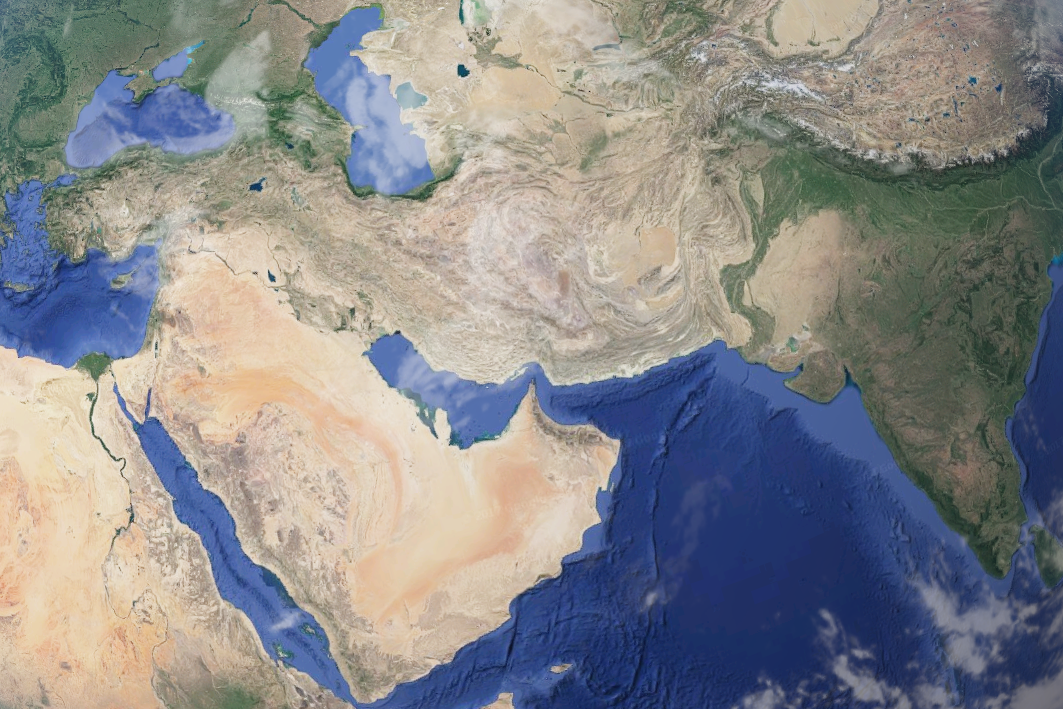
A conference in Doha on ‘Enriching the Middle East’s Economic Future’ offered many insights into the nature of geopolitical relations in the region and India’s significant role in it

 Courtesy: to put
A conference in Doha on ‘Enriching the Middle East’s Economic Future’ offered many insights into the nature of geopolitical relations in the region and India’s significant role in it
 Courtesy: MEA/Flickr
Regional groupings in South Asia have turned out to be like diligent pupils whose report cards show performance below par. The reasons for such an impasse range from political divergences to the economic downturn and the much talked about China factor that has many implications for India
 Courtesy: Narendra Modi Official/ Flickr
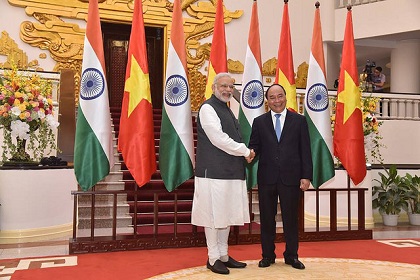
Vietnam has the highest level of bilateral relationship—or ‘Comprehensive Strategic Partnership’—with three countries: China, Russia and India. It envisages a much more active role in the region for India, but many factors mar such a development currently
 Courtesy: Arjun Chawla
This speech was delivered by Rajiv Bhatia, Distinguished Fellow, Foreign Policy Studies, Gateway House, at the Delhi Dialogue 9, for the session on Regional Geopolitics: Great Power Politics in Asia -Pacific in Delhi on 4 July
 Courtesy: Gateway House
The Modi government’s shift in policy since 2014 has not been a merely semantic one: the prime minister systematically enlarged the scope of the Look East Policy to include the whole of East Asia and not just the ASEAN. He showed his keenness to enhance trade and investment ties and took a stand on key issues, such as the regional security architecture. With the geopolitical situation in a state of flux, India has to now redesign its policy to develop a multi-dimensional relationship with ASEAN and ensure peace in East Asia.
 Courtesy: MEA/ Flickr
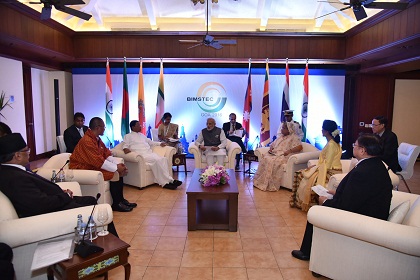
This regional grouping, which was envisioned as a potential bridge between SAARC and ASEAN, turns 20 on June 6. It achieved very little until last year, when efforts to revive its original mission began quite by accident. It has the potential to make greater strides if member states adhere to their commitments.
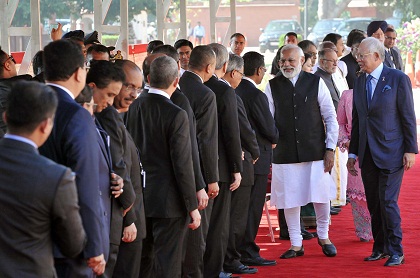 Courtesy: MEA/ Flickr
India views its ties with Malaysia as a core element of its Act East Policy, while the Malaysian leadership has taken note of India’s geopolitical importance and the many attractions of its market Both nations share a strong commitment to multiculturalism, democracy and inclusive development
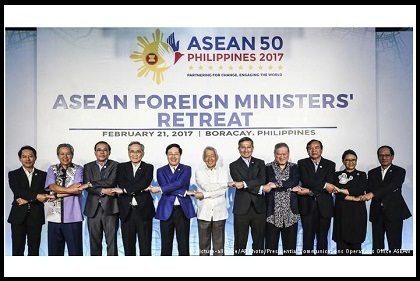 Courtesy: Deutsche Welle
This regional grouping of 10 nations, which observes its golden jubilee year in 2017, has come a long way from the Cold War era when it was founded, making a significant contribution to peace, security and prosperity. Now, its future prospects and “centrality” look uncertain amidst the region’s changing geopolitics
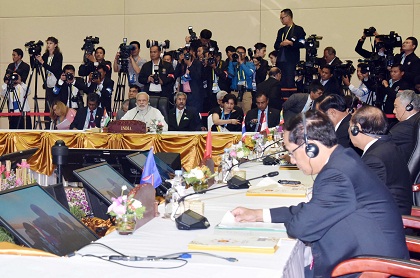 Courtesy: MEA/flickr
The year 2017 may change some equations in the East Asian region. Will the near parity that the U.S. and China currently share turn into a keener contest? Will strained relations between India and China persist? Donald Trump’s election as the next U.S. president casts the spotlight squarely on these inter-state relationships
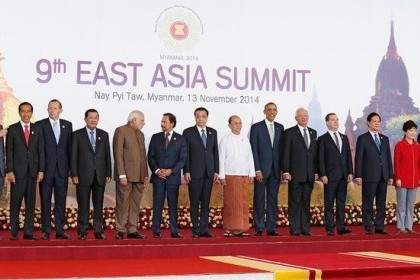 Courtesy: Russian Government
At a time when New Delhi is beginning to not just ‘Look East’ but also ‘Act East’, and when parallel integrative processes are underway globally, including the ASEAN-led process, the incipient China-led process and the U.S.-led TTP, India and ASEAN could together produce a brilliant new era of Asian integration