India’s foreign policy priorities 2015
Gateway House's article on India's foreign policy priorities for 2015 was republished by The Political Indian

 Courtesy: The Political Indian
Gateway House's article on India's foreign policy priorities for 2015 was republished by The Political Indian
 Courtesy: The Diplomat
The style and substance of Narendra Modi’s foreign policies have been very different from those of his predecessors. The Diplomat republished Gateway House's article analysing Modi's outreach in 2014
 Courtesy: Fair Observer
Gateway House's article on India's foreign policy priorities for 2015 was republished by Fair Observer
 Courtesy: khabrsoutheastasia
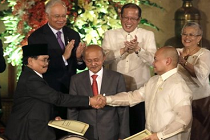
The Islamic State’s violence dominated 2014’s news headlines, masking important non-violent initiatives around the world. But endeavors for peaceful solutions are thriving, and India, with its legacy of a non-violent freedom struggle, must contribute to this process as a counter-force against the advocates of violence
 Courtesy: wikimedia.org
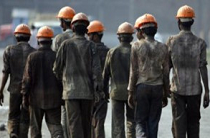
The five-day strike threatened by Coal India’s unions has driven home the risks India faces due to excessive dependence on a single company. The Indian economy needs to be secured against such blackmail by diversifying—using more gas and hydropower, and by getting other public sector firms such as NTPC into coal mining
 Courtesy: Quartz India
Gateway House's analysis on China's readjustment of its economy and how secure South Asia remains was republished by Quartz India.
 Courtesy: psychotropicon.info
Cyber crime has transcended hacking and other online illegal activities—the black markets of the “hidden” internet are now a potent threat. This “darknet” is used by illicit traders, saboteurs and terrorist groups—with serious financial and security implications for the Indian government and business sector

Ambassador Navdeep Suri explains why its ever-more important for diplomats and governments to be present and active on social media, as terrorist organisations such as the Islamic State use the digital media to disseminate their propaganda.
 Courtesy: globalsherpa.org
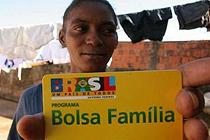
The Indian government has undertaken a massive financial inclusion scheme to bring bank accounts to the poor. But poverty alleviation needs to be addressed at multiple levels for which the Latin American example of using targeted and customised conditional cash transfer programmes can help India
 Courtesy: Yale University Press
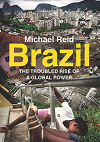
Michael Reid's book argues that Brazil, a nation that was built by a top-down elite, is now moving to a new phase of a bottom-up approach to political and economic reform