Why Military Assistance Programs Disappoint
Since the end of World War II, U.S. administrations of both parties have relied on a time-honored foreign policy tool: training and equipping foreign militaries.

 Courtesy: Foreign Affairs
Since the end of World War II, U.S. administrations of both parties have relied on a time-honored foreign policy tool: training and equipping foreign militaries.
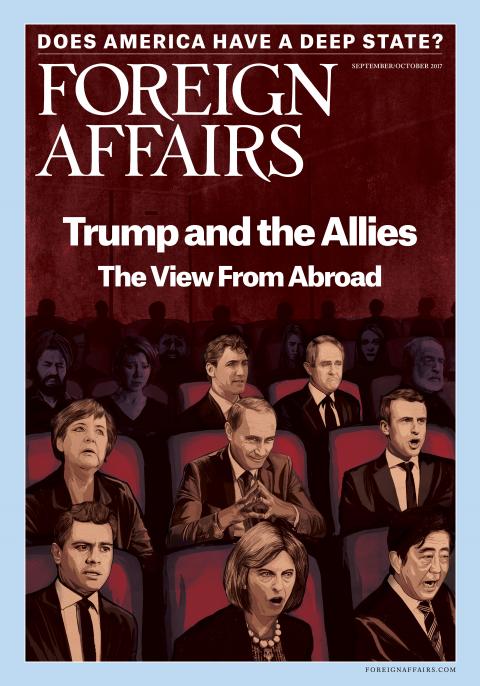 Courtesy: Foreign Affairs
Donald Trump, the 45th president of the United States, has a point about Europe and NATO.
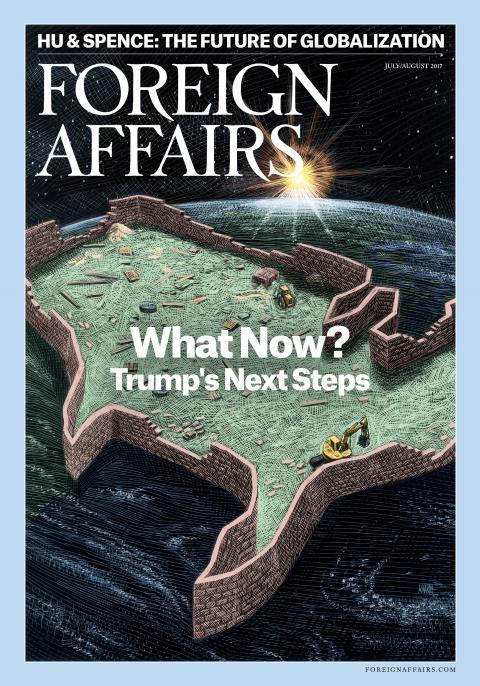 Courtesy: Foreign Affairs
For decades, Israeli and Palestinian politicians have pursued a political solution to the Arab-Israeli conflict, only to see their hopes dashed again and again.
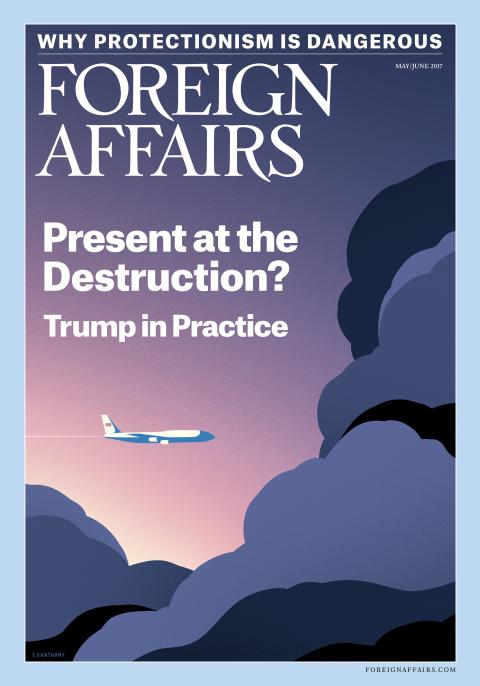 Courtesy: Foreign Affairs
The global recovery from the Great Recession of 2009 has just entered its eighth year and shows few signs of fading.
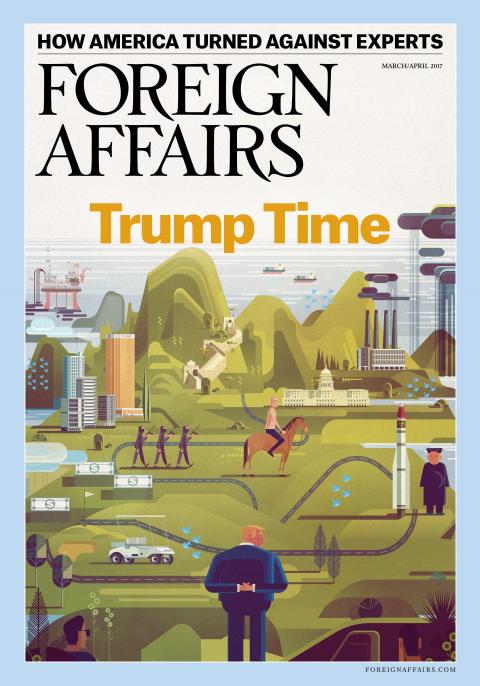 Courtesy: Foreign Affairs
For decades, outsiders have thought of China as a country where religion and faith play marginal roles.
 Courtesy: Foreign Affairs
During the nineteenth century, the United States played a minor role in the global balance of power.
 Courtesy: Foreign Affairs
Foreign policy experts have long been taught to see the world as a chessboard, analyzing the decisions of great powers and anticipating rival states’ reactions in a continual game of strategic advantage.
 Courtesy: Foreign Affairs
Brazil has rarely had it so bad. The country’s economy has collapsed: since 2013, its unemployment rate has nearly doubled, to more than 11 percent, and last year its GDP shrank by 3.8 percent, the largest contraction in a quarter century.
 Courtesy: Foreign Affairs
Over the past two decades, Germany’s global role has undergone a remarkable transformation. Following its peaceful reunification in 1990, Germany was on track to become an economic giant that had little in the way of foreign policy.
 Courtesy: Foreign Affairs
The push for ubiquitous surveillance may, oddly enough, result in greater transparency of state practices as the gaps between rhetoric and reality become more visible.