World Lauds India’s Global COVID Role
Our Executive Director and co-founder, Manjeet Kripalani was featured on the Debate by Arnab Goswami. Watch the show here.

 Courtesy:
Our Executive Director and co-founder, Manjeet Kripalani was featured on the Debate by Arnab Goswami. Watch the show here.
 Courtesy: MEA/Flickr
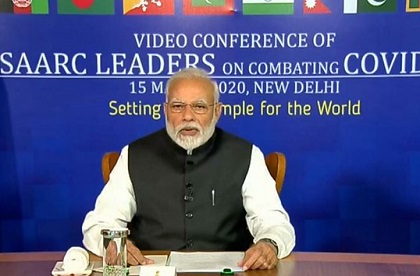
The first-ever virtual summit of leaders from member-states of the South Asian Association for Regional Cooperation on March 15 was an innovative exercise in showing solidarity in containing a pandemic. Here is an assessment of its tangible outcomes – and longer-term ways to prepare for SAARC’s revival
 Courtesy: Shutterstock
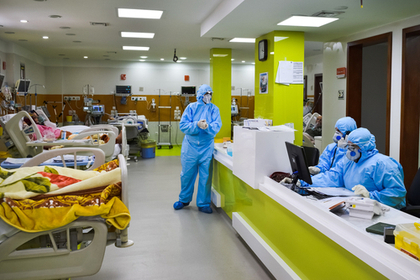
Iran is reeling from the Coronavirus Disease (COVID-19), with no access to medicine or equipment due to severe sanctions, the continuing uncompromising position of world powers, and an ill-advised regime
 Courtesy:
Amit Bhandari, Fellow, Energy and Environmental Studies, Gateway House was quoted in The Economic Times. Read the article here.
 Courtesy: Shutterstock
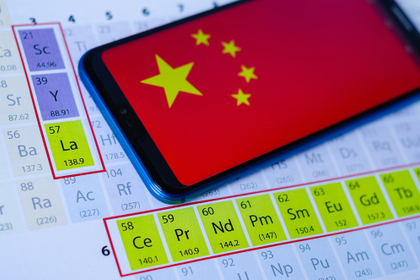
The second-most important issue on everyone's mind after the Coronavirus, is Rare Earths - those metallic elements like scandium and cerium, used in every aspect of modern electronics like our cell phones, rechargeable batteries, florescent lighting. The reason is: China. China has the world's largest deposits and production of rare earths, and has not hesitated to withhold its export to countries that disagree with it in the past.
 Courtesy: Ministry of External Affairs
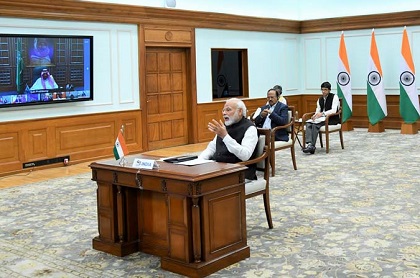
COVID-19 unified G20 leaders at an extraordinary summit last week. An idea given a nudge by Prime Minister Narendra Modi, here was an opportunity for all participants to put together a plan and make a pledge for international cooperation, focusing on four main themes. Next, will they be able to turn words into action?
 Courtesy: Shutterstock
The pandemic has highlighted the positive role of 3D-printing technology. Identifying this potential, and seeking to insert India into the new global value chains, the Ministry of Electronics, IT & Technology has announced a National Strategy for Additive Manufacturing. It will address the lacunae in the country's additive manufacturing ecosystem, including physical hardware like printers, software, materials and service providers.
 Courtesy: Lovneet Bhatt
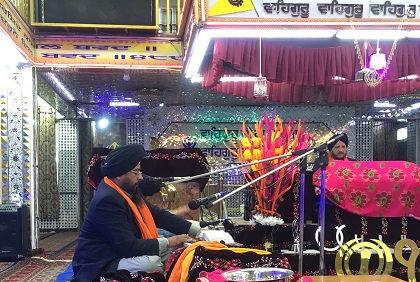
The 25 March 2020 attack on a Sikh gurudwara in Kabul focused world attention on the plight of Afghanistan’s indigenous Sikh and Hindu minorities, the target of both local lawless elements and religious fundamentalists. They once were a significant part of Afghanistan’s principally Muslim population and a mark of its cultural syncretism and religious pluralism
 Courtesy:
Sagnik Chakraborty, Researcher, Cybersecurity Studies, Gateway House was featured in NPR. Listen to the show here.
 Courtesy: Shutterstock
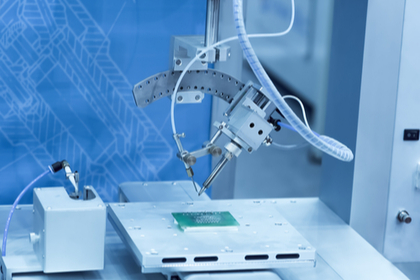
The COVID-19 pandemic has exposed the deficiencies of India’s precision instrument import-dependency and the global supply-chain vulnerabilities of international high-tech manufacturing giants. New Delhi can incentivise such companies to manufacture under the Make in India and Assemble for the World in India programmes