Key GST lessons from the world
The long march to implement the long-awaited Good and Services Tax in India has just begun. It is instructive to understand how other countries introduced this tax and cherry-pick lessons from their experiences

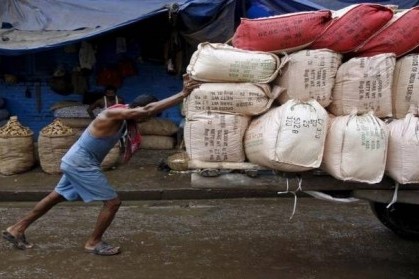 Courtesy: Reuters
The long march to implement the long-awaited Good and Services Tax in India has just begun. It is instructive to understand how other countries introduced this tax and cherry-pick lessons from their experiences
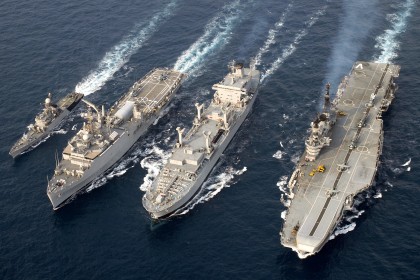 Courtesy: http://nausena-bharti.nic.in/
With the 21st century being heralded as the 'century of the seas', there is much need for India to reclaim its historically dominant maritime position in civilian and military endeavours.
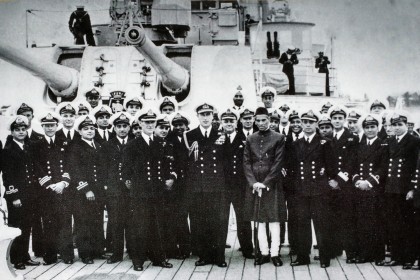 Courtesy: A Salute to the Sword Arm
15 August 1947 saw the division of more than a country. There were other spoils that were split: the Royal Indian Navy was one of them. This included not just a division of assets, but also of staff, whom the British Royal Navy had trained. This led to a piquant situation
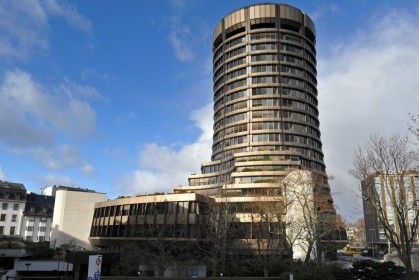 Courtesy: Quartz
Regulations are the new focus of economic statecraft. Their increasing importance is reflected in the negotiations on global financial standards, plurilateral trading rules, and regional economic unions.
 Courtesy:
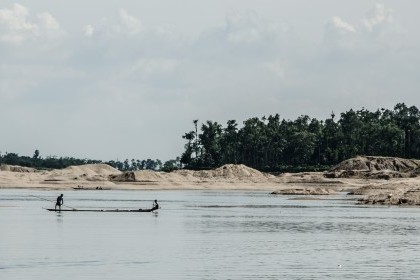
India's North Eastern States are part of one of the largest fluvial regions, they share this region with five other nations. At a recent conference, held on the sidelines of the the Nadi Festival in Shillong, the message of 'Listen to the dignity of the river' struck a chord with all present, and is a message which should be carried across the region.
 Courtesy: Livemint
Indian infrastructure financing has for long suffered from rating concerns, but recent changes to credit enhancement are helping to plug this gap, enabling investment by foreign insurance and pension companies, and stimulating project exports.
 Courtesy: Wikipedia
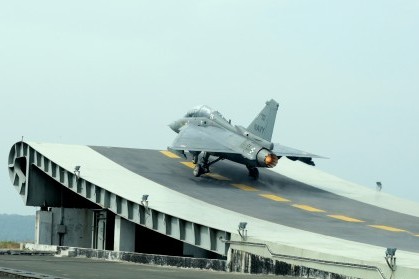
‘Make in India’ in defence production does not imply stopping arms imports altogether. Rather, it means importing only those components that cannot be produced locally, while strategically utilising offsets and building domestic capabilities that will enable India to export complete systems and sub-systems as an active participant of the global supply chain.
 Courtesy: India Africa Forum Summit 2015
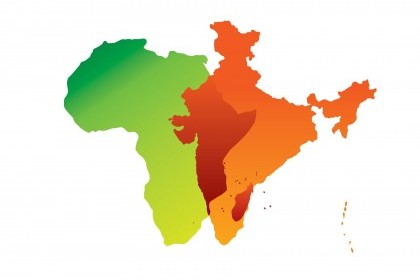
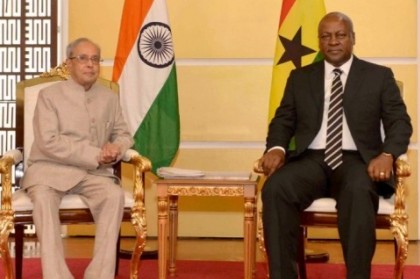
Prime Minister Modi’s tour of four African countries will seek to build upon recent high-level visits to the continent, providing fresh impetus for the reinforcement of India-Africa relations in matters of diplomacy, business, security, and energy while putting to rest criticism of India’s visibility deficit in Africa. However, the onus to harness this momentum now lies with other stakeholders.
 Courtesy: Sputnik News
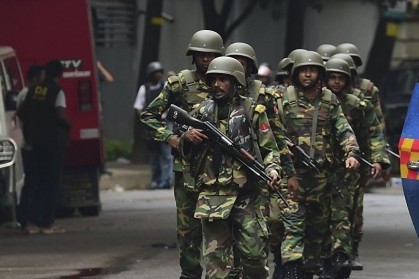
The recent terror attacks in Dhaka, the capital of Bangladesh, turned the spotlight on the country’s increasingly violent and volatile political situation. The interplay of deep political divisions, the rise of radicalised student politics, religious extremism, which the government has failed to rein in, and the spread of trans-national terror networks has created a toxic cocktail in Bangladesh with dangerous implications for India.
 Courtesy: The First Mail
India now sees Africa as a promising market for Indian goods, services, and investments. This is evident in the government’s recent concerted focus on the India-Africa relationship—high profile visits by top leaders to African countries, a recasting of India’s development diplomacy, and an attempt to match action to past promises