A new, consensual world order
The era of globalisation is drawing to a close and a new one is emerging—an era of bilateralism over globalisation, of domestic over foreign focus, and reality-based policy-making
Courtesy: IB Times
The era of globalisation is drawing to a close and a new one is emerging—an era of bilateralism over globalisation, of domestic over foreign focus, and reality-based policy-making
Courtesy: The Wire
China has launched the One Belt, One Road (OBOR) Initiative in an attempt to rebuild the ancient Silk Road with proposed land and sea routes to promote infrastructure, trade, and investment in the regions that it will thus connect. The challenge will be to attract private financing to support the official and multilateral ones
Courtesy: Wikimedia Commons
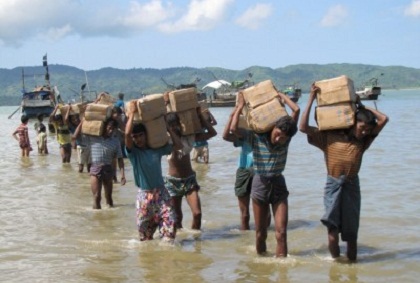
Even nearly 70 years after independence, the people of Myanmar are struggling to complete nation-building and resolve the Rohingya issue. Is the million-strong community an ethnic group native to Myanmar or is it of South Asian origin, and, therefore, a part of Bangladesh? Evading the issue may not hasten national reconciliation
Courtesy: Flickr
Prince Salman’s accession to the throne after the death of Saudi King Abdullah on 23 January 2015 has been a game changer, both domestically and in West Asian politics. Within days, he sidelined rivals within the House of Saud, and took on Iran with a confrontational policy. But two years later, the results of his new strategy disappoint
Courtesy: MEA/Flickr
The West Asian monarchies are being forced to ‘look East’ due to a range of factors: the rise of the Islamic State, their need to boost falling oil revenues and doubts about the United States continuing to remain a guarantor of regional stability. Quite coterminously, India is looking towards the Gulf for energy security besides fulfilling other geostrategic goals: this is an ‘East’ and ‘West’ where the ‘twain will meet
Courtesy: MEA flickr
The choice of the Crown Prince of the United Arab Emirates (UAE) to be the chief guest at India’s 2017 Republic Day celebrations is an indication of the enhanced attention that the Indian government is according the Gulf countries. Many trade interests ally India to the UAE, but a deeper engagement is called for even as instability grows in the region
Courtesy: Wikimedia Commons
The first ever summit of the Indian Ocean Rim Association, to be held in Indonesia in March 2017, will cast light on how India and other like-minded nations can develop oceanic resources sustainably. This event offers scope for India to mould outcomes
Courtesy: Wikipedia
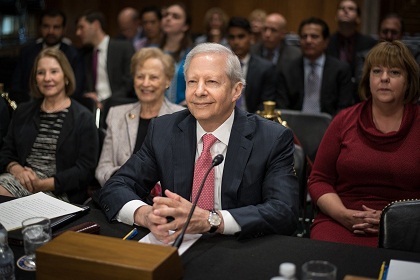
Trump’s cabinet has a preponderance of China hardliners, which has wider implications for the Asia Pacific region while some of its members view Narendra Modi as Reaganesque and a man of the times
Courtesy: Flickr/ResoluteSupportMedia
The Russians have concluded that the Afghan Taliban offer a better shield against the Islamic State than the old Northern Alliance. A negotiated settlement in Afghanistan could be achieved if Washington and New Delhi join Moscow, Beijing, Islamabad and Tehran in a joint effort.
Courtesy: MEA/flickr
The year 2017 may change some equations in the East Asian region. Will the near parity that the U.S. and China currently share turn into a keener contest? Will strained relations between India and China persist? Donald Trump’s election as the next U.S. president casts the spotlight squarely on these inter-state relationships