Sifra Lentin is Fellow, Bombay History Studies. She was Visiting Fellow 2018 at the Herbert Katz Center for Advanced Judaic Studies at University of Pennsylvania for a project on Karachi’s Jews. Her latest Gateway House policy report on “India and the SCO, Bound by Buddhism” (November 2020) proposed how India could leverage her soft power as the holy land of Buddhism in this multilateral grouping. Her “Mumbai-Shanghai Sister Cities” report (May 2017): proposed recommendations on how sister city relationships between these two cities can be made to work. She has also written a number of books, namely, Bombay’s International Linkages (Gateway House, 2019); Our Legacy: The Dwarkadas Family of Bombay (2018), and A Salute to the Sword Arm – A photo Essay on the Western Fleet (Western Naval Command, 2007). Her work has also appeared in edited volumes: “The Jewish Presence in Bombay” in India’s Jewish Heritage: Ritual, Art, & Life-Cycle (Marg Publication, 2002), “Shalom India” published in One India One People’s book Know India Better (2006), “The Jewish presence in Mumbai: their contribution to the city’s economic, social and cultural fabric”, in Mumbai—Socio-Cultural Perspectives: Contribution of Ethnic Groups & Communities (Primus Books, 2017).
Sifra graduated in English Literature from Elphinstone College, Mumbai, and went on to complete her Bachelor’s in General Law (BGL) from Government Law College, Mumbai. Her earlier career was in journalism with a focus on Bombay and South Asian Jewish history. Most notably, she wrote a popular thrice-weekly column for Mid-Day “Vintage Mumbai” from 1995 to 1997 and a five-part Partition series for Reuters on the golden jubilee of Indian Independence in 1997. She is on the Board of Trustees of the Sir Jacob Sassoon School (Byculla, Mumbai).
Expertise
History, Bombay
Last modified: December 24, 2025
Recent projects
Courtesy: Alamy
24 December 2025 The Kizuna India Japan Study Forum
The earliest sizeable presence of Japanese expatriates in India was in colonial Bombay and its Presidency. The Japanese came for trade, but their engagement with the port city and its cotton hinterland went beyond commerce to include spiritual life and later, India’s national movement. This chapter, ‘Geographies of Exchange between Japan and India’, traces their community, religion, social infrastructure, and commercial and cultural contributions to Bombay.
In December, India and Oman signed a Free Trade Agreement – a formalisation of exchanges which are, in fact, two hundred years old. These were led by the Indian merchant diasporas, especially the Bhatia, Bohra, Khoja, Khimji and Jain communities, which used Omani-controlled maritime networks to link Bombay with East Africa. These networks still endure, and among the oldest, strongest, and culturally richest are the Bombay-Oman-East Africa connections.
Courtesy: Alamy
18 December 2025 The Kizuna India Japan Study Forum
The earliest sizeable presence of Japanese expatriates in India was in colonial Bombay and its Presidency. The Japanese came for trade, but their engagement with the port city and its cotton hinterland went beyond commerce to include spiritual life and later, India’s national movement. This chapter, ‘Geographies of Exchange between Japan and India’, traces their community, religion, social infrastructure, and commercial and cultural contributions to Bombay.
For a week in December, the Feast of St. Andrew is observed in Mumbai’s two Scottish Presbyterian churches – St. Andrew’s Cathedral and the Church of St. Columba. In the absence of Scots, these Churches and multiple educational institutions and trading houses remind us that colonial Bombay was primarily built by these hardy Highlanders, often mistaken by locals for Englishmen. The Scots were also Britain’s most enthusiastic Empire-builders.
In the late 19th century, Bombay was a key import and transshipment port for Russian kerosene. The city’s market was dominated by the Russian product, with American kerosene in a distant second place. The jousting for Indian market share between the two nations unfolded amid geopolitical tensions between Great Britain and Imperial Russia – and gave the U.S. a decisive edge.
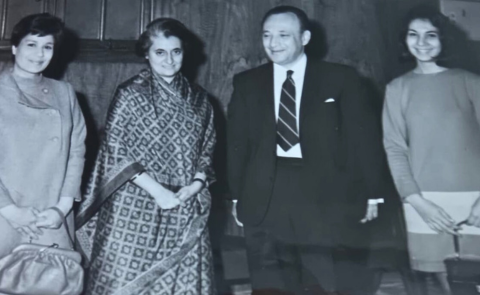
Prime Minister Narendra Modi visited the Republic of Cyprus on June 15-16, and was warmly received by President Christodoulides. Deep in the bilateral connection is an Indian-origin First Lady, Lilla Irene (Erulkar) Clerides, wife of former president Glafkos Clerides. Lilla, an Indian Jew from Bombay, lived through India’s and Cyprus’ independence and Partition. It made her a passionate advocate for the unity of her adopted home.
The proposed IMEC corridor connecting India to Europe through the Gulf can be transformative, helping to reduce risks to the global movement of goods and data. It’s early days yet, and there are gaps to be filled in terms of missing infrastructure and overcoming a diplomatic rift.
Mumbai’s iconic Wankhede Stadium was inaugurated in October 1974, making this year its golden anniversary. The first test match was played on its grounds from 23-27 January 1975. It was the last in the India vs. West Indies test series and was memorable for the 242 not-out scored by West Indian batsman Clive Lloyd. It led to such jubilation in the stands that a fan excitedly ran onto the pitch to congratulate him. He was arrested by the Bombay police.
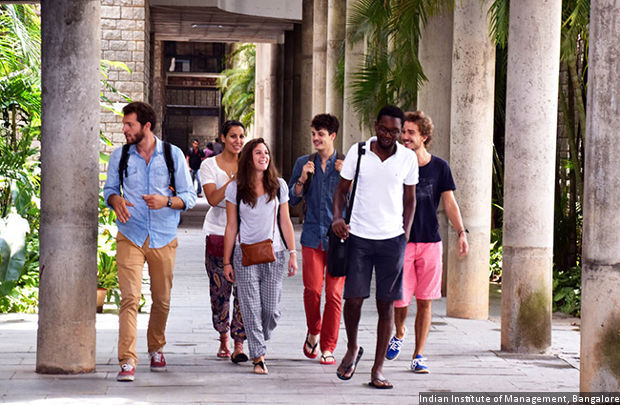
The anti-migration movements in the West have had a dampening effect on students traveling for study. There is diminished intake, higher fees and no guarantee of a job after graduation. This can play well for India, whose new education policy seeks to attract foreign students to its shores. Delhi must offer reciprocal work visas to foreign students, creating a cohort of those with valuable India experience.
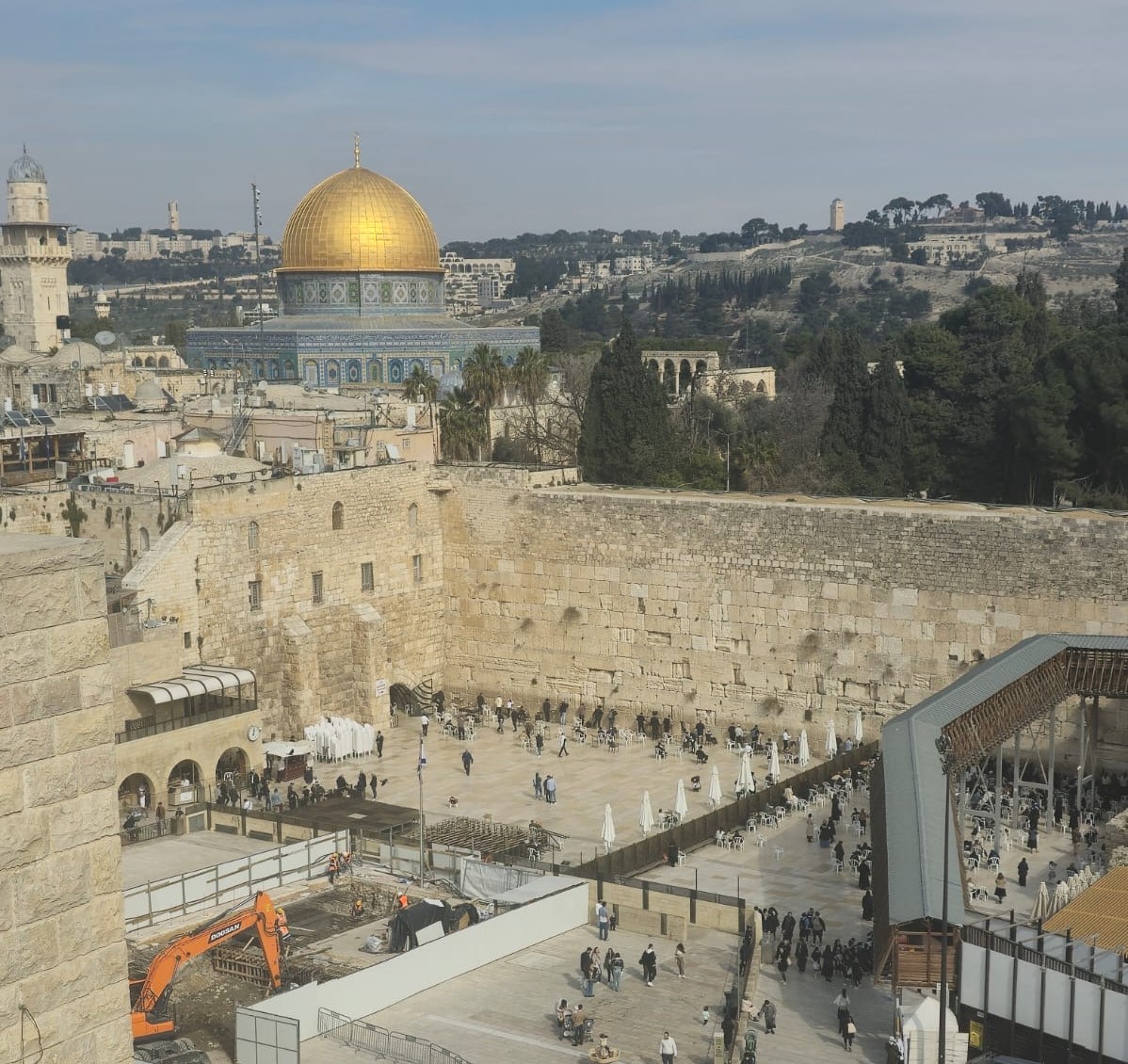
A visit to Israel in the last week of January coincided with the six-week ceasefire between Israel and Hamas and the 80th anniversary of the Holocaust in which 6 million Jews were killed during the Second World War. It revealed a country at war and in mourning, yet one whose natural resilience looked to the future with optimism.