Neelam Deo has served as the Indian Ambassador to Denmark and Ivory Coast with concurrent accreditation to Niger, Guinea, and Sierra Leone. She has also served in the Indian embassies in Rome, Bangkok and Washington D.C., where she liaised with the U.S. Congress, the State Department, and the National Security Council on strategic issues. Her last assignment was as Consul General in New York from 2005 to 2008.
During the course of her assignments in the Ministry of External Affairs, she held the position of Joint Secretary for the divisions dealing with Bangladesh, Sri Lanka, Myanmar and the Maldives. At different times over the course of her career, she has dealt with Bhutan, South East Asia and the Pacific, as well as countries in West Asia and North Africa.
She is an invited speaker on strategic issues and India-U.S. relations at numerous think tanks and universities, in India, Europe and the United States.
Apart from her articles and commentaries written exclusively for Gateway House, Neelam occasionally writes for mainstream publications, and is a frequent commentator for television news channels.
She has a Master’s degree from the Delhi School of Economics and serves on the Editorial Advisory Board of the Indian Foreign Affairs Journal.
She is also a member of the board of Oxfam India and is a trustee of Breakthrough (a human rights organization).
She is an independent director on the boards of Mahindra CIE Automotive Limited and Mahindra Defence Systems Limited.
Expertise
Africa, Foreign Policy, India's Bilateral Relations, USA
Trump promises to reform the post World War II global order. Neelam Deo discusses how India can benefit from the changes Trump will cause in the existing trade structure as well as the transformation of trade networks in Europe after Brexit
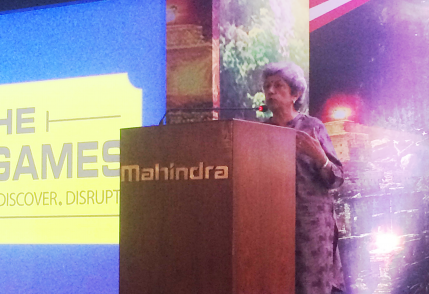
Ambassador Neelam Deo delivered this speech at the grand finale of ‘The Mind Games’ – a platform for talent development & idea generation at Mahindra Partners on January 18, 2017. Ambassador Deo’s speech focuses on the disruption of the post-Cold War global framework to be caused by Trump’s foreign policy changes
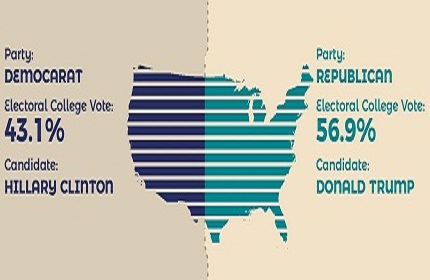
The year 2016 is the year of the divided electorate, so close were some of the election outcomes. Deep divisions lurk within voters coming from ostensibly “liberal” political cultures. The trend looks set to continue in the elections that will be fought in dozens of countries in 2017, where the votes could also be divided. Gateway House analyses these results through this infographic
Security studies provides the framework for anticipating and analysing threats. While foreign policy offers fitting strategies to respond to these threats and address potential issues. Both contribute fundamentally to the other, making it important for both fields to be developed and studied.
In the last seven decades since independence, successive prime ministers have ushered in changes in India’s foreign policy in response to shifting global geopolitical dynamics, aggregating transformation in bilateral relations. This overview places the past against the changes being brought in by Prime Minister Narendra Modi, a more forceful foreign policy practitioner than his predecessors
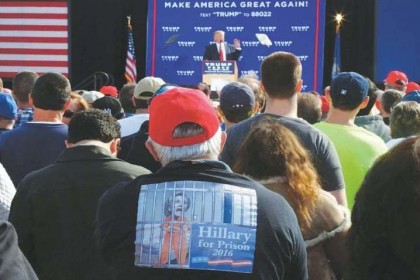
Gateway House has closely monitored the 2016 U.S. Elections and, with Ambassador Neelam Deo, have broken down the major issues in the election which may prove to have foreign policy implications across the world.
The Forum 2000 conference in Prague last week was an occasion to reflect on the challenges facing democracy in an economically globalised, but socially fragmented, West.
This edited excerpt was transcribed from The Gateway House Podcast episode 'U.S. Elections: assessing its wider impact' which is a part of the special mini-series on the U.S. elections and its foreign policy implications. In this episode, Ambassador Deo talks about the wider impact that the elections will have on the race for the U.S. Congress and Senate, on American society, and on global political discourse.
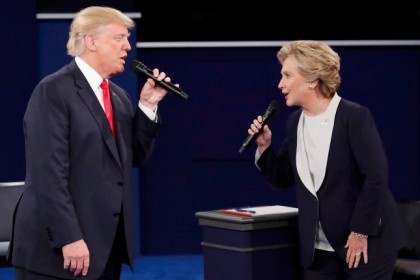
This excerpt was transcribed from The Gateway House Podcast episode, 'U.S. Elections: Trump’s down but not out' which is part of the special miniseries on the U.S. election and its foreign policy implications. In the episode, Ambassador Neelam Deo discussed the larger foreign policy implications mentioned by the presidential candidates at the second Presidential debate on Sunday night
A lesser publicised aspect of the American Presidential Race is the adoption of the Party Platform during the Convention. During the Republican National Convention and the Democratic National Convention, the two parties put down and adopted their platforms. Ambassador Neelam Deo analyses the foreign policy aspects of the platforms and their implications.