Eastern Europe Goes South
Many eastern European states who are part of the EU and were admitted only after being deemed compliant with the Copenhagen criteria have seen political parties in these countries become increasingly illiberal

 Courtesy: Foreign Affairs
Many eastern European states who are part of the EU and were admitted only after being deemed compliant with the Copenhagen criteria have seen political parties in these countries become increasingly illiberal
 Courtesy: WikimediaCommons
This daily column includes Gateway House’s Badi Soch – big thought – of the day’s foreign policy event. This Badi Soch analyses the implications of France’ kowtowing to Saudi Arabia and Israel’s demands in the P5+1 talks with Iran.
 Courtesy: United Nations
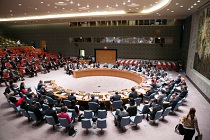
The recent UNSC Resolution, which mandates the complete destruction of Syria’s chemical weapons, demonstrates that after more than a year, a degree of international agreement on the Syrian issue has been possible. In the evolving situation, Russia will now emerge as a major player
 Courtesy: WikimediaCommons
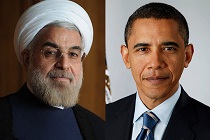
The positive advances made by newly-elected Iranian President Hassan Rouhani and U.S. President Barack Obama at the 68th UN General Assembly indicates a strong potential for a thaw in Tehran-Washington relations. However, it will take sincere efforts from both sides to turn this into concrete reality. Can India help?
 Courtesy: WikimediaCommons
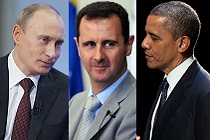
Can the world aspire to a future where the use of force is not seen as leadership? Can the U.S. and former colonial powers like France and UK, think differently and reject the use of force as first resort? Can China and India craft alternatives?
With India backing the United Nations resolution against Sri Lanka, New Delhi-Colombo relations appear to be in a tense phase. Gateway House interviews Prasad Kariyawasam, the High Commissioner of Sri Lanka to India, to discuss the implications of the UNHRC vote and the future of India-Sri Lanka relations.
 Courtesy: WikimediaCommons
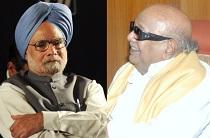
New Delhi has taken some opportunistic actions, such as its vote against Sri Lanka in the UN Human Rights Council, to pacify internal political demands. But these extract a price in the international arena. Should we anticipate a further decline in India’s regional and international credibility?
 Courtesy: movieevery/WikimediaCommons
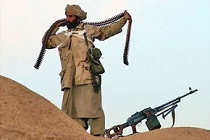
In the backdrop of a gradually weakening Quetta Shura, the Haqqani network has emerged as a powerful extremist group operating in the Afghanistan-Pakistan theater. How can the UN Security Council's recent sanctions against the Haqqanis act as a potential de-motivator for this Pakistan-based terrorist outfit?
 Courtesy: Patrick Gruban/WikimediaCommons
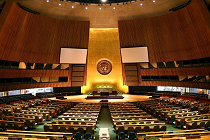
Is a focus on a nuclear Iran in international forums such as the UN General Assembly necessary and appropriate? At a time when other crises – including Syria and Palestine – require the world’s undivided attention, this inordinate focus raises major concerns.
With the Free Syrian Army being supplied aid by the West and the Gulf Cooperation Council countries, the endgame for the Syrian regime has begun. Does Assad's exit guarantee the replacement of autocracy with democracy? What implications will it have on regional politics?