Climate change and the shifting strategic landscape in the Pacific
Tevita Motulalo discusses changing geopolitical partnerships in the Pacific Islands, post-COP21, and the irreparable damages of Climate Change on the Pacific.

 Courtesy: jopolopy / Flickr
Tevita Motulalo discusses changing geopolitical partnerships in the Pacific Islands, post-COP21, and the irreparable damages of Climate Change on the Pacific.
 Courtesy: ustr.gov
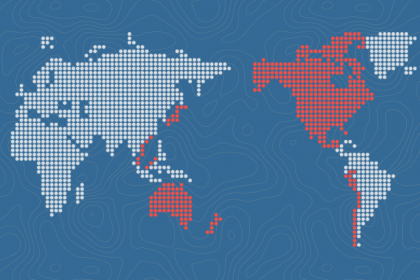
The U.S.-driven Trans Pacific Partnership agreement between 12 countries, which is aiming to become the new standard of world trade, impacts domestic systems globally. For India, it will skew investment and intellectual property rights, and especially the debate over the Investor State Dispute System which allows companies to challenge sovereign rights and public policy.
 Courtesy: WikimediaCommons
Policy Perspectives from Gateway House give an overview of a global issue that has implications for India’s policy-making and business community. This edition examines the geoeconomic and geostrategic imperatives for expanding India’s engagement with the South Pacific
 Courtesy: generalising/Flickr
The India-Japan alliance needs to be viewed through a prism broader than that of "containing" China, and by treating the Indian and Pacific oceans as a single entity. Such an alliance has the potential to strengthen the geopolitical security of India and Japan, along with that of all their allies and associates
 Courtesy: Jessica Taekman/Flickr
Indian Prime Minister Manmohan Singh and Japan’s Shinzo Abe are giving heft to a renewed partnership and a focus on the Indo-Pacific. Both nations must collaborate and work with South Pacific countries, especially Tonga, to counter China’s growing influence in this increasingly geopolitically important region
 Courtesy: Taimi Media
Taimi Online, a Tonga based news website republished Gateway House's Tevita Motulalo's piece on the strategic importance of the Pacific Islands. He argues that having control over large resource-rich ocean areas have made these small island-states increasingly geostrategic.
 Courtesy: mpeacey/Flickr
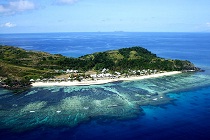
Traditionally, the South Pacific islands have been considered strategically insignificant. However, the need for resources, and the geopolitical shift towards Asia-Pacific have prompted nations to realize that these small island states control large resource-rich ocean areas and are increasingly geostrategic.