G20’s midlife crisis
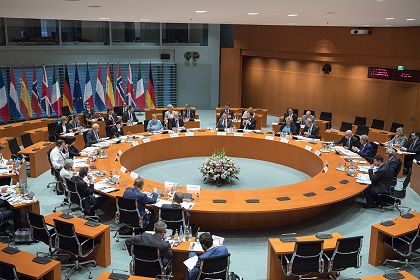
The G20’s response to the economic crisis was effective, the expansion of its scope was logical. This week’s Summit in Argentina is an opportunity to build consensus and deliver on concrete economic policy design
Courtesy: G20
The G20’s response to the economic crisis was effective, the expansion of its scope was logical. This week’s Summit in Argentina is an opportunity to build consensus and deliver on concrete economic policy design
Courtesy: Gateway House
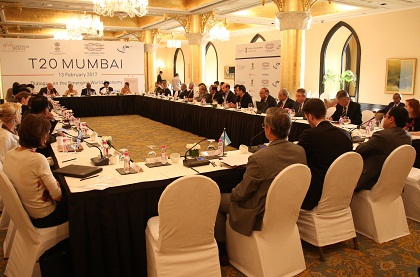
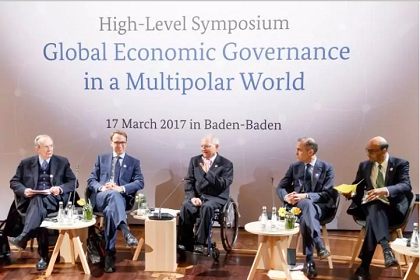
Gateway House hosted a T20 meeting in Mumbai on February 14, 2017 in collaboration with the Kiel Institute for the World Economy and the Ministry of External Affairs, Government of India, with support from GIZ and Siemens India. This was the third time Gateway House hosted a T20 meeting; previous editions were held in 2015 under the Turkish Presidency with the leading Turkish think tank TEPAV, and in 2016 under the Chinese Presidency with the leading Chinese think tanks — Institute for World Economics and Politics, Shanghai Institute for International Studies, and Chongyang Institute for Financial Studies.
Courtesy: Wikipedia
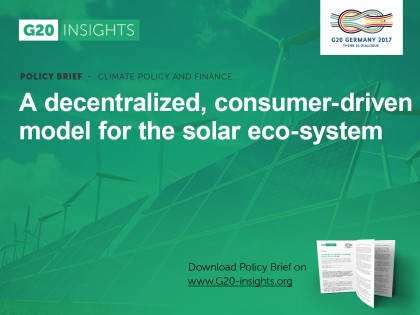
The transition to renewable energy is hampered by the lack of suitable, affordable products and specialised financing for its infrastructure. This infographic, as part of a policy brief put forth by Gateway House, set to be tabled at the 2017 Hamburg G20 conference, outlines an ecosystem to overcome these hurdles
Courtesy: G20 Insights
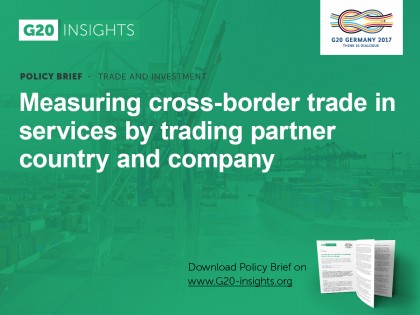
In a policy brief for the G20, Akshay Mathur and Purvaja Modak discuss the challenge of data classification when it comes to cross-border trade in services
Courtesy: The Telegraph
President Trump’s “America First” rhetoric has eroded support for the commitments that leaders made at previous G20 summits regarding trade: rejecting protectionism and strengthening the multilateral trading system. What implications does this have for global trade? Will the more moderate voices in the administration get heard?
Courtesy: Gateway House
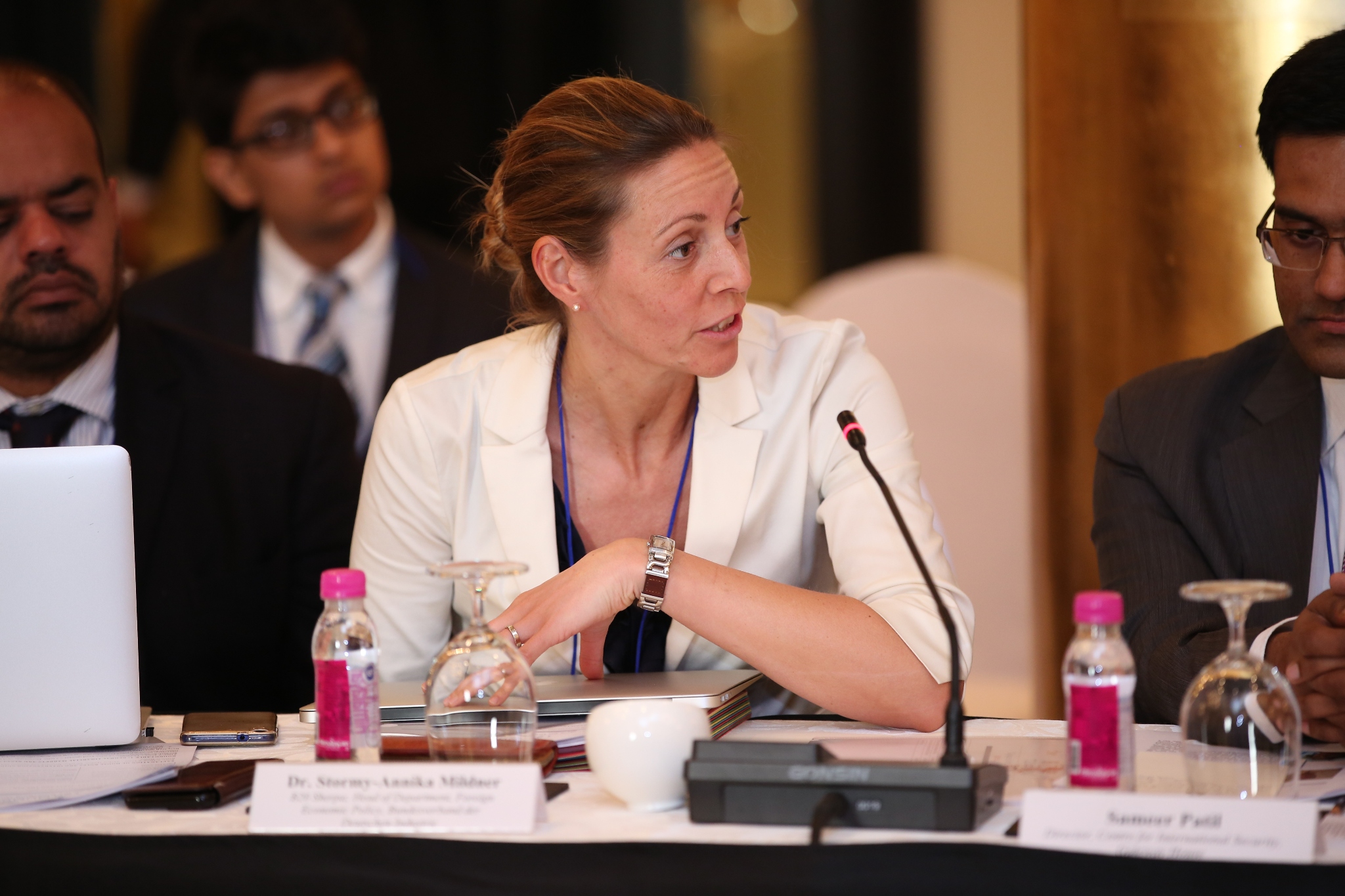
In Dr. Stormy Mildner's interview she highlights the high levels of benefits accrued to countries due to trade. She mentions methods that can further increase these advantages. Her perception of trade is that it involves not just the mobility of goods but also of services. She describes measures taken by the B20 such as the Business Mobility Card that will facilitate labour mobility. She ends with the founding principles, objectives and goals of the B20 and the legacy the German Presidency would like to leave behind when its term ends, namely, sustainability, inclusiveness and a future oriented approach to growth.
Courtesy: Getty Images
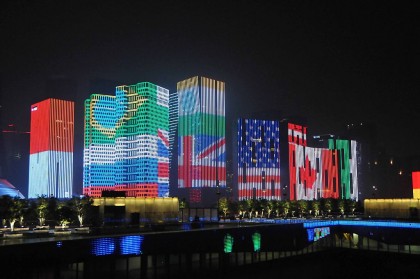
Global growth has become weaker than expected. Did the G20 at the Hangzhou Summit in September focus on reversing this trend and help build consensus in this direction?
Courtesy: AP
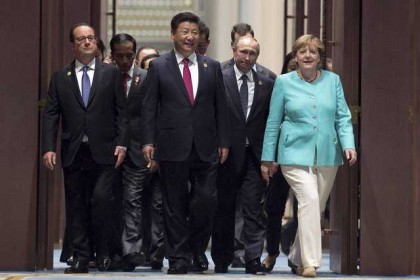
The IMF warned at the G20 Summit, held last week-end, that the world economy was growing “too slow for too long” and the G20, as a group, needed to provide some clear answers. What did the Chinese G20 presidency achieve? And what will Germany have to look at in 2017?
Courtesy:
At the G20 summit in Hangzhou, leaders are expected to discuss the potential for strengthening the international monetary system and the conditions under which SDR could play an important role in this regard. This is a step that is well overdue but will require a major leap in international policy coordination.
China will be hosting the G20 Summit in Hangzhou on the 4-5 September 2016. Huang Wei, Director of Research, Department of Global Governance, IWEP-CASS, gave an interview on the sidelines of T20 Mumbai where she discussed how structural reforms can add energy to the world economy and help stabilise financial markets.