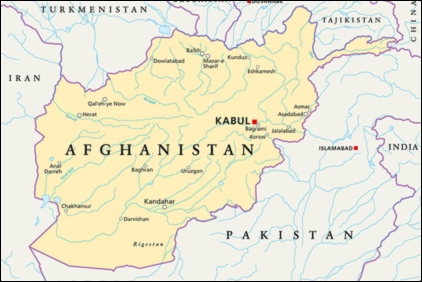
Regional impact of U.S.-Taliban deal
The U.S.-Taliban deal of 29 Feb favours some and disadvantages others in the region. This infographic shows how regional geopolitics will change

 Courtesy: Shutterstock
The U.S.-Taliban deal of 29 Feb favours some and disadvantages others in the region. This infographic shows how regional geopolitics will change
 Courtesy:
Amit Bhandari, Fellow, Energy and Environment Studies, Gateway House, and Kunal Kulkarni, Senior Researcher, Gateway House, write an op-ed for The Asian Age on the possible implications of U.S. President Donald Trump’s recent announcement to withdraw from the JCPOA, more colloquially Read more
 Courtesy: Gateway House
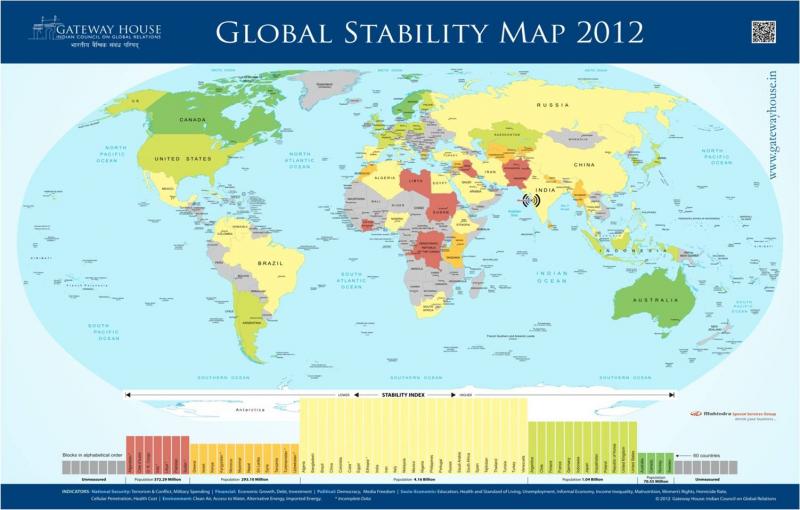
Gateway House prepared a Global Stability Map, using 20 differing indicators, to analyze the stability of 60 countries around the world. Using criteria that are important to the emerging economies of the world, the map provides an Indian perspective of the world today.
Though some countries like Russia gained a strong foothold in Central Asia and the Caucasus post-1991, India has been a late-comer. Gateway House interviews former Ambassador to Azerbaijan Debnath Shaw to discuss India’s energy interests in the region, the Shanghai Cooperation Organization and the TAPI pipeline.
 Courtesy: PMO
Over the past thirty years, the U.S. and Iran have been at odds over Iran's alleged nuclear weapons programme. India too has a large stake with both countries - with the U.S. as a strategic partner and Iran for its oil imports - and resolving this conundrum will require some creative diplomacy.
Corruption has become a galling global phenomenon: structured, vertically-integrated networks, whose objective is the extraction of resources, are forming in countries around the globe. And strikingly, these structures are masquerading as democratically-elected, seemingly-open governments.