shutterstock_1643544484 Courtesy: Shutterstock
18 March 2021

Big, bigger tech: trust and anti-trust

Big Tech wields considerable influence over commerce, speech, media, and politics. Mergers and acquisitions have been key to their burgeoning growth. Now it is clear that their power is buttressed by anti-competitive and predatory practices. Governments across the world are moving to redress this through regulation, but the task is complex.
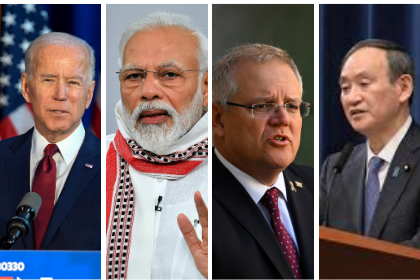

the quad comes of age Courtesy: Shutterstock
12 March 2021

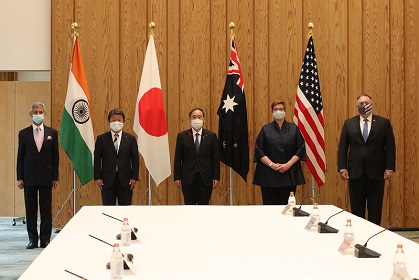
The Quad comes of age

In its recent itineration, the Quad (or the Quadrilateral Security Dialogue) has been toiling since 2017, through deliberations among mid-level and senior officials, to develop a common vision for the challenges facing the Indo-Pacific region, challenges caused by China's menacing rise and aggressive behaviour.

edited asian geo Courtesy: Shutterstock
1 January 2021

Asian geopolitics in 2021

As 2021 opens, the post-COVID world can expect some changes in the geopolitics of Asia. It will involve altering equations in the Indo-Pacific among major, middle and small powers. These will fluctuate with characteristic familiarity, creating instability, tensions and strife, but not leading to military conflict – barring an unforeseen accident. Post-COVID, the world will be uncertain and complex.

Quad image_ Courtesy: Shutterstock
10 December 2020

To formalize the Quad – or not

Should the Quad be formalized? It has evolved from a crisis response group in 2004 to a strategic partnership today between the four member-countries – India, the U.S., Australia and Japan. There are benefits and challenges to the institutionalisation of the Quad which require timely analysis, especially as the group has renewed vigour this year with the COVID-19 pandemic and China’s aggression in the Indo-Pacific region.

Malabar Excercise Courtesy: US Navy/Twitter
26 November 2020

Malabar Naval Exercise 2020

Australia's much-awaited inclusion at the Malabar Exercise-2020 reflects a hard reset in India's foreign policy that was traditionally accommodative to Chinese concerns on the militarisation of the Quad. In the backdrop of the on-going stand-off with China at the Ladakh border, the Indian Navy has maintained a high operational tempo and deployed the highest numbers of frontline assets during this edition of the Malabar Exercise. India must build on this strategic vision and work towards including France at the next edition of Malabar in 2021.

shutterstock_355422692 Courtesy: Shutterstock
5 November 2020

Growing Sino-American Military Rivalry

The global world order is witnessing a substantial shift. Part of the greater tussle for strategic and geopolitical dominance is the military rivalry between the U.S. and China. The two countries together now account for over one-half of the world’s defense spending.

shutterstock_1746264761 Courtesy: Shutterstock
5 November 2020

Weekly Podcasts – U.S. Presidential Elections 2020

As part of our weekly series of podcasts in the run-up to the U.S. elections, Ambassador Neelam Deo, Director and Co-founder of Gateway House shares her insights on various aspects of the U.S. Presidential elections.

shutterstock_1330442813 Courtesy: Shutterstock
5 November 2020

U.S elections, a China order & India’s position

The recent in-person Quad meeting attended by external affairs minister S. Jaishankar and the India-U.S. 2+2 meeting of foreign and defence ministers in New Delhi, highlights not only the big upgrade in India’s strategic relations with the U.S. but also the enhanced U.S. focus on India, the Indo-Pacific and Asia. Clearly then, the foreign policy of the next U.S. administration will impact India, Asia and the world.

Biden-China Courtesy: Shutterstock
29 October 2020

The growing Sino-American military rivalry

On 21 October, Gateway House and the Institute of Chinese Studies, Delhi jointly hosted a webcast with Ambassador (Lt. Gen.) Karl Eikenberry, Sinologist, Deputy Chairman, NATO Military Committee; former Director of the U.S.-Asia Security Initiative at the Shorenstein Asia-Pacific Research Center, Stanford University on the Growing Sino-American Military Rivalry