wall street 2 Courtesy: Fletcher6/WikimediaCommons
23 July 2012

The shadow of LIBORgate

As the revelations pile up after the LIBOR rigging incident, it seems Europe and Britain are more committed to enforcement action than America. Real conservatives believe fully in market capitalism, that prices must come from uncorrupted market signals. Could this start a sea-change for enforcement globally?
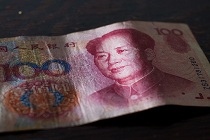
renminibi2 Courtesy: rahims/Flickr
16 July 2012

China’s Achilles’ heel

China is quick in providing loans to execute domestic and international business plans, and returns are often forgone in the quest to own market share. Faced with an economic slowdown, will Beijing be able to sustain such unconventional economic policies? Or will its banking sector prove to be its Achilles' heel?

Courtesy: Malwack/WikimediaCommons
14 July 2012

Romney vs. Obama: A problem of class

At the heart of the U.S. Presidential elections campaign is a debate about class. This time, the scenario is different: recession, slow economic recovery, the Occupy movement and many financial scandals have expanded the domain for the forbidden topic.

peru india Courtesy: Indian Council of World Affairs
12 July 2012

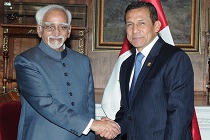
India-Peru: A new Pacific pivot

The Indian Council of World Affairs republished Gateway House's Hari Seshasayee's feature on the India-Peru relationship. He argues that new commercial exchanges can enhance the bilateral, but strategic elements must be incorporated if both countries are to benefit from each others' geopolitical alliances.

xerxes china Courtesy: Ministry of Defence, India
12 July 2012

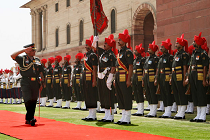
The spectre of China

Though India may seem to be mirroring or competing with China’s military build-up, it doesn't seem to be doing so in consonance with a long-term plan. New Delhi would be better served by avoiding an arms race; staying away from the U.S.-China rivalry and fostering stronger relations with its immediate neighbours.

Neelam on Syria Courtesy: FreedomHouse2/Flickr
6 July 2012

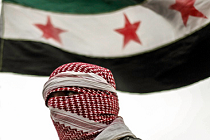
The unique tragedy of Syria

Simultaneous efforts to resolve the problem in Syria remain stymied even as more and more high level meetings and consultations take place. The more countries treat the situation as a proxy for political differences, the more it creates the conditions for a wider conflagration with an unpredictable outcome.

debnath shaw Courtesy: Gateway House
5 July 2012

“Russia still dominates Central Asia”

Though some countries like Russia gained a strong foothold in Central Asia and the Caucasus post-1991, India has been a late-comer. Gateway House interviews former Ambassador to Azerbaijan Debnath Shaw to discuss India’s energy interests in the region, the Shanghai Cooperation Organization and the TAPI pipeline.

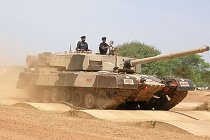
largest arms importer Courtesy: Ajai Shukla/WikimediaCommons
4 July 2012

Revitalising India’s ailing arms industry

Various unfavourable factors, attributed to both the government and the military, have resulted in dubbing India as the world’s largest arms importer. These factors – corruption, political interference and bureaucratic lethargy – have contributed to an absence of clarity on the use of arms in diplomacy.