EVs to Hydrogen?
The embargo on rare-earth magnets by China reflects a gap in India’s critical mineral supply chain. India should reduce the need for these minerals by promoting green hydrogen.

 Courtesy: shutterstock / Allahfoto
The embargo on rare-earth magnets by China reflects a gap in India’s critical mineral supply chain. India should reduce the need for these minerals by promoting green hydrogen.
 Courtesy: Gateway House
Geopolitics is increasingly intertwined with the economic destiny of South Asia. Even before the U.S. tariffs were rolled out, growing polycrises had hit the global economy, which has been struggling since the pandemic. South Asia seems a relatively bright spark of regional trade and growth. This paper analyses South Asia’s trade architecture in the backdrop of a sluggish world economy in the 2020s, and makes recommendations for closer regional economic integration.
 Courtesy:
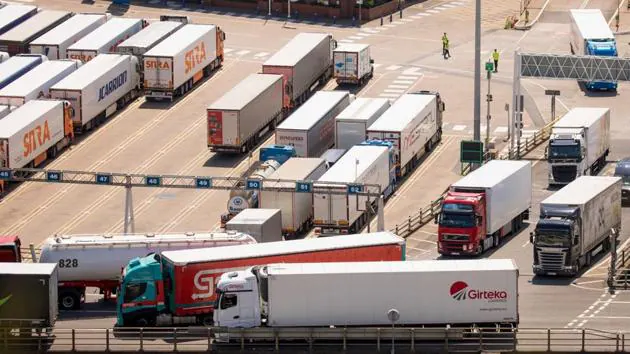
China-centric global supply chains, the backbone of East Asia’s prosperity, are shifting out as tensions over tariffs and strategic contest between the West and China soars. Ganeshan Wignaraja, Professorial Fellow, Economics and Trade, Gateway House, discusses diversifying supply chains, the China plus one strategy, and the role of India as a supply chain magnet for its South Asian neighbours.
 Courtesy: Hindustan Times
South Asia requires resilient and cost-effective regional supply chains. This can be achieved through Indian investment, fostering local linkages while reducing dependency on Chinese financing of regional partners. A new approach enhances India's regional influence, creating a win-win scenario for the entire South Asian neighbourhood in a changing global landscape.
 Courtesy: Monocle
China's economic slowdown and pandemic-related and post-pandemic disruptions to supply chains have dampened China’s attractiveness as a global supply chains hub. Ganeshan Wignaraja, Professorial Fellow in Economics and Trade at Gateway House speaks with Georgina Godwin on The Globalist by Monocle, about the prospects for India to emerge as an alternative manufacturing hub in Asia, and takeaways for the broader South Asian region.
 Courtesy: Forbes India
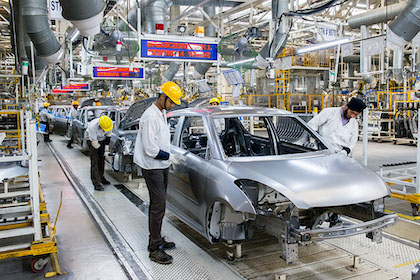
The announcement of the India-Middle East-Europe Economic Corridor (IMEC) has the potential to make India an Asian hub in global supply chains. India’s renewed emphasis on trade agreements and export-oriented foreign direct investment presents a significant opportunity for the country to promote industrialisation across South Asia and make the region less vulnerable to Chinese enticements.
 Courtesy: Economic Times
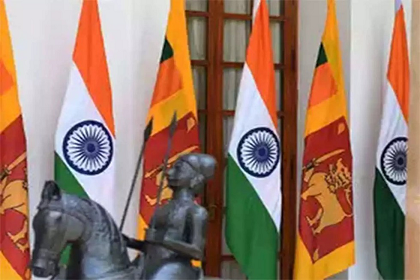
Sri Lankan President Ranil Wickremesinghe's visit to India last month laid the foundation for a new era of cooperation in key areas like energy, connectivity, trade and tourism. By working together on trade facilitation, central bank cooperation, and IMF capacity-building, market-led regionalism can be the pragmatic way forward for India and Sri Lanka to achieve prosperity.
 Courtesy: Nikkei Asia
China-centric global supply chains are being disrupted by rising geopolitical tensions between the U.S. and China and multiple global shocks, forcing multinational companies to rethink are global sourcing strategies. India can leverage this moment to become a complementary manufacturing hub in Asia by reaping gains from technology transfers and creating value-adding jobs.
 Courtesy: The Times of India
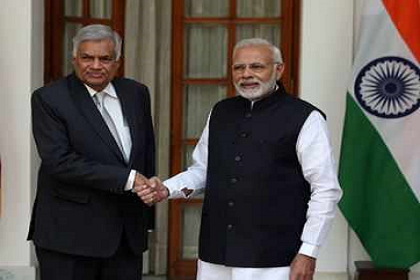
On July 21, Sri Lankan President Ranil Wickremesinghe is set to visit for the first time since taking office. India has already provided $5 billion in economic assistance to Sri Lanka, and is now looking to expand its investment in the nation. Sri Lanka is also seeing interest from Indian private investment. The visit presents an opportunity for the two countries extend this relationship in new areas of cooperation, especially energy, infrastructure, and tourism.
 Courtesy: Gateway House
Supply chains are central to the new chapter of India-U.S. relations. Simultaneously, China-centric global supply chains, which underpinned East Asia’s prosperity, are changing as multinationals re-assess risks in the post-Covid era. Is the shift to India and the rest of South Asia occurring? This paper finds that South Asia supply chain pessimism could be changing, and India can spread gains through regionalising supply chains in its neighbourhood.