podcast MK Courtesy: Abhijit Chavda Podcast
27 May 2025

Emerging Middle Powers beyond U.S. and China

The rules-based world, perceived to be functional till last year, seems broken, giving way to an increasingly multipolar order. Manjeet Kripalani, Executive Director, Gateway House discusses in the Abhijit Chavda podcast, how emerging middle powers like India, Brazil, and Indonesia to name a few, have the heft to rewrite the rules of global trade and reform, away from U.S. and China.

India Today (1) Courtesy: India Today
26 May 2025

India’s evolving defence doctrine

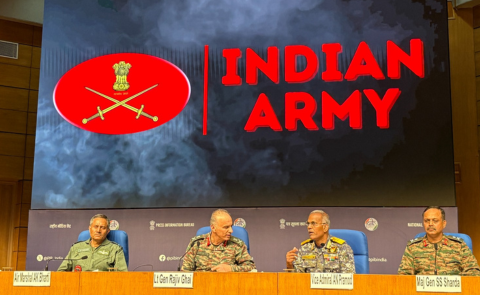
The Pahalgam attack has changed India’s strategic calculus. With Operation Sindoor, the country is moving towards a more assertive posture, consolidating its strategy around an evolving doctrine of Proactive Deterrence underpinned by Calibrated Coercive Capability. A strategic practitioner’s viewpoint is below.

Website articles  (19) Courtesy: Reuters
22 May 2025

India-UK FTA: Four benefits for India

The India-UK Free Trade Agreement comes amidst increasing economic uncertainty caused by the Trump administration’s reciprocal tariff policies. The FTA has revitalised previously lethargic discussions for India to conclude FTAs between like-minded countries. An India-EU FTA, along with the India-UK FTA, may reform global rule-making on international trade and perhaps even revive the WTO.

Website articles  (17) Courtesy: Nayanima Basu
19 May 2025

India’s three-pronged war strategy

Operation Sindoor has established a “new normal” in India-Pakistan relations. It has also given the world a glimpse into the Narendra Modi government’s future strategy in countering terrorism supported by the Pakistani Army and ISI, and how New Delhi will manage the Kashmir dispute.

The New Indian Express Courtesy: The New Indian Express
19 May 2025

Post-Pahalgam diplomacy

Studying the reaction of key stakeholders to the India-Pakistan conflict, and how India’s diplomatic machine coped with it, is revealing. Some of the major powers like the U.S., raised the temperature, China expectedly stood by Pakistan while Russia once again proved a dependable friend. Unsurprisingly, South Asia had a consistently neutral stance toward the conflict.

Website articles  (8) Courtesy: The Diplomatist
12 May 2025

The Emerging Exception

The traditional label of ‘middle power’ fails to capture India’s growing status. The country’s ability to shape the international discourse is no longer in question. India sees itself as a key player the global order.

Website articles  (5) Courtesy: PTI
9 May 2025

Three messages from Operation Sindoor

Operation Sindoor conveyed three messages: First, to Pakistan that it will have to bear the consequences of continuing to support terrorism. Second, to terrorists, that Bharat will inflict the same pain, if not more, than they inflict on Indian citizens. Third, to the world, that Bharat is resolute in responding to terrorism in a “measured, non-escalatory, proportionate, and responsible” manner.

Website articles  (3) Courtesy: Agence France-Presse
8 May 2025

How China can assist Pakistan post Pahalgam

India-China relations, undergoing a thaw since October 2024, have been slow to mend. In this scenario it is worth examining what assistance China can give Pakistan in case of military action by India, post Pahalgam. The state of play on the India-China border will also have a major implication for this.

Pahalgam-attack-1024x679 Courtesy: Khyber News
24 April 2025

Post Pahalgam, India’s choices

The horrific attack on April 22 on tourists in Kashmir has exposed its stark and violent reality. Kashmir remains tumultuous even after the abrogation of Article 370 in 2019. Before confronting Pakistan, India must first address its internal challenges and deliver on its election promises to achieve enduring progress.

World Leaders Courtesy: East Asia Forum
17 April 2025

Multipolarity is gaining ground

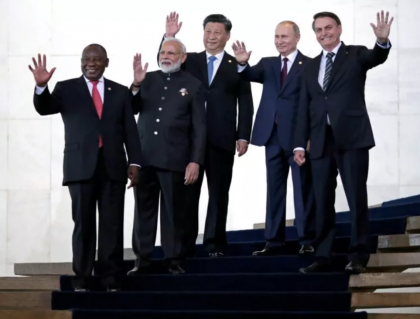
The traditional power structures of ‘unipolarity’ or ‘bipolarity’ prevalent over the past 80 years are no longer appropriate to describe the current global order, with more countries increasingly supporting the evolving multipolar world. With the old ‘rules-based’ order becoming less relevant, emerging powers like India have an opportunity to draft more equitable rules to match their multipolar intentions.