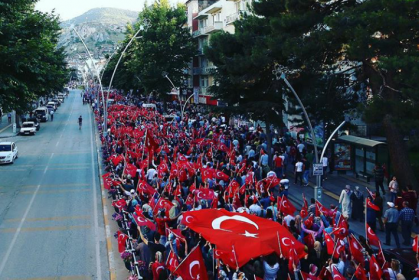
Tokat_darbe_karşıtları Courtesy: Wikipedia
27 July 2016

The beginning of the end for Erdogan

The attempted coup on July 15 in Turkey as well as its aftermath have irreparably dented President Erdogan’s international image and impacted Turkey's standing as a democratic state, a military power, a NATO member, an EU aspirant, and an emerging economy. This downtrend is unlikely to be reversed in the near future and the country is in for an extended period of instability
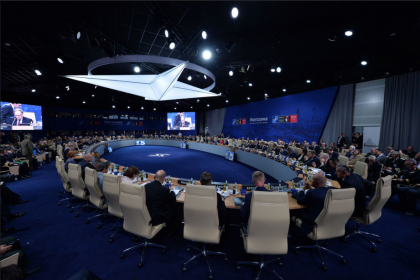
NATO Courtesy: NATO/Flickr
21 July 2016

Brexit, NATO, EU: emerging dichotomies

In the aftermath of Brexit, the recently concluded NATO Summit highlighted the emerging asymmetry between NATO and the EU on their respective policy positions towards Russia. Has the expansion of NATO and the EU to absorb Eastern Europe, and the consequent large migration flows, been responsible for the visible cracks within the Europe?

nice-attack-1 Courtesy: The Independent/AP
20 July 2016

Islamic State and France: mortal enemies

France's state policy of 'laïcité' (secularism) and its military interventions in Islamic countries has made it the prime target of IS in the West. The hardline French response to step up bombing campaigns against jihadis in Syria, Iraq, and Mali will likely continue, but conversely feeds IS strategy, which is to foment anti-Muslim sentiment among the non-Muslim French population.

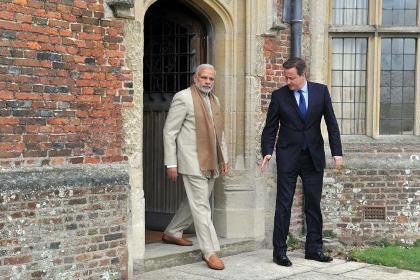
1023-modi-cameron-mea Courtesy: MEA / Flickr
30 June 2016

The dislocations of Brexit: can India gain?

The result of the Brexit referendum is nothing less than a body blow to Bretton Woods organisations, International Monetary Fund-North Atlantic Treaty Organisation (NATO)-World Bank, that originated at the end of the Second World War. The possibility of an Asian century becomes more feasible, if India can be nimble enough to make the most of the opportunity which has presented itself in Europe.

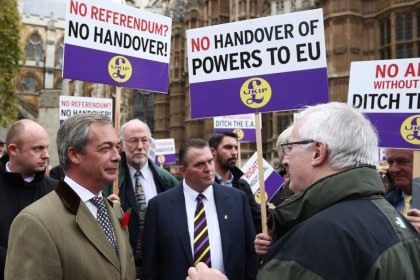
ukip-eu-protest-5 Courtesy: Business Insider
24 June 2016

Brexit: a wake-up call for global elites

The message from Brexit is simple: the post-second world war financial, trade and industrial order and security arrangements that developed around Bretton Woods, have passed their expiry date. This is the time for countries, regional unions and global institutions to reform themselves – putting people instead of regulations and strategic objectives at the centre of their decision-making.

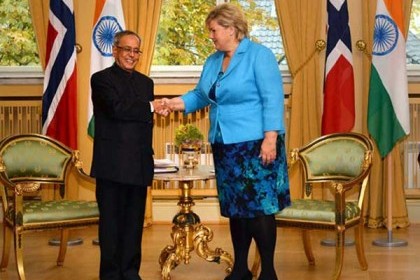
IndiaNorway Courtesy: sarkarairtel
24 June 2016

India-Norway: burgeoning business synergy

A recent visit to the capital of Norway---Oslo---offered the opportunity to study the country’s economic success story and note its increasing interest in Asia’s emerging economies, especially India, and immense scope for deepening cooperation for mutual benefit.

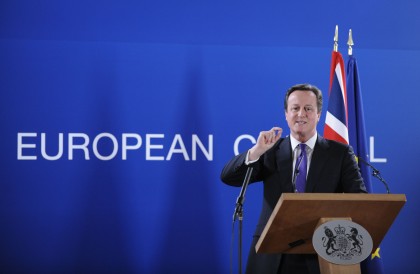
British Prime Minister David Cameron speaks at a press conference at the EU Headquarters on February 8, 2013 in Brussels, on the last day of a two-day European Union leaders summit. After 24 hours of talks lasting through the night, European Union leaders finally clinched a deal on the bloc's next 2014-2020 budget, summit chair  and EU president Herman Van Rompuy said Friday.  AFP PHOTO / JOHN THYS Courtesy: ukrep.be
21 June 2016

Deciding the UK’s future in Europe

As the referendum on the UK’s membership of the EU draws near, predicting the outcome remains difficult. While the potential impact of Brexit on the UK has been discussed at length, a vote to stay in the EU could have implications for the UK’s domestic political situation as well as its future relationship with the EU.

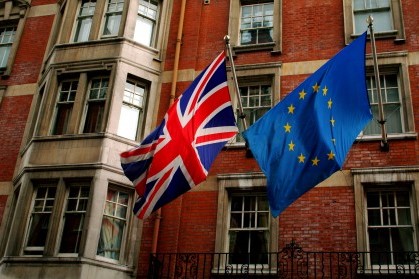
Union_Jack_and_the_european_flag Courtesy: Wikipedia
19 June 2016

What does Brexit mean for India?

On June 23, the United Kingdom will vote on whether they wish to remain a part of the European Union through the Brexit vote. The debate surrounding the vote has spurred many a heated and emotional debate. While the Indian government has not declared anything publicly - remaining in the EU would be beneficial to Indian businesses.

_89083411_89083410 Courtesy: BBC
26 May 2016

International credibility in a domestic crisis

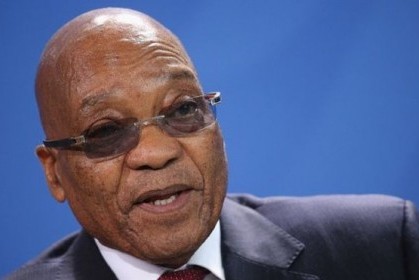
At present, South Africa finds itself charting political and economic policy uncertainties. This is not to suggest that the domestic political crisis will see different trajectories unfolding with regard to its BRICS/IBSA engagements, or on a broader foreign policy path, but it will have repercussions at the international level, in terms of investor confidence, credit ratings, and currency volatility. Pretoria will face constant pressure to be seen as a credible actor, especially when it comes to its African identity.