Capture Courtesy: Foreign Affairs
16 June 2022

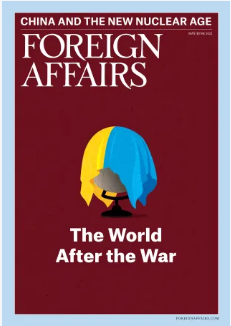
The New Nuclear Age

China’s expansionist nuclear programme aims to bolster its capabilities, so much so, that Beijing's predictions boast 2500 new warheads by 2030, thus rivalling the American and Russian arsenals. As the dragon quadruples its nuclear propensity, heralding the world to something greatly unstable – a tripolar nuclear system; nuclear peace seems a quite convoluted goal.

00_fa_mj2020_cover Courtesy: Foreign Affairs
27 April 2020

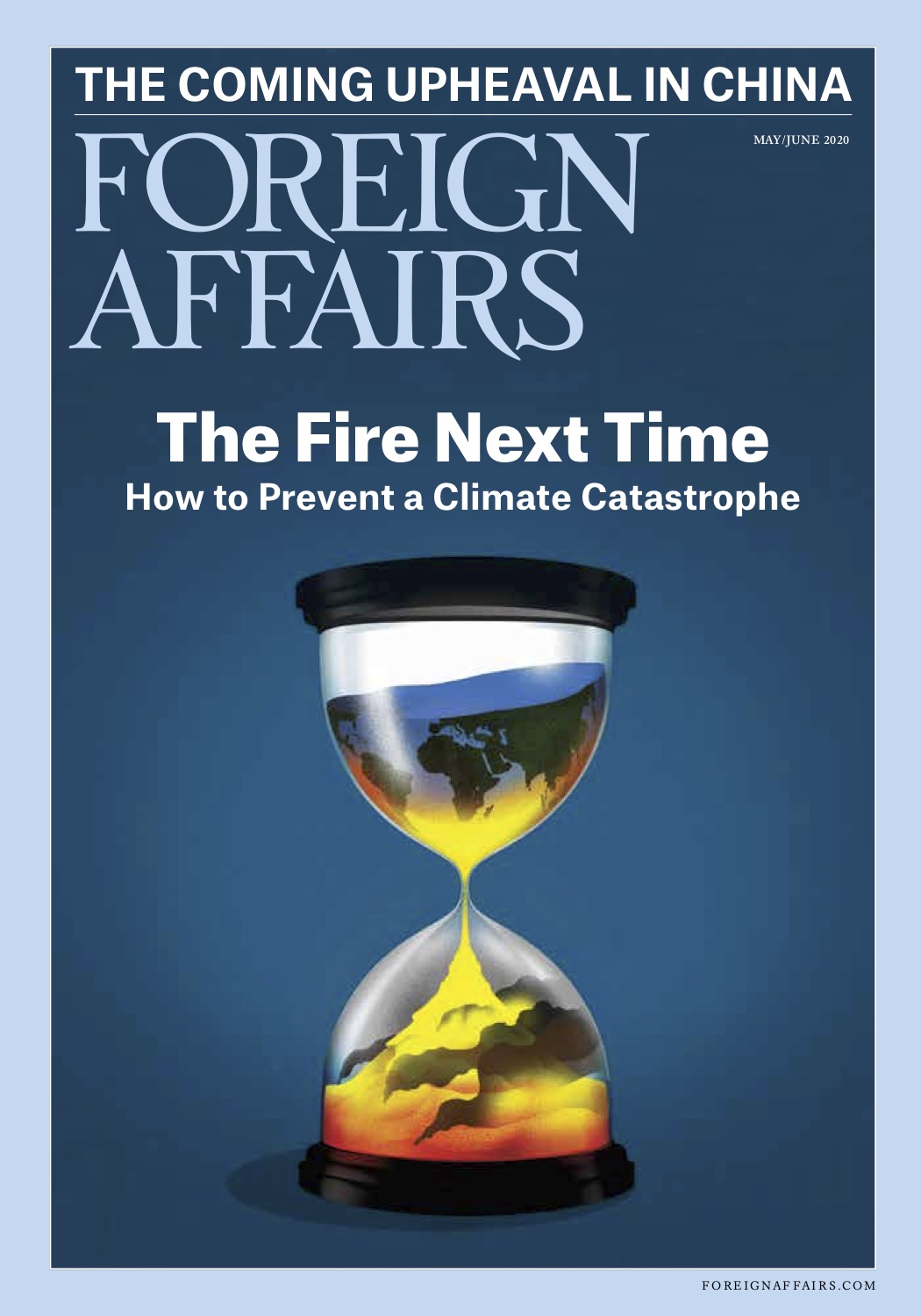
China’s Coming Upheaval

The U.S.-China relationship, which has wavered between cooperation and competition, has, over the past few years, veered more sharply towards confrontation – possibly because of China’s own more assertive stance. Now, Beijing’s confidence is under test, not only by these fractious relations, but also COVID-19 and an economic slowdown. Will these factors reveal its weaknesses?

so18_cover_large_0 Courtesy: Foreign Affairs
1 October 2018

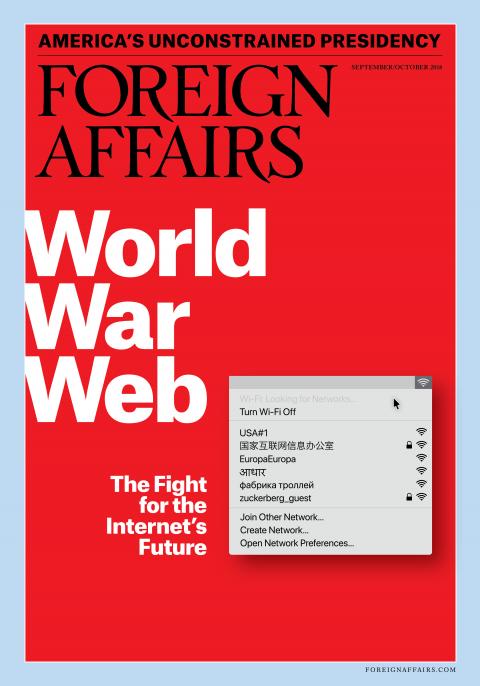
Battlefield Internet

The immediate threat is more corrosive than explosive. States are using the tools of cyberwarfare to undermine the very foundation of the Internet: trust. The result is that an arena that the world relies on for economic and informational exchange has turned into an active battlefield.

ja18_cover_small Courtesy: Foreign Affairs
29 August 2018

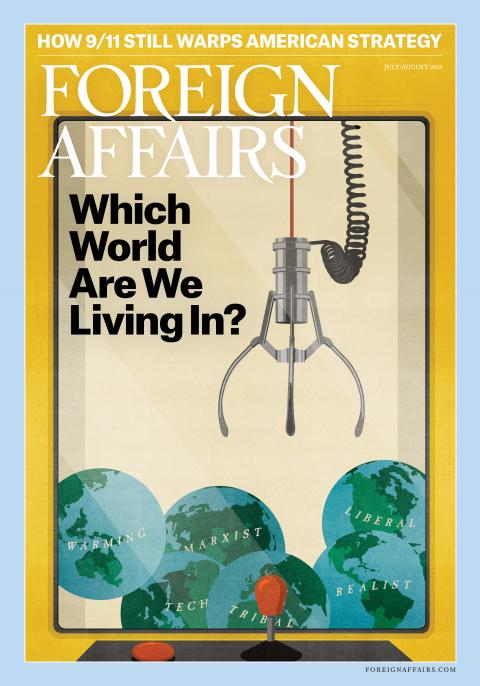
The People’s Authoritarian

The psychology of Putin, the ideology of his regime, and the machinery received exhaustive attention in the West. The Russian people, however, remain poorly understood.

jf16_cover_sub Courtesy: Foreign Affairs
17 February 2016

How China Sees Russia

Beijing and Moscow are close, but 
not allies. Scholars and journalists in the West find themselves debating the nature of the Chinese-Russian partnership and wondering whether it will evolve into an alliance.

foreignaffairsjan Courtesy: Foreign Affairs
10 February 2014

The Ever-Emerging Markets

When the average growth rate in emerging markets hit over seven percent a year in the last decade, forecasters hyped its implications. Today, more than five years after the financial crisis of 2008, the euphoria seems to have waned

Broken BRICs Courtesy: Foreign Affairs
30 October 2012

Broken BRICs

There’s been much talk about the “the rise of the rest,” with Brazil, Russia, India, and China leading the charge. However, few countries can sustain unusually fast growth for a decade, and even fewer, for more than that. As the boom years begin to end, the international order won’t change as much as expected.

martin wolf cfr Courtesy: World Economic Forum/Flickr
30 March 2012

Does the BRICS Group Matter?

The emerging BRICS economies agree that the West should hold less sway in the global economy. But their leaders, despite regular summits, have failed to articulate a coherent vision because of divergent interests, says journalist Martin Wolf.

BRICS magazine Courtesy: Newsdesk
3 January 2012

BRICS: The 2012 New Delhi Summit

Alongside the 2012 BRICS Summit in Delhi, this special publication is a collection of articles that addresses important issues of the global agenda, the priorities of BRICS, the policies and competitive advantages of the participants, as well as BRICS institutionalization.

pragati november cover Courtesy: Pragati
12 November 2011

Missed opportunities

IBSA’s abstention over Syria is an argument against Security Council reform. Critics of reform have long argued that increasing the number of permanent members to include Brazil and India would lead to paralysis.