US-Pakistan: A new nuke normal
Seema Sirohi's article, 'US-Pakistan: A new nuke normal,' was republished on The Political Indian and on Indian American Times.

 Courtesy: The Political Indian
Seema Sirohi's article, 'US-Pakistan: A new nuke normal,' was republished on The Political Indian and on Indian American Times.
 Courtesy: Eurasia Review
Jivanta Schöttli's article 'Germany’s Energy Model For India?' was republished by Eurasia Review, Worldpress.org and The Political Indian.
 Courtesy: The Express Tribune
Sameer Patil, National Security Fellow, Gateway House, was quoted by The Express Tribune on his views on 'Stateless: Myanmar's Rohingya Muslims.' The quote appeared in various other publications.
 Courtesy: The Diplomat
Neelam Deo, Director, Gateway House, wrote an article on 'Pakistan's denial game.' This article was republished on The Diplomat and on Eurasia Review.
 Courtesy:
ONGC’s purchase of a 15% stake in Russia’s Vankorneft presents the road ahead for India – by acquiring oil and gas fields today, India has a chance to lock in the price of imported energy at the current low level for the long run.

Amit Bhandari, fellow for energy and environment studies, Gateway House, comments on the significance of the deal between Rosneft's Vankorneft and ONGC Videsh Limited.
 Courtesy: Wikipedia
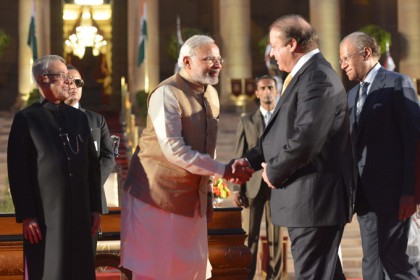
The cancellation of the August 23-24 meeting of the national security advisors of India and Pakistan follows a pattern of unrealistic expectations raised and then quickly dashed. This is compounded by Pakistan’s long history of denial on numerous issues. It may be time for both countries to abjure high-profile diplomacy and turn to small confidence-building measures.
 Courtesy: Bharata Bharati
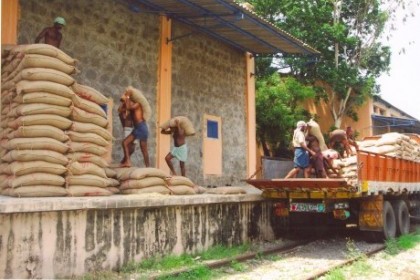
India, along with China, will present the case for food security protections at the WTO Ministerial Conference in Nairobi in December, where India will find it difficult to maintain its integrity as both a leader of G33 countries and a nation that has an expressed stake in the expansion of global trade. But it should stick to the G33’s Bali proposal for flexibilities for developing countries.
 Courtesy: Jürgen / Flickr
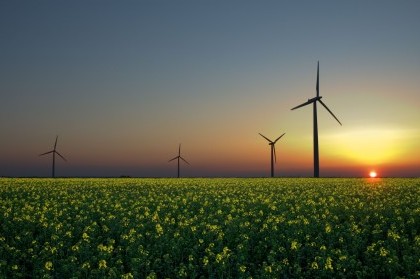
In Germany in June 2015, G7 countries made major commitments towards decarbonisation and reduction in greenhouse gases, which will lead to binding decisions at the COP-21 conference in Paris in December. Germany pushed for these outcomes, and as one of the most energy efficient countries in the world its technology and expertise can help India’s targets of alternative energy and sustainable industry.
 Courtesy: Wikipedia
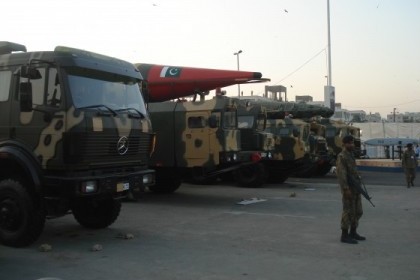
A report by the Carnegie Endowment and the Stimson Center attempts to recognise Pakistan’s nuclear programme as ‘normal’ and India’s as not. However, with dangerous new additions to Islamabad’s arsenal, a throwback to simplistic US rationalisations still won’t bring Pakistan into the non-proliferation mainstream.