The Gateway House Podcast is a special audio product created by Gateway House to provide indepth discussion and analysis on important foreign policy events in an accessible, and digestible format. The podcast frequently features experts from Gateway House as well as several external experts from across the world.
You can follow the podcast on iTunes and Soundcloud.
Current Host: Virpratap Vikram Singh, Website Content Manager, Gateway House
Past Hosts: Shubhashish, Ashna Contractor, Dev Lewis
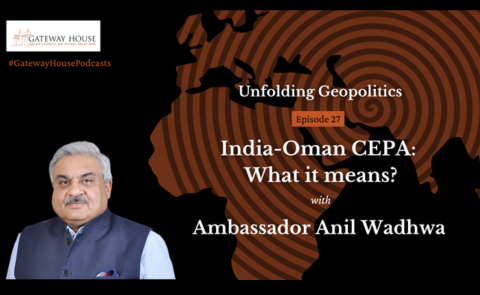
India and Oman signed the Comprehensive Economic Partnership Agreement (CEPA) on December 18, 2025. The agreement reflects India’s approach to engaging with trusted partners while rediscovering its historic trading ties. Ambassador Anil Wadhwa explains what CEPA means for India: it is less about becoming a global gateway and more about anchoring a strategic economic partnership in a geopolitically sensitive region.
India and the U.S. share a comprehensive global strategic partnership across trade, technology, defence, and education, yet high school exchanges remain overlooked. The ecosystem depends on two U.S. government-backed programmes, which have recently faced budget cuts of 90% and have both been paused, putting their future at risk. Nina Robinson, CFR International Affairs Fellow, explains why these exchanges matter and how their loss would limit opportunities for young students.
There’s growing speculation about a power struggle in China and whether President Xi Jinping is losing control. Amid reported internal rifts within the Communist Party of China, Xi has launched a military purge, removing several top officials, while Chinese companies face mounting internal issues. Lt Gen S. L. Narasimhan, Adjunct Distinguished at Gateway House, analyses these rumours and reveals China’s internal dynamics.
Afghanistan’s Foreign Minister Amir Khan Muttaqi will visit India on October 10, marking the first high-level Taliban visit since the group took over Kabul in 2021. Nayanima Basu discusses the purpose of this visit and the importance of engagement with Afghanistan. She explains the roles of China, which seeks business; Pakistan, which pursues political interests; and the U.S., which has a renewed interest in Bagram Air Base and its return to the country it abandoned.
On August 15, President Donald Trump and President Vladimir Putin met in Alaska to discuss the Russia-Ukraine peace deal. Ivan Timofeev analyses the stakes for Russia, the U.S., Europe, and Ukraine, noting that Washington and Moscow remain decisive players while Europe and Ukraine play secondary roles. Could this meeting pave the way for peace? For India, the talks matter, as it faces an additional 25% tariff for buying Russian oil.
A decades-old dispute has escalated into a conflict along the Thai-Cambodia border. It centres around the archaeological sites of Hindu temples, and are emblematic of a deeper and layered contestation rooted in three key issues: French colonial cartography, political use of history and heritage, and interests of Thai and Cambodian military and political elite.
Dr. Thanachate Wisaijorn, Head of Government, Faculty of Political Science at Ubon Ratchathani University in Thailand is an expert on the borderlands of the Thai region, with Cambodia, Thailand and Laos. He has been closely watching the unfolding issues on the Thai-Cambodia border. He speaks to Manjeet Kripalani of Gateway House, about the history of the conflict, its current status and its potential resolution.
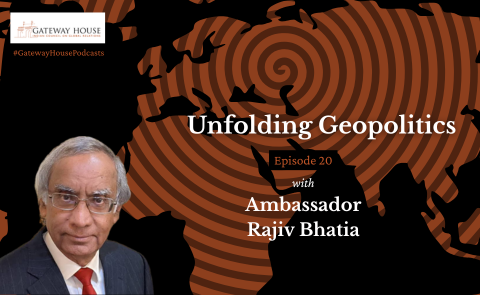
All eyes are on the July 25-26 visit of Prime Minister Modi to Maldives as chief guest for the Maldivian Independence Day celebrations. It’s a remarkable turnaround by Maldivian President Mohamed Muizzu, who won the 2023 election on an “India Out” campaign. What caused the change? Proximity and geopolitics, says Rajiv Bhatia transformed Maldivian view.
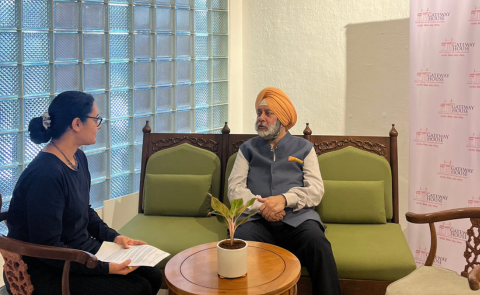
As part of India’s diplomatic outreach after Operation Sindoor, Ambassador Manjeev Singh Puri and his delegation visited Spain, Greece, Slovenia, Latvia and Russia. He spoke to Gateway House on how the thinking of countries needs to coalesce so that the global gaze is not just on terrorism but on Pakistan, which should be pressured to understand that the price for terrorism is far beyond what it can afford.
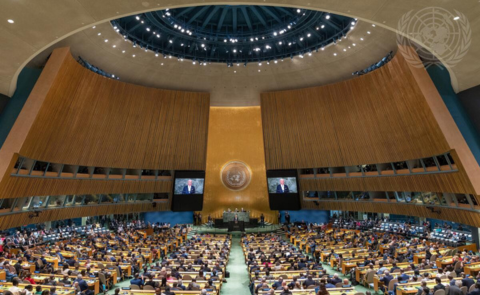
The UN turns 80 this year. How is it being judged? Both disparagingly and with admiration says Ruchira Kamboj, Former Permanent Representative of India to the UN. In this podcast with Manjeet Kripalani, Executive Director, Gateway House, she explains the now-diminished U.S presence, the growing influence of China, the scope for reform and India’s position as an emerging global power.
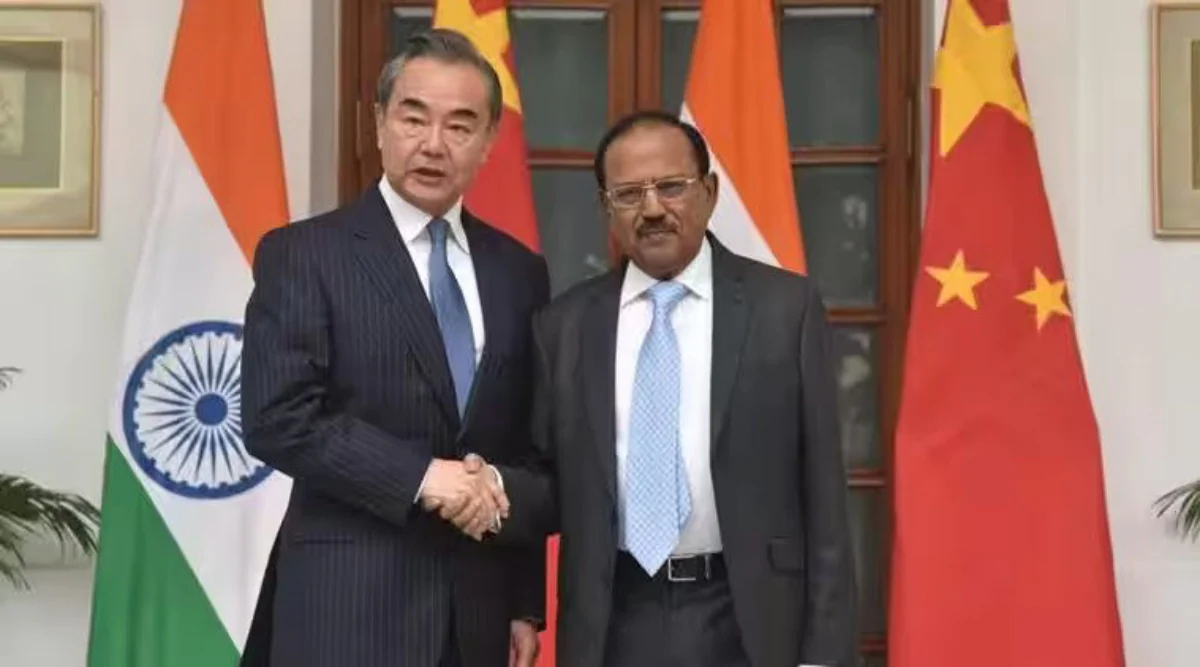
On December 18, India’s National Security Advisor Ajit Doval and Chinese Foreign Minister Wang Yi met in Beijing. This came two months after Prime Minister Modi’s bilateral meet with President Xi on the sidelines of the BRICS Summit in Russia. Lt Gen S L Narasimhan, Adjunct Distinguished Fellow, National Security and China Studies, discusses recent developments in India-China ties and how New Delhi can manage its complex relationship with Beijing.