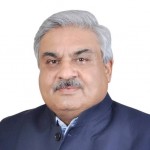
Ambassador Anil Wadhwa was a member of the India Foreign Service from 1979–2017 and has served as the Indian Ambassador to Italy, Thailand, Oman and Poland. As Secretary (East) in the Ministry of External Affairs of India he oversaw relations with South East Asia, Gulf and West Asia, Pacific and Australasia. He has served as the Indian Ambassador and permanent Representative to FAO, IFAD, WFP UNESCAP and worked with the Organization for the Prohibition of Chemical Weapons (OPCW) in The Hague heading the Government Relations and Political Affairs and Media and Public Affairs Branches. He has served as India’s chief delegate to the East Asia Summit, Asean- India, ASEM, ACD, the Arab league, Mekong Ganga Cooperation, and ARF meetings. Ambassador Wadhwa’s previous postings include stints with the Indian Permanent mission to the United Nations in Geneva, twice to the Indian Embassy in Beijing, and in the Commission of India in Hong Kong.
He has led a Confederation of Indian Industries task force for writing the Australia Economic Strategy report for the Indian government released by the Minister of Commerce, Industry & Textiles in November 2020.
Ambassador Wadhwa is also a Distinguished fellow with the Vivekananda International Foundation, New Delhi, and serves as an Independent Director and Advisor on the Boards of several corporate firms and organisations in India and abroad.
India-U.S. trade negotiations have faltered. India stepped outside its comfort zone to offer zero tariffs on industrial goods that form 40% of U.S. exports to India, but the additional 25% tariffs have rendered most Indian exports noncompetitive. Only a carefully balanced, incremental negotiating framework blending economic pragmatism with protection of core domestic interests backed by political will, stands a realistic chance of bridging the current impasse.
U.S. President Trump is prioritising strategic competition with China and seeking stability with Russia. This approach involves sanctions relief, sidelining Ukraine, and fostering economic ties with Moscow to weaken its reliance on China and reshape global power dynamics. Europe is divided on the outreach to Russia, but the U.S. wants to leverage energy markets and investment opportunities to expand its influence over Moscow.
The India-Australia Comprehensive Economic Cooperation Agreement will be signed this year. It will complete a unique, two-part trade agreement that will bring India into global trade regimes in a calibrated manner, and with a helping hand. For Australia, with its deep global trading knowledge and pragmatic approach to such agreements, gaining it first-mover advantage in India’s large market is a major win
India and Australia signed an Economic Cooperation and Trade Agreement (ECTA) in December 2022. The ECTA is the first of a unique, two-part trade agreement that will bring India into global trade regimes in a calibrated manner. For Australia, with its global trading knowledge and pragmatic approach, gaining first-mover advantage in India’s large market is a major win. This case study explains the elements of ECTA.