Website articles  (14) Courtesy: Wikiwand
11 December 2025

The Scottish espirit in Bombay

For a week in December, the Feast of St. Andrew is observed in Mumbai’s two Scottish Presbyterian churches – St. Andrew’s Cathedral and the Church of St. Columba. In the absence of Scots, these Churches and multiple educational institutions and trading houses remind us that colonial Bombay was primarily built by these hardy Highlanders, often mistaken by locals for Englishmen. The Scots were also Britain’s most enthusiastic Empire-builders.

91RL+JMb+lS._UF1000,1000_QL80_ (1) Courtesy: Amazon India
17 July 2025

The case that shook the empire

This book follows the O’Dwyer vs. Nair libel case which brought the Jallianwala Bagh massacre of 1919 to public life, and spurred India’s nationalist movement. Through the case, it recounts the life of Sir Chettur Sankaran Nair who was a critic of Gandhi but also of the British government and publicly held Michael O’Dwyer, lieutenant governor of Punjab, responsible for the massacre.

Furmeyer/WikimediaCommons Courtesy: Furmeyer/WikimediaCommons
13 March 2013

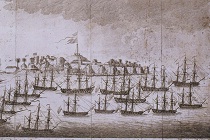
Historical Perspectives on Piracy: The British Empire in the Persian Gulf

Maritime piracy is one of the several grave security issues faced by today’s world. This problem, however, isn’t a new phenomenon, and nations have long-battled this issue. How did piracy manifest itself in the Indian Ocean in the 19th century, and what was the nature of counter-piracy efforts during that period?

angre2 Courtesy: Columbia/WikimediaCommons
4 September 2012

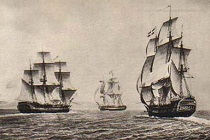
Kanhoji Angre: India’s first naval commander

In the 1700s, one man antagonized the European powers, and insisted on the Maratha Empire’s rights to taxation and sovereignty over Maharashtra’s coast. He was Kanhoji Angre, the head of the Maratha navy. How did he, 283 years ago, set an important precedent for the Subcontinent’s local powers?