buildings-china-city-50868 Courtesy:
20 March 2019

Three ways to resolve Chinese debt crisis

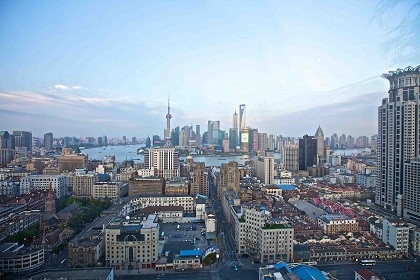
The Chinese leadership faces a range of economic problems and not very palatable solutions, says Prof Heribert Dieter, Visiting Fellow at Gateway House, Mumbai, and Senior Fellow, German Institute for International and Security Affairs, Berlin, in this wide-ranging conversation with Gateway House. He also analyses the European perspective on China, the U.S.-China trade war and the role of global forums, such as G20
shutterstock_268677542 Courtesy: Instinctif Partners
21 February 2019

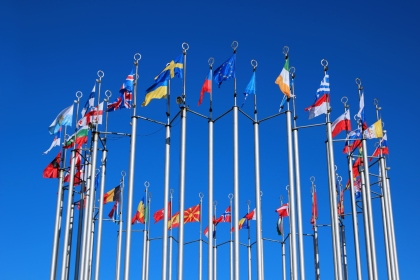
A ‘club’ structure for European integration

Europe’s integration process may seem doomed, but more choices exist than a return to the nation state of the 20th century or a bold move forward to a complete and new sovereign European state. Here is an opportunity for Europe to reunite through a ‘club’ structure

180130211303-sotu-trump-02-exlarge-169 (1) Courtesy: cnn.com
18 February 2019

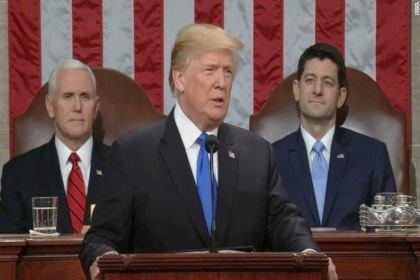
The state of the American Union

The state of the American Union is both polarised and ironic. Moderated presidential messaging is needed if there is a chance to become more united and avoid perpetual acrimony

35830490205_81bd5000f7_o Courtesy: MEA/Flickr
6 February 2019

Indian Foreign Policy in 21st Century

The following remarks were given by Ambassador Rajiv Bhatia, Distinguished Fellow, Foreign Policy Studies, Gateway House as Distinguished Guest Lecturer at IIM Tiruchirappalli on February 3, 2019

46658837911_46b856f8ef_o Courtesy: MEA Flickr
10 January 2019

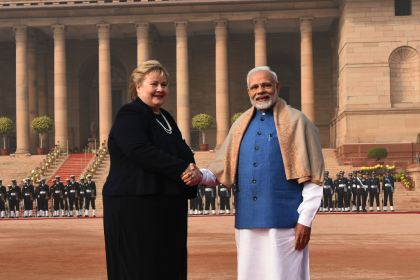
India, Norway and the Blue Economy

Norwegian prime minister Erna Solberg’s visit to India earlier this week had a central focus: strengthening economic and technological cooperation in the Blue Economy. This is an area in which her country has considerable expertise and with which Indian business needs to collaborate in managing industries, such as oil, shipping, fisheries and aquaculture in a ‘green’ way

34752548343_a7841c4919_o Courtesy: MEA Flickr
3 January 2019

2019, the year of aligning decisively

The imperative for India to move away from its non-aligned posture is now, especially if it wants to be consequential in the global reordering underway. This will play out in the contention between the U.S. on one side, and China and Russia on the other.

sputnik Courtesy: Sputnik News
20 December 2018

A world of uncertainties & unease

Speakers at the seventh Atlantic Dialogues, held in Morocco earlier this month, discussed what the challenge to western dominance and China’s expansionism meant for their political and economic future

Rediffmail Courtesy: Rediffmail
6 December 2018

Modi a better CM than PM?

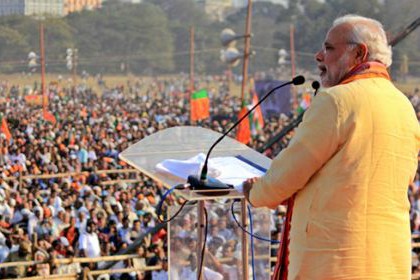
Academic and columnist M.D. Nalapat, in this interview with Manjeet Kripalani, speaks of how a tardy bureaucracy has brought about “a too-cautious” policy towards the U.S. and China as opposed to the former Gujarat chief minister’s greater openness in consulting people before handing over policy implementation to the bureaucracy. He also discusses the prime minister’s shrewd approach to South Asia, the dependable warmth of the Japanese and a range of other topics

President_Donald_Trump_and_Prime_Minister_Justin_Trudeau_Joint_Press_Conference_February_13_2017 Courtesy: Wikimedia Commons
25 October 2018

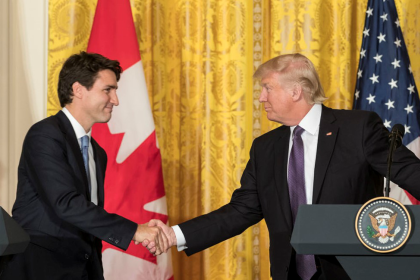
Three pillars of Canada’s worldview

The United States, Europe and the Asia Pacific today form Canada’s tripartite foreign policy priorities. The ASEAN is its sixth largest partner, which was not so 20 years ago, but economic engagement with India – still small, compared to China and Japan – has scope to grow

President_Reagan_and_Soviet_General_Secretary_Gorbachev_shake_hands_after_signing_the_INF_Treaty Courtesy: Wikimedia Commons
25 October 2018

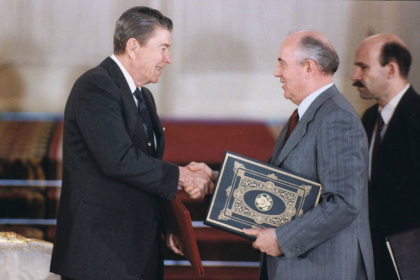
INF Treaty: China behind U.S. exit

America’s withdrawal from a Cold War arms control agreement seems to be dictated by China’s development and deployment of thousands of short and medium range ballistic missiles.