


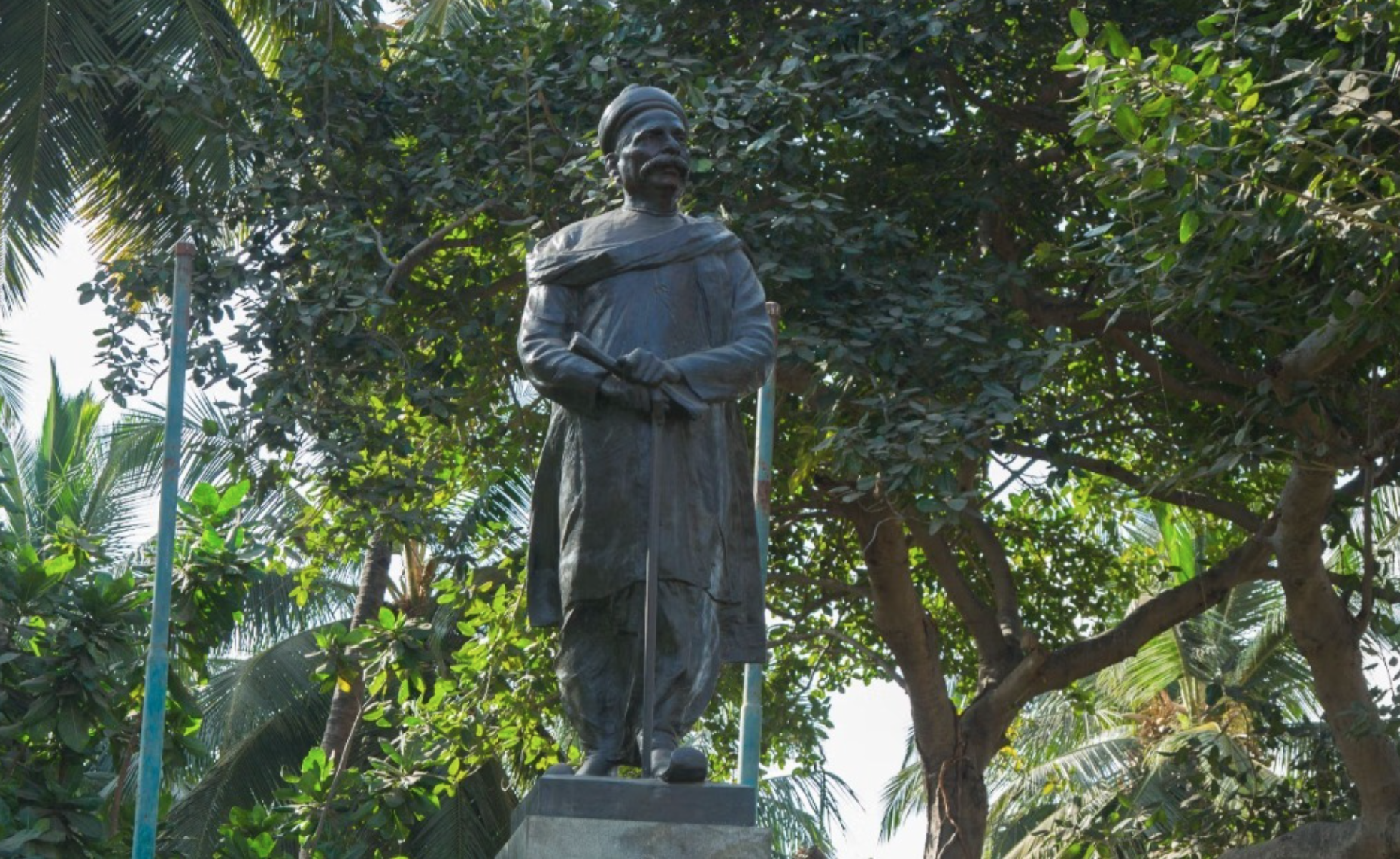
Ganesh Chaturthi festivities have begun in Mumbai and will continue until 25th September, when Ganesha, the Divine Remover of Obstacles and Mumbai’s favourite God, is immersed in the sea. The festival, promoted by freedom fighter Bal Gangadhar Tilak, is traditionally strongly associated with Mumbai and Maharashtra, but has now become a pan-India celebration.
This year, Ganesh Chaturthi coincides with the 170th birth anniversary of Tilak, one of the foundational figures in the Indian freedom movement against the British Raj[1] and the promoter of the Ganesh festival as a social event with political messaging. Tilak was born in 1856, a year before the Indian Freedom Movement’s First War of Independence.
Tilak’s greatest contribution is the promotion of Swaraj, or self-rule. He famously said, “Swaraj is my birthright, and I shall have it,” in 1916, beginning the movement for Home Rule in India. This was done through the Home Rule League, along with Dr Annie Besant, an Irish woman and supporter of Irish Home Rule, who was also the first woman president of the Indian National Congress.[2]
Swaraj is derived from Sanskrit, with swa meaning self and raj meaning governance or rule. Three exceptional Indians worked to popularise and propagate the term Swaraj in the public consciousness. Dadabhai Naoroji, who first used the word in 1906 in Calcutta, in his presidential address to the Indian National Congress, delivered in the wake of the territorial reorganisation of the Bengal Presidency[3]. Mahatma Gandhi described it in his 1909 book Hind Swaraj. Finally came Lokmanya Tilak in 1916, who used it in his speech in Belgaum, which launched the Home Rule Movement.
Swaraj has three meanings: political, economic, and individual. Within it is the right to political self-rule, for a nation to be free of foreign rule and to decide its own future. There is the right to economic rule, the right to be self-sufficient or, as it is expressed today, atmanirbhar. Finally, most importantly, it means the ability to control one’s impulses, exercise self-restraint, and take personal responsibility for one’s actions.
Between 1893 and 1894, Tilak used his Marathi newspaper Kesari and English newspaper The Mahratta to advocate transforming the privately celebrated Ganesh festival into a public, community-organised event. The Ganesh pavilions or pandals[4] provided a platform to propagate political messaging and awaken cultural and community consciousness. Tilak used the crowds gathered at these pandals as an audience for patriotic poems, public speeches, plays and songs, through which he spread the nationalist message. Ganesh Chaturthi also brought together members of different castes and classes under the umbrella of a shared religious identity, breaking down barriers that had hampered the independence movement.[5]
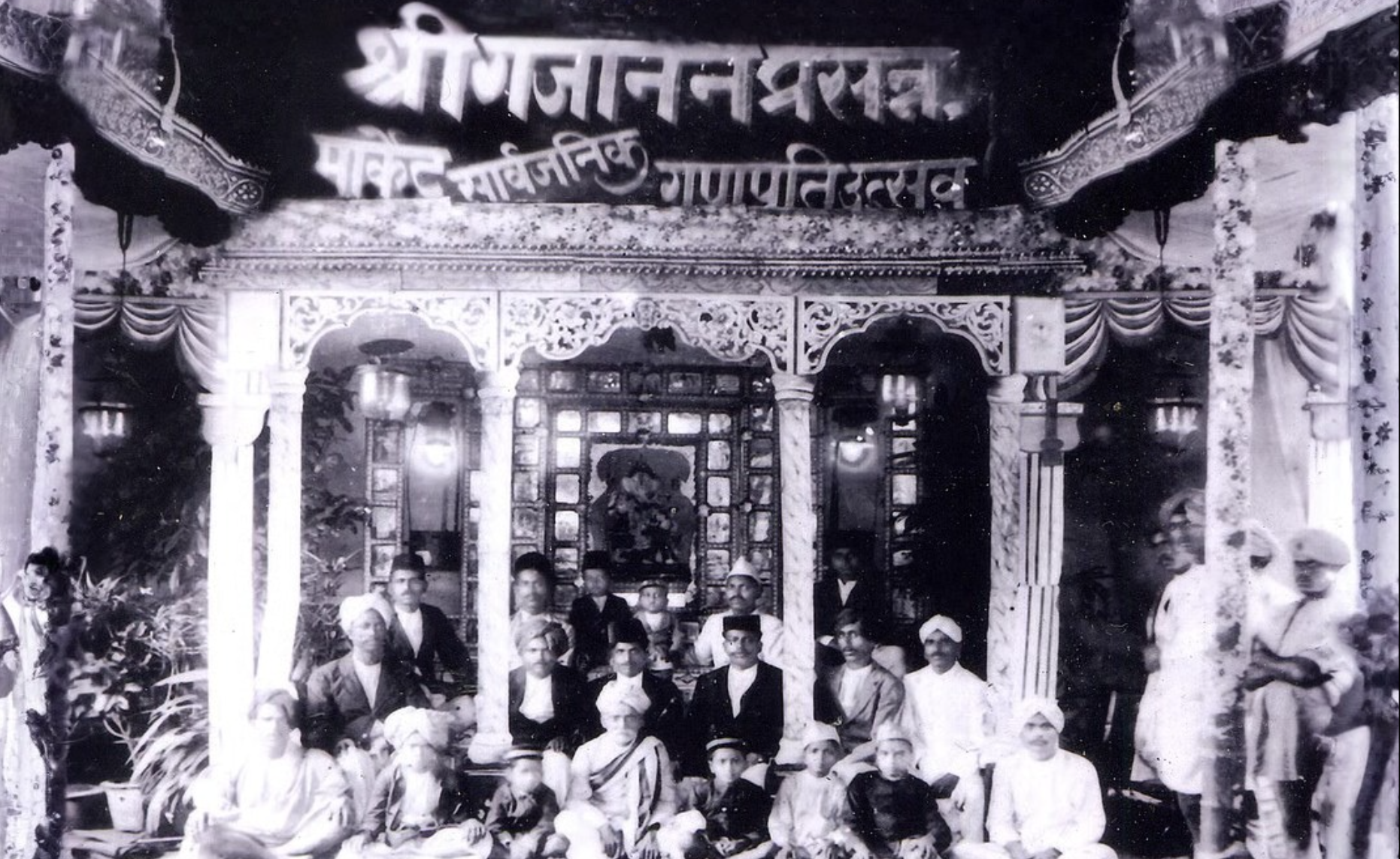
Image Credits: Ministry of Culture India
What level of swaraj has India achieved today?
Politically, India has matured as a nation, with the ability to overcome external and internal challenges. Wars in 1947, 1962, 1971, and 1999 presented external challenges, with implications for India’s sovereignty and territorial integrity. The 1975 Emergency, the 1979 institution of the Mandal Commission, the 1984 assassination of former Prime Minister Indira Gandhi, and the 2011 India Against Corruption Movement introduced internal challenges that India successfully overcame, strengthening its polity and society. India is less Delhi-centric and is now slowly turning into a federation of states. Soviet-style five-year plans have been abolished for the more ambitious Viksit Bharat 2047 vision, in line with the global norm.
Economic self-rule, however, has been slower in coming. India’s socialist model aimed for economic equity, but it only resulted in shortages. The socialist model could not carry the weight of a largely entrepreneurial country, collapsing in 1991, when Prime Minister Narasimha Rao and Finance Minister Manmohan Singh liberalised the economy and allowed companies to compete internationally with the best in the world. Indian competitiveness created a new study of industrialisation called frugal engineering, with robust products at the most affordable prices. This was followed by the digital revolution of the 2000s, which brought Indian information technology companies to the global forefront, highlighting the talent and potential underlying new sectors of the economy. In 2016, India had its own fintech revolution, driven primarily by the launch of the Aadhaar card in 2010, aligned with the India Stack architecture, which delivered state subsidies directly to the beneficiaries and democratised financial access for entrepreneurs.
What about individual Swaraj? Moral and personal Swaraj, explains Gandhian author Rajni Bakshi, “[is] an expanded sense of self, one that includes a concern for the needs of others”.[6] Tilak personified it. His pursuit of Independence for India therefore took precedence over the discomfort of two rigorous prison terms, underlining how the attainment of Swaraj cannot be achieved without effort and sacrifice.
Each year, Mumbai’s grandest Ganpati idols converge on Chowpatty, along the same shore where Tilak was cremated.[7] Tilak’s endeavours have ensured that India’s youth inherit political and economic Swaraj as the norm. Moral Swaraj, the quieter, more demanding third of his vision, is different: it cannot simply be handed down. It must be exercised afresh in every generation, through restraint, civic responsibility, and a willingness to serve something larger than personal ambition. Tilak’s long fight against British rule demonstrates that such freedom does not come without a cost; India’s Independence is now 80 years old. Many in the younger generation do not remember the contributions and sacrifices of freedom fighters like Tilak, whose great endurance enables the Swaraj of today.
The immersion of Ganesha on the same beach where Tilak’s statue stands demonstrates that just as the idol is welcomed, honoured, and immersed each year anew, Swaraj asks the same of every generation – not to just inherit it, but to assimilate it anew.
Karthik Narayan Venkataraman is a Research Assistant at Gateway House.
This article was exclusively written for Gateway House: Indian Council on Global Relations. You can read more exclusive content here.
For permission to republish, please contact outreach@gatewayhouse.in.
Support our work here.
© Copyright 2026 Gateway House: Indian Council on Global Relations. All rights reserved. Any unauthorised copying or reproduction is strictly prohibited.
References:
[1] Press Information Bureau, Government of India, “Prime Minister Pays Tributes to Lokmanya Tilak on His Birth Anniversary,” July 23, 2026, https://www.pib.gov.in/PressReleasePage.aspx?PRID=2288113®=48&lang=2.
[2] Jawaharlal Nehru, “The Home Rule League,” The Leader, September 6, 1917, in Selected Works of Jawaharlal Nehru, First Series, vol. 1, 108, The Nehru Archive.
[3] Indian National Congress, Report of the Proceedings of the Twenty-Second Indian National Congress, Held at Calcutta on the 26th, 27th, 28th, and 29th December 1906 (Calcutta: Indian National Congress, 1906), 19, https://dspace.gipe.ac.in/xmlui/handle/10973/17959.
[4] A temporary decorated stage or pavilion housing the Ganesh idol during the annual festivities of Ganesh Chaturthi.
[5] Barnouw, Victor. “The Changing Character of a Hindu Festival.” American Anthropologist 56, no. 1 (1954): 74–86. http://www.jstor.org/stable/664633.
[6] Gateway House. “Swaraj as Journey – Gateway House.” Gateway House, December 11, 2017. https://www.gatewayhouse.in/swaraj-as-journey/
[7] Municipal Corporation of Greater Mumbai, “Lokmanya Tilak Samadhi, Girgaon,” Mumbai Legacy Project, D Ward, accessed September 4, 2026, https://www.mcgm.gov.in/irj/go/km/docs/documents/D%20Ward/Heritage-Sites/62_Legacy%20of%20D%20Ward_Article_Lokmanya%20Tilak%20Samadhi,%20Girgaon.pdf.